
Livraison le jour même ou le lendemain

Qualité garantie

Débloquez vos offres de bienvenue: Livraison GRATUITE | Jusqu'à -80 % | 30 jours d'essai gratuits à JoyPlus
Téléchargez l'application
A cluttered desk is never a good sign. Between piles of files, accumulating mail, and scattered supplies, productivity and focus inevitably suffer. Yet, choosing the right desk organizer is far from simple. The market is flooded with solutions that look ideal in photos but often prove disappointing in practice.
As the head of product selection at Joybuy, my mission is to help you see things more clearly. Together, we'll break down the most common pitfalls so you can make an informed choice that truly fits your needs, without falling for marketing ploys.
Before you start shopping, let's identify the hidden flaws that too often turn a promising purchase into a real regret.
To ensure your investment will genuinely improve your desk organization, focus on a few key points.
The choice of material is crucial. For daily use and excellent longevity, powder-coated steel is the gold standard. This treatment protects the metal from rust and oxidation while providing a smooth, highly scratch-resistant surface. Unlike plastic that warps or wood that chips, this finish ensures a flawless appearance over time, even for desk accessories that are handled constantly.
Space optimization is key. Your choice will depend on the surface area available on your desk.
It seems obvious, yet it's a classic trap. Always check the internal dimensions of the compartments. A good organizer must effortlessly accommodate A4 format (21?x?29.7?cm) documents, even when they are in folders or plastic sleeves, which are often slightly larger. A desk file organizer worth its salt should allow easy access to documents without bending or damaging them.
Here are our recommendations, chosen for different user profiles while keeping in mind the durability and practicality criteria we've just discussed.
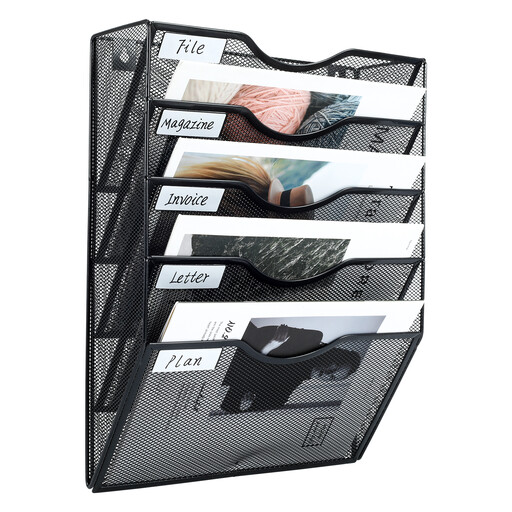
Why we recommend it: Perfect for remote workers or students with a small desk. It leverages often-neglected wall space to file a large volume of documents and completely free up your work surface.
Its sturdy metal construction with a powder-coated finish prevents it from warping. The five compartments are well-sized for A4 documents, and the included label holders are a real organisational bonus.
It maximises vertical storage without encroaching on your desk. The label holders allow for methodical sorting of files, mail, or magazines.
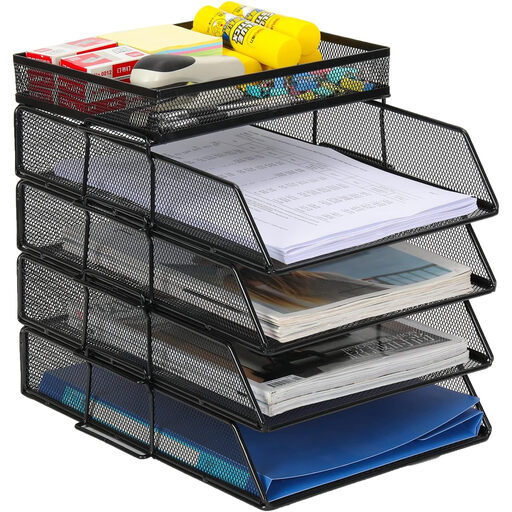
Why we recommend it: Designed for heavy-duty use, this modular system keeps a large filing capacity within easy reach. Its sturdiness and stability make it a reliable ally for managing a high volume of documents daily.
Its interlocking system ensures the trays remain perfectly aligned and stable, unlike models that are simply stacked. The quality metal frame supports the load without buckling.
Its modularity allows you to adjust the number of tiers as needed. The top pencil holder is perfect for centralising all your small accessories.
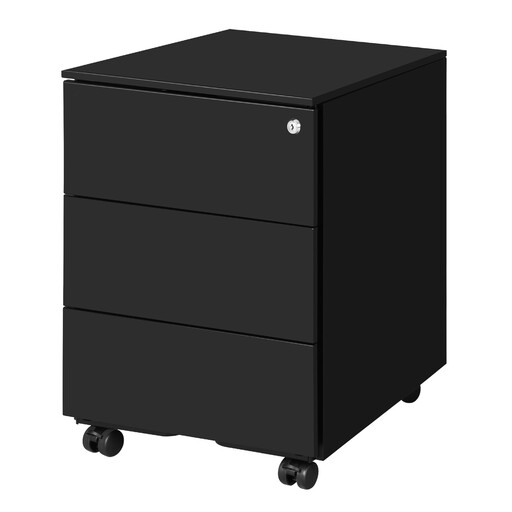
Why we recommend it: Much more than a simple sorter, this is a true secure and mobile storage unit. Ideal for storing confidential documents, valuable supplies, or for easily moving your workspace.
Its steel frame supports up to 15 kg per drawer, a level of sturdiness unmatched by classic organizers. The lock provides security that open sorters cannot offer.
It combines storage, security, and mobility. Delivered pre-assembled (only the castors need to be attached), it's ready to use in minutes for no-compromise organisation.
Discover our full selection of products that meet our quality criteria and current safety standards.
For a reliable installation, use the provided screws and wall plugs, choosing plugs appropriate for your wall type (plasterboard, brick, concrete). If you plan to store a lot of weight, aim for the wall studs rather than just the plaster. Remember to check that the fixings are tight from time to time.
A powder-coated steel model, if well-maintained, can last for many years. To preserve its appearance, simply dusting it with a dry cloth is sufficient. Avoid moisture and abrasive cleaning products, which could damage the finish.
Yes, and more than you might think. A tidy workspace reduces visual distractions and the time wasted searching for a document or supply. By applying the famous principle, "A place for everything, and everything in its place," you free up your mind to focus on what's essential.