
Livraison le jour même ou le lendemain

Qualité garantie

Débloquez vos offres de bienvenue: Livraison GRATUITE | Jusqu'à -80 % | 30 jours d'essai gratuits à JoyPlus
Téléchargez l'application
An overflowing desk is often a sign that your organization needs a rethink. Piles of documents stacking up, lost invoices, precious time wasted searching for a single sheet of paper... Whether you're working remotely, in the office, or simply dealing with administrative paperwork at home, the result is the same: clutter harms your productivity. Choosing a desk organizer seems simple, but the market is flooded with products whose tempting promises often hide deal-breaking design flaws.
To prevent a promising purchase from turning into a useless gadget after just a few months, it's essential to know how to spot the most common traps.
For a long-lasting and truly functional purchase, it's better to focus on a few key technical criteria than on marketing hype.
The choice of material directly impacts your organizer's lifespan and its suitability for your needs.
Your filing needs change over time. Your organizer should be able to keep up.
The small details often make the biggest difference in daily use. Consider integrated desk accessories that can save you space and time: a built-in pen holder, non-slip rubber feet to protect your desk from scratches, or a handle for easy transport.
Rather than an endless list, we have selected three models that each meet a specific need, while avoiding the pitfalls we've discussed.
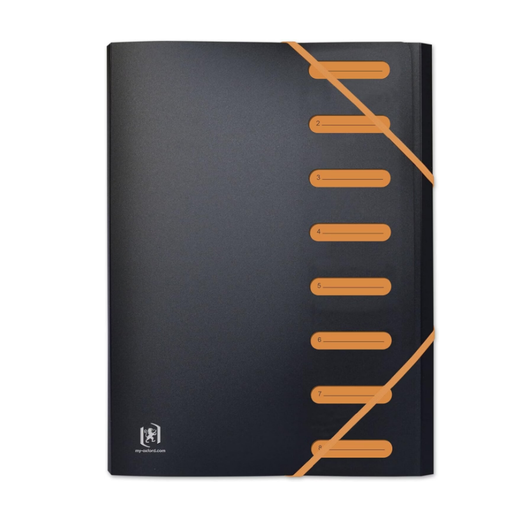
Why we chose it: Ideal for carrying class notes or project files. Its polypropylene construction makes it both lightweight and sturdy. Its 8 compartments and expandable spine adjust to the volume of documents, while the integrated zip pocket is perfect for storing small accessories.
This all-in-one model eliminates the risk of unstable modularity. Its expandable spine adjusts to the required volume without ever weakening the structure.
Flexibility and portability: Its variable capacity and wide elastic flap perfectly secure documents during transport.
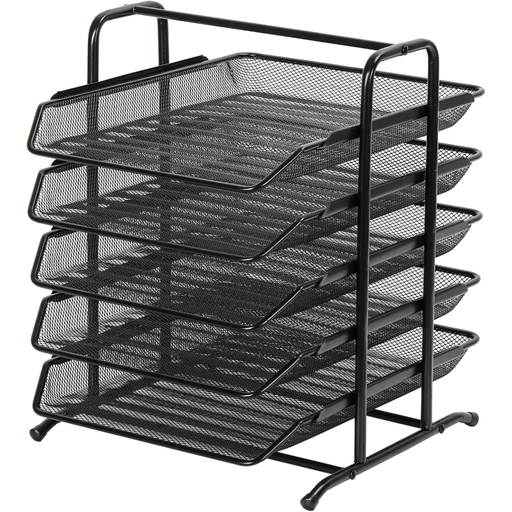
Why we chose it: With its 5 tiers, this model offers substantial vertical filing capacity, ideal for professionals juggling numerous files. Its metal structure is a guarantee of durability, and its sliding drawers provide effortless access to documents at the bottom.
It avoids the trap of low-quality materials with its robust metal construction. As a fixed, assembled unit, it ensures far greater stability than a precarious stackable system.
High capacity and ergonomics: The 5 sliding drawers optimize vertical space while ensuring direct and easy access to each level.
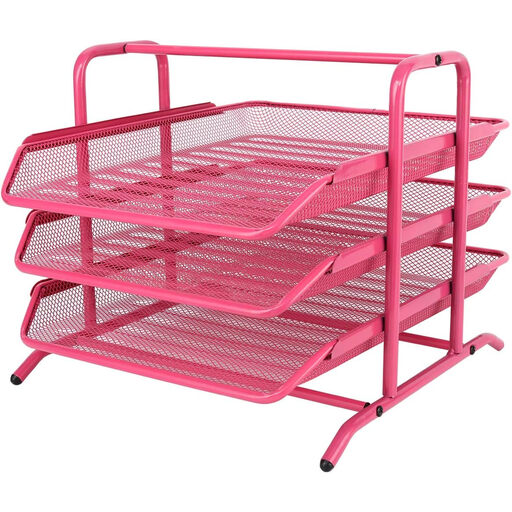
Why we chose it: For those who want their desk accessories to complement their decor. Available in several colours (pink, white, silver), this model combines aesthetics and functionality. Its 3 tiers are more than enough to manage daily paperwork (mail, bills, important documents).
It avoids the trap of improper dimensions. Its trays are generously sized for A4 paper, and their sliding design prevents sheets from getting stuck or damaged.
Design and practicality: The choice of colours and the neat finish make it a beautiful object, while the sliding drawers make it very practical for daily use.
We've compiled a complete selection of products that meet our strict selection criteria.
1. How do I assemble a metal desk organizer? Most multi-tiered metal models are delivered in a kit, but assembly is usually simple. They come with the necessary screws and sometimes a small tool. The main tip: tighten all screws securely to ensure a stable structure. Don't forget to install the provided rubber feet to protect your desk.
2. What is the difference between a letter tray and a document sorter? Although the terms are often used interchangeably, a letter tray generally refers to one or more stacked trays (2 or 3) for basic sorting (e.g., "In" / "Out"). A document sorter, on the other hand, is more elaborate. It offers multiple compartments (often 5 or more), sometimes vertically or in an accordion style, for more detailed filing by project or topic.
3. How do I maintain my desk organizer to make it last longer? For metal models, a simple dusting with a dry cloth is sufficient. Avoid moisture to prevent any risk of rust, even if the coating is protective. For plastic or polypropylene, a damp cloth will do the trick. Also, remember to empty and reorganize it regularly to avoid overloading it, which could deform its structure over time.