
Livraison le jour même ou le lendemain

Qualité garantie

Débloquez vos offres de bienvenue: Livraison GRATUITE | Jusqu'à -80 % | 30 jours d'essai gratuits à JoyPlus
Téléchargez l'application
Piles of documents threatening to collapse, pens that are nowhere to be found, a lack of space... If this scenario sounds familiar, it's time to take action. A messy desk isn't just unpleasant: it saps your concentration and productivity. Whether you work from home, are a student, or simply want a more optimised workspace, a good desk organiser is an essential accessory.
I'm the Head of Product Curation at Joybuy, and my mission is to find the hidden gems that will transform your daily routine. In this guide, I'll help you choose the perfect desk storage solution for your needs and introduce you to my current favourites, which combine design, practicality, and durability.
To make the right choice, review these key points. They will help you find the model that perfectly fits your space and your habits.
The lifespan of your organiser depends primarily on its material. Metal, like that of a magazine holder, guarantees rock-solid strength and stability, perfect for heavy-duty use. Plastic, which is lighter and often more affordable, is suitable for moderate use. Wood adds a natural, warm touch, but be mindful of moisture. Consider how you'll use it and the weight it will need to support.
Everyone has their own organisational style. Are you drowning in paperwork? A vertical file holder or a drawer unit is a must-have. If you just need to manage daily mail, a stackable A4 letter tray will do the job perfectly. For students juggling multiple subjects, the expanding student file is a great ally, thanks to its capacity that adapts to your volume of coursework.
First things first: measure the available space on your desk. If space is tight, go vertical with multi-level units. Have a large desktop? A horizontal organiser will allow you to keep a maximum number of accessories within arm's reach. Also, consider modularity: stackable or adjustable elements can evolve with you and your needs.
To put theory into practice, here are three products that caught our eye, each meeting a specific need.
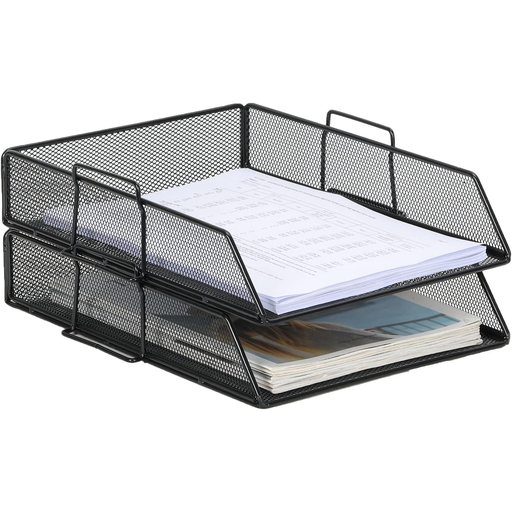
What sets it apart: This model gets straight to the point. Its metal mesh structure gives it a versatile industrial look, ideal for both the office and home. Its real advantage? It's stackable, allowing you to save vertical space without cluttering your desk.
Key features:
Who is it for? Perfect for professionals, whether in the office or working from home, who are looking for a simple, solid, and modular document sorter to manage daily mail and files.
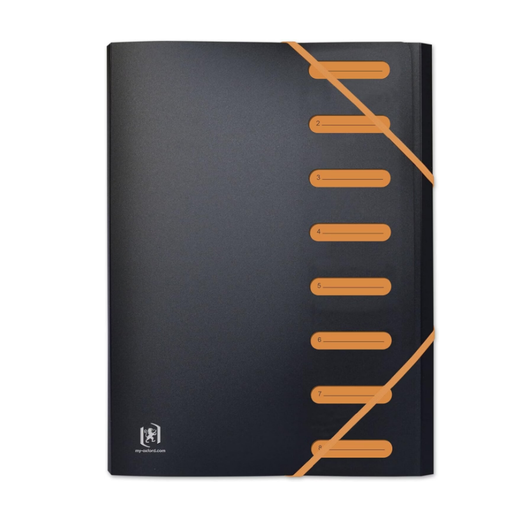
What sets it apart: Designed for the hectic life of a student, this file is a model of flexibility. Its expanding spine adapts to the volume of papers you need to carry, and its extra features make it a true Swiss Army knife of organisation.
Key features:
Who is it for? The ultimate expanding student file. Essential for high school and university students who need a portable, sturdy, and versatile solution for carrying notes and projects.
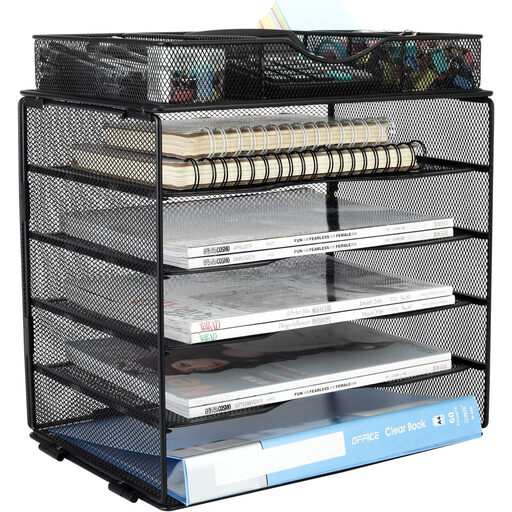
What sets it apart: More than just a sorter, this is a true command centre for your desk. With its five trays and a drawer, it centralises paper filing and small supply storage in a vertical format that frees up space.
Key features:
Who is it for? For those who want a complete desk storage solution capable of organising both A4 documents and multiple accessories, at home or in the office.
Our selection covers the most common needs, but your workspace is unique. If you're looking for other sizes, materials, or configurations, our catalogue is packed with solutions. Designer magazine holders, drawer units, customisable filing systems... you're sure to find the model that's right for you.
? Explore our full range of desk organisers to find the perfect fit.
The foolproof method: the three-pile sort. To do, to file, and to throw away. Use a document sorter or an A4 letter tray for urgent items. Archive important documents in binders or boxes. The pro tip? Scan everything you can to reduce paper clutter.
A letter tray (or in-tray) is a simple, often stackable tray for incoming documents. It's your physical 'inbox'. A sorter, on the other hand, is a single unit with multiple compartments (vertical, stepped, etc.) that allows you to categorise papers immediately: by project, by urgency, and so on.
Nothing could be simpler. A wipe with a soft, dry cloth is enough for dust. For stains, use a slightly damp cloth and dry immediately to prevent any risk of rust, even though most models are treated. Most importantly, never use abrasive products that could scratch the finish.