
Livraison le jour même ou le lendemain

Qualité garantie

Débloquez vos offres de bienvenue: Livraison GRATUITE | Jusqu'à -80 % | 30 jours d'essai gratuits à JoyPlus
Téléchargez l'application
A cluttered desk is the worst enemy of focus and productivity. Faced with a jungle of available options, choosing the right desk organiser can quickly become a headache. Many products promise the world, but not all deliver. Before you decide, it's essential to know the pitfalls to avoid so you can invest in a solution that will genuinely make your daily life easier.
This guide breaks down the essential criteria for you and presents a selection tailored to every type of user.
Marketing often focuses heavily on aesthetics, but it's everyday practicality that makes all the difference. Here are the most common pitfalls:
To make the right choice, focus on a few fundamental points that guarantee the quality and suitability of your future organiser.
The choice of material has a direct impact on the sturdiness, maintenance, and therefore the longevity of your organiser.
A good stationery organiser must, above all, adapt to your items, not the other way around.
Before any purchase, take out your tape measure and check the available space on your desk. An organiser that is too bulky will quickly become counterproductive. Vertical solutions are often an excellent trick to maximise storage without encroaching on your workspace. Finally, the detail that changes everything: the presence of non-slip pads on the base. They protect your desk from scratches and ensure the entire unit stays perfectly in place.
Here is a selection of models that meet specific needs, all evaluated according to our quality and practicality criteria.
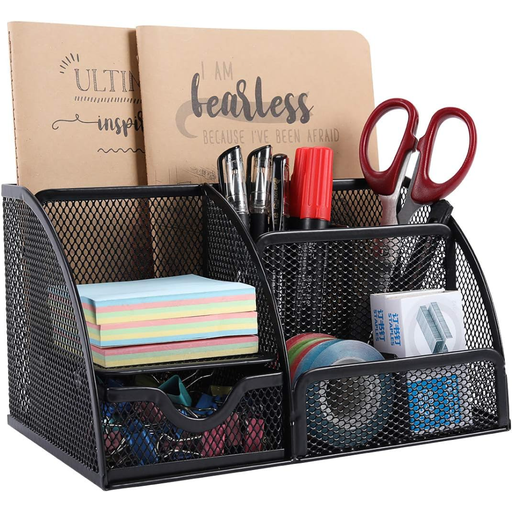
Why we chose it: The ideal solution for those looking for compact yet comprehensive storage for their stationery. Its vertical design frees up maximum desk space, making it an excellent choice for small areas, remote work, or student desk corners.
Its cast iron construction with a powder-coated finish immediately eliminates the risk of flimsy materials. Its seven variously sized compartments are a direct answer to the lack of versatility in some models, allowing you to store everything from pens to an A5 notebook.
A robust metal structure, perfectly stable thanks to its 4 non-slip pads. Its space-to-capacity ratio is unbeatable.
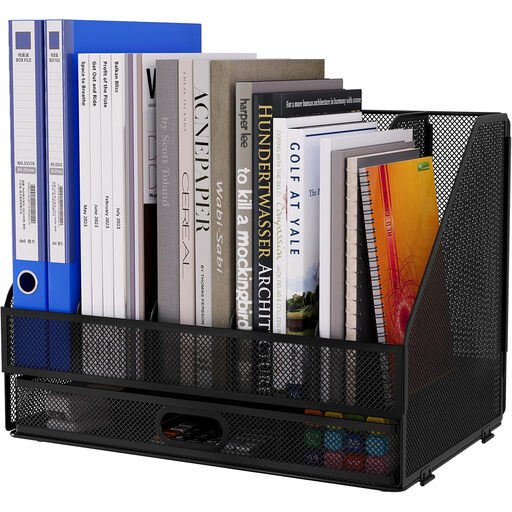
Why we chose it: Designed for professionals or students who juggle a large volume of files, magazines, or binders. It's the ultimate all-in-one solution for centralising paper sorting and storing small supplies.
It tackles the pitfall of poor design head-on by offering 5 vertical compartments perfectly sized for the A4 format. Its metal structure with a powder-coated finish is a guarantee of longevity.
A very large storage capacity for documents, complemented by a practical drawer for accessories. All within a controlled footprint.
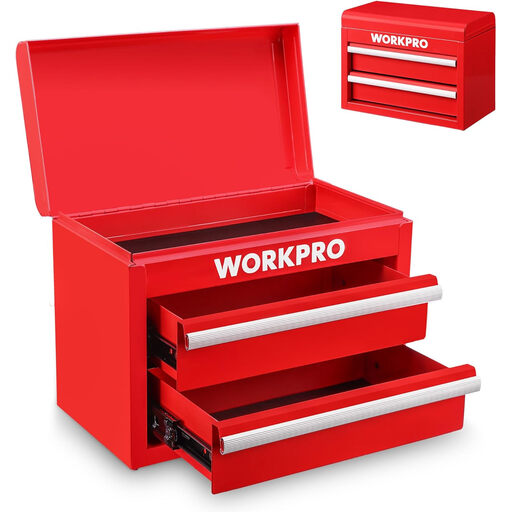
Why we chose it: For those who refuse to choose between sleek aesthetics and flawless functionality. This desk storage box adds a splash of vibrant colour while offering discreet and perfectly organised storage.
It avoids the "style over substance" trap by combining a bold design with solid metal construction. The drawers, mounted on ball bearings, and the internal PVC protective mats are finishing touches that prove function has not been sacrificed.
Drawers that glide smoothly and silently, and removable protective mats to take care of your belongings and the inside of the box.
Discover our complete and updated selection of products that meet our demanding selection criteria.
Longevity primarily depends on the material. For metal, opt for a powder-coated finish, as it's the best guarantee against rust. For plastic, choose well-known polymers like PET or ABS and ensure it has a decent thickness. If you opt for wood, check that it is treated against moisture and isn't just a low-quality particleboard.
When working from home, every square inch counts. Optimisation is therefore key. Favour vertical solutions that use height rather than width: multi-level sorters, stackable modules, or compact all-in-one organisers. Measure your space carefully before ordering and list what you absolutely need to keep within reach to choose the perfect configuration.
Maintenance depends on the material. For metal mesh, a simple wipe with a dry cloth or duster is enough for dust. For plastic, a damp cloth and a little mild soap will do the trick. Avoid harsh chemicals at all costs, as they could damage the finish. Finally, for wood, use a slightly damp cloth and dry it immediately to avoid leaving marks or causing damage.