
Livraison le jour même ou le lendemain

Qualité garantie

Débloquez vos offres de bienvenue: Livraison GRATUITE | Jusqu'à -80 % | 30 jours d'essai gratuits à JoyPlus
Téléchargez l'application
Finding the perfect desk can radically transform the way you work or study. Yet, the process is often fraught with pitfalls. A model that looks perfect in photos can prove disappointing in practice. Before you commit, it's best to know the most common traps to make an informed and lasting choice.
The most common mistakes aren't always obvious. It's easy to be swayed by a stylish design while overlooking details that make all the difference in daily use. Here are three critical points to never neglect:
To avoid these disappointments, focus on a few key parameters. These technical aspects, far from being complex, are the key to a functional and comfortable workspace.
Before you even consider the design, measure the space you have available. Think not only about the desktop surface area but also the furniture's total footprint.
The longevity of your desk depends directly on the quality of its construction.
A desk for remote work must be, above all, functional.
To help you make sense of it all, here are a few common user profiles and the solutions that suit them.
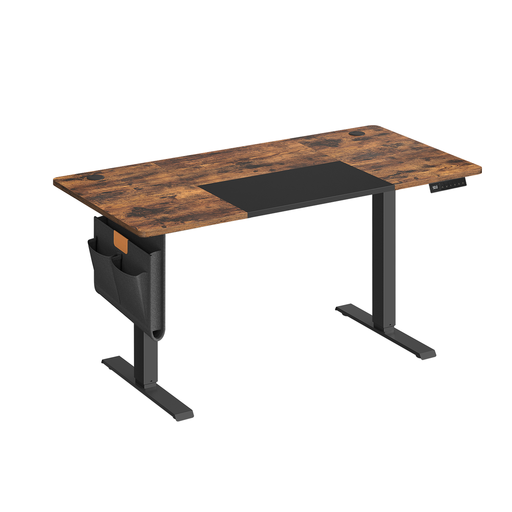
Why we chose it: Ideal for those who spend long days working from home. The ability to easily change posture and save favourite heights is a real daily benefit. The integrated USB-C port and organisational accessories make it a turnkey workstation.
It directly tackles the problem of neglected ergonomics. Instead of a fixed height, it adapts to your body and your tasks, whether you're sitting or standing.
Motorised height adjustment (72-120 cm) with 4 memory presets and a quiet motor. Accessories included (storage bag, hooks).
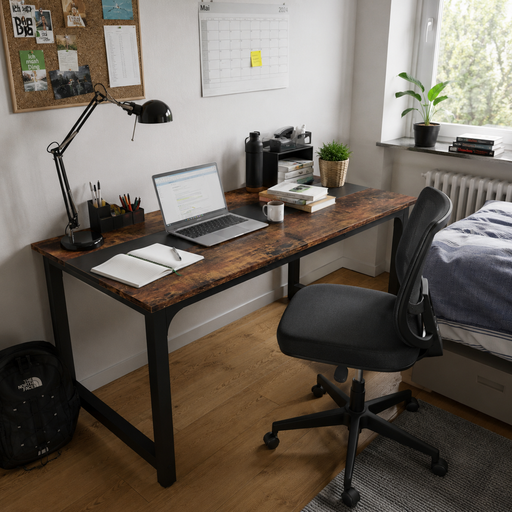
Why we chose it: Perfect for professionals, creatives, or gamers who need a very large work surface. Its generous dimensions allow for multiple monitors and a printer, while still leaving ample space for writing or drawing.
It avoids the "illusion of stability" pitfall. Its reinforced steel frame, wide legs (5 x 5 cm), and design with additional supports ensure excellent rigidity, even under a heavy load.
Very large 160 x 80 cm surface and an ultra-stable frame with a stated load capacity of up to 400 kg. Adjustable feet for perfect stability.
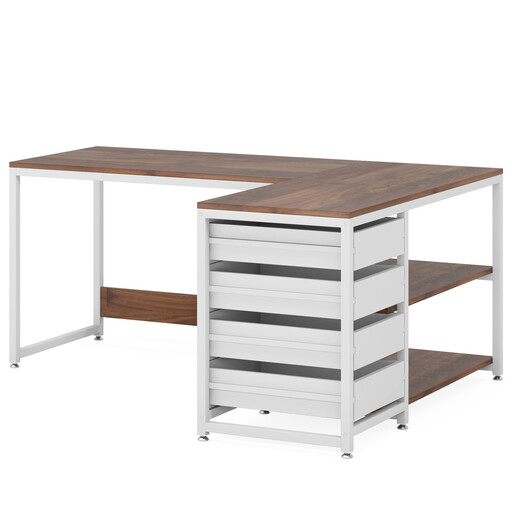
Why we chose it: Designed for those looking to set up a complete office nook in a limited area. Its L-shape makes use of often-wasted corners, and its integrated storage helps keep the desktop clear.
It solves the "impractical storage" problem by offering an all-in-one solution: 4 drawers for documents and supplies, and 2 open shelves for everyday items or a PC tower.
Reversible corner desk design (the storage cabinet can be mounted on the left or right) for maximum adaptability to your room's layout.
Explore our complete, up-to-date selection of products that meet our selection criteria and safety standards.
The standard height for a fixed desk is typically between 72 and 75?cm. Ideally, when you are seated, your forearms should rest flat on the desk, forming a 90-degree angle with your upper arms. Your feet should be flat on the floor. If a fixed height doesn't work for you, an adjustable sit-stand desk is an excellent alternative to find the perfect position.
For those who spend long hours in front of their screen, the ability to alternate between sitting and standing is a major benefit for overall comfort. It helps vary pressure points on the body and breaks the monotony of a prolonged static posture. An electric model with memory presets makes adopting this new habit very easy.
The lifespan of a computer desk depends mainly on the quality of its materials and its maintenance. A desk with a thick steel frame and a high-density MDF top, used under normal conditions, can easily last 5 to 10 years, or even longer. Avoid exceeding the recommended maximum load and clean the surfaces with appropriate products to preserve its appearance.