
Livraison le jour même ou le lendemain

Qualité garantie

Débloquez vos offres de bienvenue: Livraison GRATUITE | Jusqu'à -80 % | 30 jours d'essai gratuits à JoyPlus
Téléchargez l'application
Far more than a simple practical object, a well-chosen designer wall mirror has the power to transform a room: it expands the space, amplifies light, and establishes itself as a central element of your decor. But buying online can sometimes lead to unpleasant surprises. A model that looks spectacular in photos can be terribly disappointing once hung on the wall. To help you see things more clearly, we've broken down the most common pitfalls and the essential criteria to check to make the right choice.
Before falling for a design, beware of these common flaws that can ruin your experience… and your investment.
To avoid these disappointments, focus on a few objective technical points. These are the true guarantors of your future mirror's quality and durability.
A clear and faithful reflection depends directly on the thickness and quality of the glass. For a medium to large mirror, aim for a glass thickness of at least 4?mm. This is the minimum to ensure a flat, rigid surface, thus limiting the risk of distortion. The type of silvering (the reflective layer on the back) is also crucial; silvered glass generally offers far superior clarity and reflectivity than aluminium alternatives.
The frame sets the tone and contributes to the overall sturdiness.
Never underestimate the weight of the mirror, which is listed in its technical specifications. Check that the hanging system (D-rings, mounting plates) is securely integrated into the back of the mirror. It is imperative to use appropriate wall anchors for the type of your wall (drywall, brick, concrete). For a heavy mirror, if in doubt, do not hesitate to seek advice from a professional.
To guide you, here are a few products that suit different styles, while respecting our quality criteria and avoiding the pitfalls mentioned above.
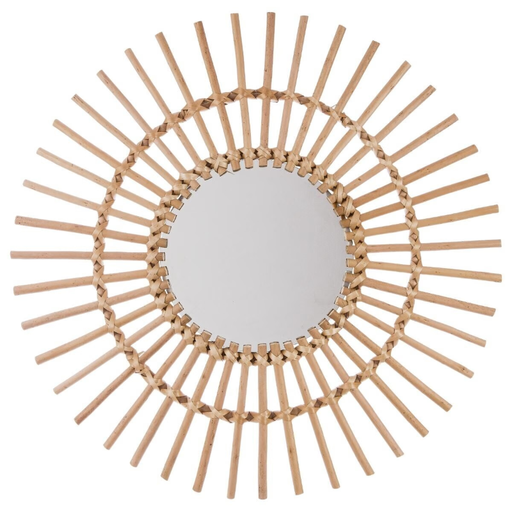
Why we love it: Ideal for warming up the atmosphere with a touch of texture. This sunburst mirror is a decorative piece in its own right that dresses up a wall without overwhelming it, while remaining lightweight and easy to install.
Its dimensions (58 cm diameter) are clearly stated, which avoids the "miniature" effect. Its rattan structure and plywood back ensure good rigidity, thus preventing the distortions typical of low-end models.
The timeless design of the woven rattan creates a subtle play of light and shadow, bringing an artisanal charm and beautiful brightness to the room.
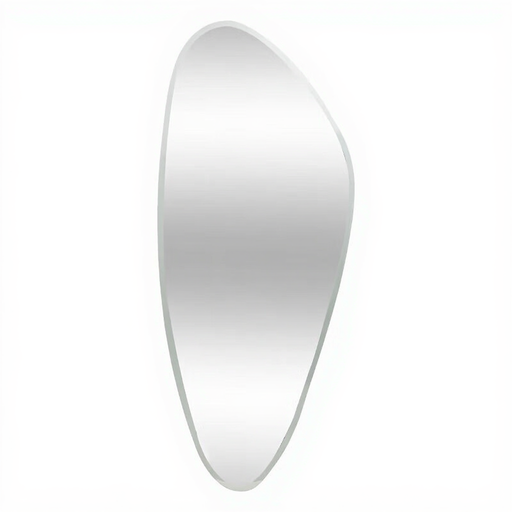
Why we love it: This large wall mirror with its free-form shape stands out as a true centerpiece. Ideal as a living room mirror or entryway mirror, its organic silhouette and bevelled edges give it a sculptural and highly sophisticated touch.
Its spec sheet makes its quality clear: a 4 mm glass thickness and a 6 mm MDF back panel are solid guarantees against distortion. Its weight (8.3 kg) is clearly indicated, prompting you to plan for a robust and secure installation.
It can be hung in four directions (both vertically and horizontally), offering rare installation flexibility to perfectly adapt to your space and preferences.
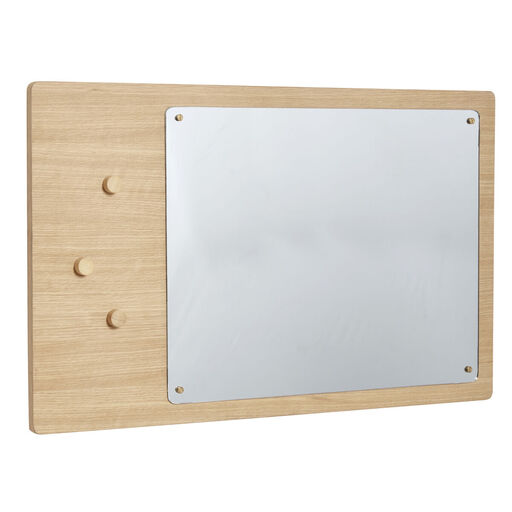
Why we love it: This 2-in-1 object is the perfect solution for those short on space but not on style. It combines an original mirror with a magnetic memo board, making it ideal for an entryway, kitchen, or home office nook.
Its dual function justifies its design and price, positioning it well beyond a mere decorative gadget. The materials (oak veneer, FSC-certified MDF) demonstrate a thoughtful, built-to-last design.
It blends Scandinavian aesthetics with maximum functionality, allowing you to display memos or photos while also providing a practical reflective surface.
Explore our complete, up-to-date selection of mirrors that meet our quality criteria and safety standards.
For a mirror weighing over 5?kg, safety is not optional. Identify the type of your wall (drywall, brick, concrete). Use specific anchors (e.g., Molly bolts for drywall, expansion anchors for hollow walls). Distribute the load across at least two fixing points. Ensure the screws are suitable for the mirror's weight and the chosen anchors. If the mirror weighs more than 10?kg, having a second person to help with handling is highly recommended.
In an entryway, a mirror should be functional. A vertical model at least 70-80?cm high allows you to see your upper body. In a living room, the mirror plays a more decorative role. A large wall mirror (over 100?cm) placed above a sofa or sideboard creates an impression of space and becomes a focal point. For a "gallery wall" effect, don't hesitate to combine several smaller mirrors, such as a round mirror and a free-form mirror.
The organic mirror or free-form mirror is part of a deep-seated trend that favours soft, nature-inspired shapes. Unlike strict geometric forms, it brings a poetic and artistic touch. Its asymmetrical design makes it a sculptural piece that is unlikely to go out of style. It functions less as a trendy object and more as a true work of functional art.