
Livraison le jour même ou le lendemain

Qualité garantie

Débloquez vos offres de bienvenue: Livraison GRATUITE | Jusqu'à -80 % | 30 jours d'essai gratuits à JoyPlus
Téléchargez l'application
Choosing a designer wall light? The equation seems simple: find a shape you like and lighting that works. And yet... behind the aesthetics lie technical subtleties that make all the difference between a successful purchase and a disappointment. A fixture that rusts after the first winter, light that's too harsh for a bedroom, an installation that turns into a headache... these scenarios are unfortunately all too common.
As a product expert for the editorial team, my mission is to guide you beyond appearances. Let's skip the marketing jargon and focus on what's essential. Here are the 3 most common pitfalls and, most importantly, how to avoid them.
To avoid making a mistake, simply keep an eye on a few key points. Far from being mere details, these technical specifications determine the use and lifespan of your designer wall fixture.
The Ingress Protection (IP) rating is a European standard that classifies a device's resistance to dust (first digit) and water (second digit). This is an absolutely non-negotiable criterion.
The lighting effect is just as crucial as the design of the object itself.
The material directly influences the aesthetics and resilience of your light.
Rather than a simple list, we've matched each product to a user profile to help you find the model that truly fits your project.
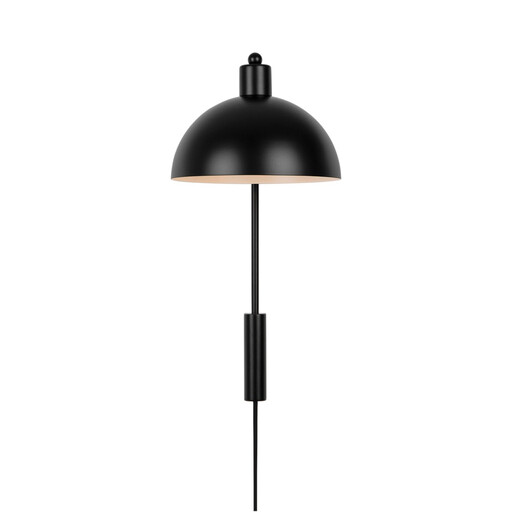
Why we love it: Perfect for creating a soft, warm atmosphere in a living room or as a bedside lamp. Its rounded metal shade and lightweight frame embody the minimalist elegance of Scandinavian design.
Its IP20 rating is clearly stated for exclusive indoor use, preventing any installation errors. The standard E14 socket offers complete freedom in choosing the bulb.
The contrast between the black metal and the textile cable adds a touch of refinement. The switch, placed directly on the cable, is a practical everyday detail.
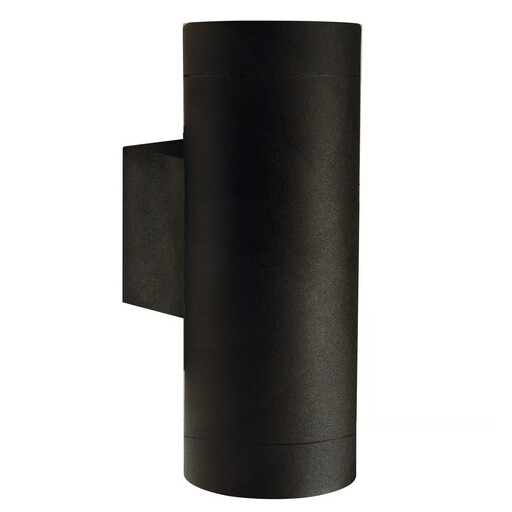
Why we love it: Perfect for illuminating a front door, a driveway, or a carport. Its sleek cylindrical design and black metal finish blend with understated efficiency into modern architecture.
It counters the false promise of durability with its metal construction and IP54 rating, which guarantees reliable protection against dust and water splashes.
Its up and down lighting elegantly sculpts the wall. The two GU10 sockets offer the ability to install dimmable bulbs to adjust the ambience as desired.
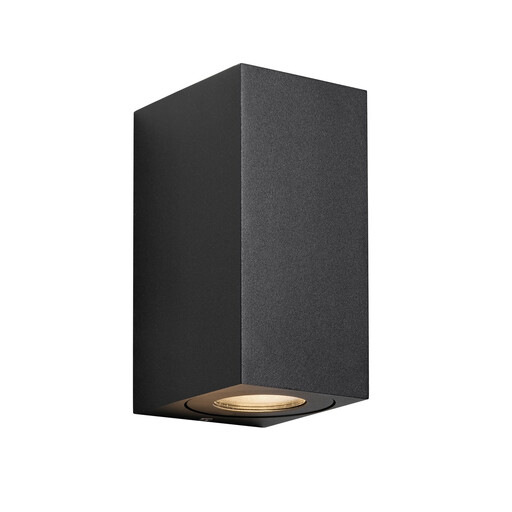
Why we love it: Specially designed for the harshest environments, such as coastal areas where salt air accelerates corrosion. Its cubic, sculptural design is as decorative as it is functional.
This model is part of Nordlux's "Designed For Seaside" range, which uses a specific coating and paint to withstand salt air. The manufacturer even offers a 10-year guarantee on the material.
Its robust aluminium construction and the ability to connect it in parallel to create a coordinated light path on a facade or along a terrace.
Discover our full selection of products that meet these quality criteria and current safety standards.
The difference lies in the protection against dust. An IP44 light is protected against water splashes, which is sufficient for a sheltered location (e.g., under a porch). An IP54 light adds enhanced protection against dust ingress, making it more durable in highly exposed areas. For a facade exposed to the wind, IP54 is therefore a wiser choice.
If the light plugs into an existing socket via a cable (like some indoor models), installation is a breeze. However, for any direct connection to the house's electrical system (hardwiring), it is strongly recommended to hire a qualified electrician. This is a matter of your safety and the compliance of your electrical installation.
No, and this is a classic pitfall. For the dimming function to work, three elements must be compatible:
The only exception: some integrated LED lights offer dimming functions via a standard switch, but this is a specific technology that should be verified in the product sheet.