
Livraison le jour même ou le lendemain

Qualité garantie

Débloquez vos offres de bienvenue: Livraison GRATUITE | Jusqu'à -80 % | 30 jours d'essai gratuits à JoyPlus
Téléchargez l'application
Finding the perfect designer sideboard is like discovering the masterstroke for your interior design puzzle. It needs to complement your decor, offer practical storage, and, most importantly, stand the test of time. However, the market is saturated with models that look appealing but often hide serious flaws. To ensure your dream purchase doesn't turn into a design disaster, here are the pitfalls to watch out for before you pull out your credit card.
To avoid falling into these traps, focus on a few key technical points. They are the true indicators of the quality and durability of your future furniture.
Looks aren't everything. The composition of your sideboard will determine its sturdiness and longevity.
Before you head to the checkout, grab a tape measure.
The hinges, drawer slides, and opening mechanisms are the joints of your furniture. Quality hardware ensures comfortable and long-lasting use. Look for features like soft-close hinges or "push-to-open" systems for a handle-free modern sideboard.
Every interior has its own needs. Here are a few options that cater to distinct profiles, all while meeting the quality criteria we've just discussed.
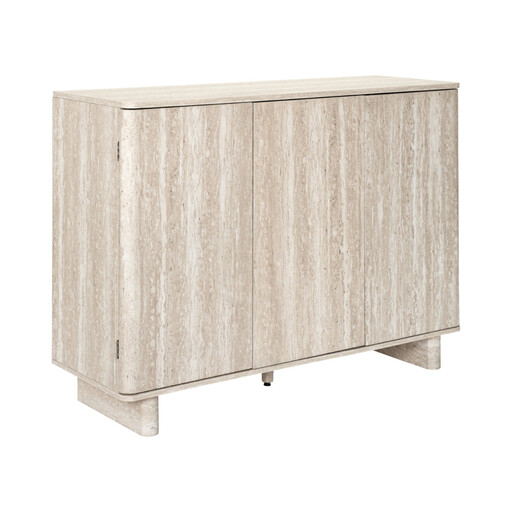
Why we chose it: Ideal for those seeking a minimalist design without sacrificing storage. Its clean lines and lack of visible handles make it a piece that blends seamlessly into a contemporary or Wabi-Sabi decor.
The stone-effect finish is designed to be more durable than a simple paper veneer. The "push-to-open" mechanism is a sign of modern hardware, preventing wear and tear on handles.
Its handleless design and textured facade bring a sophisticated and understated touch, perfect for a modern sideboard that doesn't overwhelm the visual space.
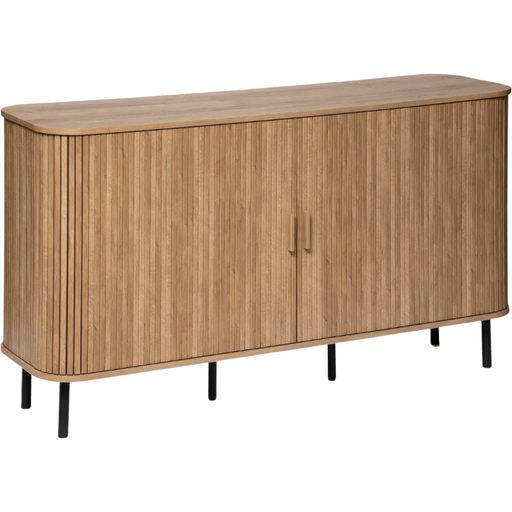
Why we chose it: Perfect for creating a warm and natural atmosphere. This piece embodies the Scandinavian-style credenza with its textured oak veneer and slender black metal legs that give it a lighter feel.
The combination of a fibreboard structure and sturdy steel legs ensures good stability, avoiding the wobbly furniture trap. Its 46 kg load capacity is a good indicator of its solidity.
The 6 internal compartments and 40 cm depth offer generous and functional storage volume, capable of holding dinnerware, books, or linens with ease.
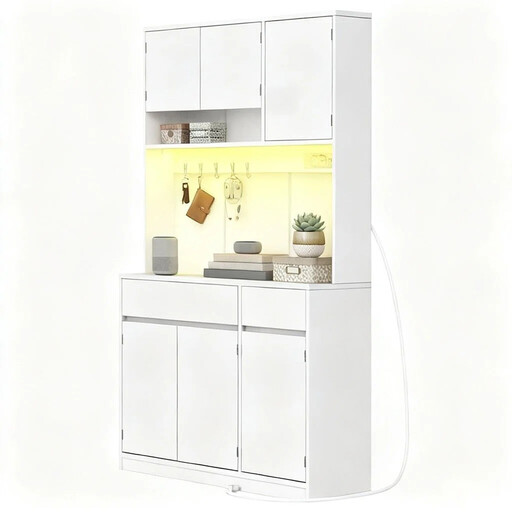
Why we chose it: For those who see furniture as a functional hub. This model goes beyond simple storage by integrating power outlets, USB ports, and LED lighting, making it perfect for a kitchen or a coffee station in the living room.
It bypasses the trap of "single-purpose," inflexible furniture. Its adjustable shelves and integrated features allow it to evolve with your needs, whether in the kitchen, living room, or even an entryway.
The built-in power strip (2 AC outlets + 2 USB ports) and customisable LED strip transform this storage unit into a true functional station for plugging in appliances and creating mood lighting.
We have compiled a complete list of products that meet our strict selection criteria and current safety standards.
To store standard dinner plates (27-32 cm in diameter), aim for an internal depth of at least 35 cm. Don't forget to check that the width of the compartments is sufficient if you plan to store serving dishes.
Consult the product's technical specifications. Look for the total weight of the unit (heavier furniture is often more stable) and the materials used for the back panel. An MDF back panel, even a thin one, is preferable to a simple cardboard backing. The inclusion of an anti-tip kit to secure the unit to the wall is also a sign of safety.
Yes, provided you check two key points. First, ensure the height of the sideboard (usually between 70 and 85 cm) places your screen at a comfortable viewing height. Second, check if the unit has cable management cutouts at the back for a clean installation of your electronic devices. If not, it's fairly easy to drill one yourself in the back panel.