
Livraison le jour même ou le lendemain

Qualité garantie

Débloquez vos offres de bienvenue: Livraison GRATUITE | Jusqu'à -80 % | 30 jours d'essai gratuits à JoyPlus
Téléchargez l'application
A designer side table is the finishing touch that transforms a forgotten corner into a space that's as practical as it is elegant. But with a huge range of options, it's easy to make a misstep: wobbly furniture, low-quality materials, awkward dimensions... disappointments are common. This guide is here to help you avoid the pitfalls and choose the model that will perfectly complement your living room and your lifestyle.
Choosing furniture based on a photo alone can lead to unpleasant surprises. Here are the most common mistakes and our tips for avoiding them.
To ensure a durable and functional purchase, a few key parameters never lie.
The frame is the skeleton of your furniture. For an industrial-style model, opt for a steel frame, which ensures excellent rigidity. For tabletops, solid wood remains a reliable choice, but high-density particleboard (MDF) offers a good compromise in terms of weight and cost, provided the finish (veneer or melamine) is high-quality. A useful indicator is the maximum weight capacity of the tabletop: this information, often provided by manufacturers, speaks volumes about the design's robustness.
To be truly useful, your side table must adapt to your habits and the layout of your room.
Rather than an endless list, we've matched specific models to user profiles. The idea is to help you better picture them in your daily life.
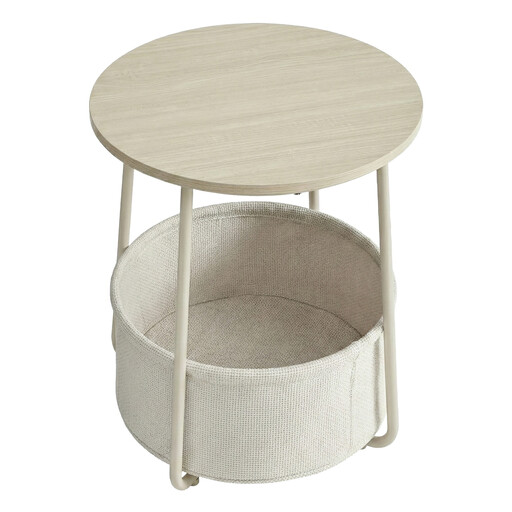
Why it's a match: Ideal for urban apartments where every square inch counts. Its compact design and dual function (table and storage) make it an ally for keeping a living room tidy without sacrificing style.
Its U-shaped steel frame and adjustable feet ensure excellent stability, even on slightly uneven floors, thus avoiding the classic problem of wobbly furniture.
The double-layer fabric basket offers discreet and stylish storage for remotes, magazines, or throws, freeing up the tabletop.
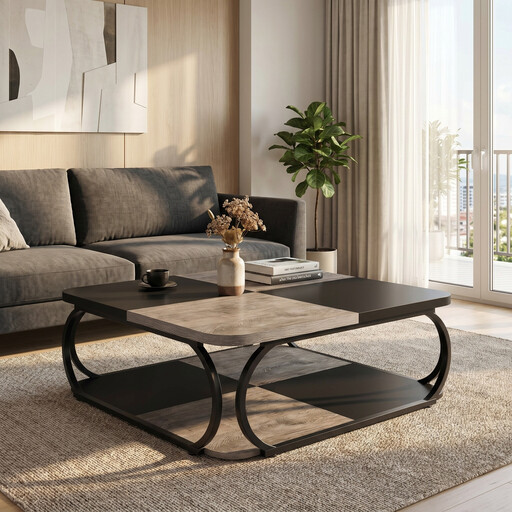
Why it's a match: For those with a more spacious living room who are looking for a statement piece. This model isn't just a side table, but a central coffee table that asserts its industrial style with its metal frame and double-decker design.
The dimension trap is avoided here because its large size is a deliberate feature. It's designed to be a centrepiece. Its robust metal frame and substantial weight give it rock-solid stability.
The two-tier design offers considerable storage space, perfect for books, magazines, and media accessories, while keeping the top surface clear.
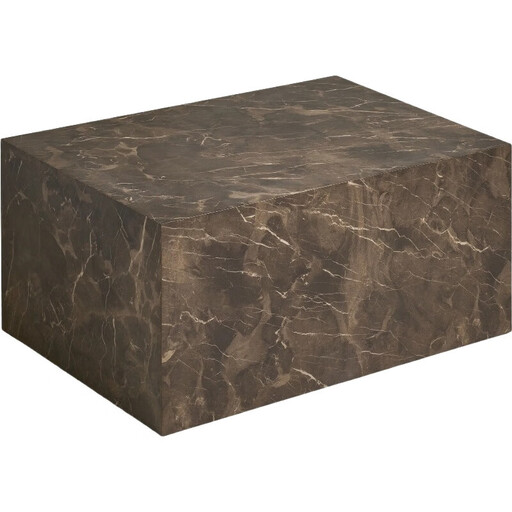
Why it's a match: For those who favour clean lines and minimalist design. Its Scandinavian aesthetic blends harmoniously into modern interiors without visually cluttering the space.
It sidesteps the trap of poor-quality materials by relying on solid construction and neat finishes, designed to last well beyond fleeting trends.
Its versatility. Although labelled as a coffee table, its contained dimensions allow it to serve as a large side table, offering a generous surface for decor and everyday items.
Once you've chosen the furniture, all that's left is to style the walls to perfect the atmosphere.
Discover our selection of wall art and decor, chosen with the same care for their style and quality, and give your interior the final touch.
The recommended height is level with your sofa's armrest, or slightly below it, which is generally between 45 and 55 cm. This allows for easy access to items on the table from a seated position without creating a visual obstruction.
The secret is to play with contrasts. Pair the ruggedness of the metal and raw wood of an industrial side table with softer textures like a plush rug, velvet cushions, or a wool throw. Ensure the colour of the metal (black, bronze, steel) echoes other elements in the room (lighting, picture frames, etc.) to create visual coherence.
Absolutely. It's a two-in-one solution that is particularly effective in small spaces. The basket helps declutter the tabletop by storing remotes, chargers, books, or other small everyday items. It's the very embodiment of storage furniture for a small space that combines form and function.