
Same-day & Next-day Delivery

Quality Guaranteed

Unlock Your Welcome Offers: FREE Delivery | Up to 80% OFF | Free 30-day JoyPlus trial
Download the APP
Choosing a designer planter? It sounds simple, in theory. Yet, behind the glossy photos and marketing promises, disappointment often lurks: a pot that cracks at the first frost, a design that sacrifices your plants' health on the altar of aesthetics, or a material that's falsely "sustainable." As a Product Expert at Joybuy, my mission is to help you read between the lines to make the right choice—one that combines style and intelligence. Here are the most common traps and, more importantly, how to outsmart them.
Nothing is more frustrating than investing in an outdoor planter only to see it crack or fade after the first season. The term "weather-resistant" is often misused. A pot might tolerate rain, but not necessarily the freeze-thaw cycle, which is fatal for porous materials.
A modern planter can be stunning, but if it lacks a drainage hole, it will quickly turn into a graveyard for your plants. Excess water stagnates at the bottom, suffocating the roots and causing them to rot. A successful design must, first and foremost, serve the plant.
With growing environmental awareness, many brands tout their "green" materials. The problem? A recycled plastic pot doesn't always offer the same guarantees. Is it recyclable itself? Is its manufacturing process truly less energy-intensive? Without transparent information, it's hard to distinguish a sincere commitment from a mere marketing ploy.
To avoid falling into these traps, focus on a few technical parameters that make all the difference.
The choice of material dictates everything: aesthetics, weight, sturdiness, and where you can place your pot.
Good drainage is non-negotiable. Always check for a water evacuation system.
A large indoor planter can anchor a room, while a small model can dress up a shelf. Beyond aesthetics, the volume must be suited to your plant's root system. A cramped plant is a plant that cannot thrive. Also, consider the total weight (pot + soil + plant), especially if it's destined for a balcony.
Here are a few options that meet specific needs, taking into account durability and functionality criteria.
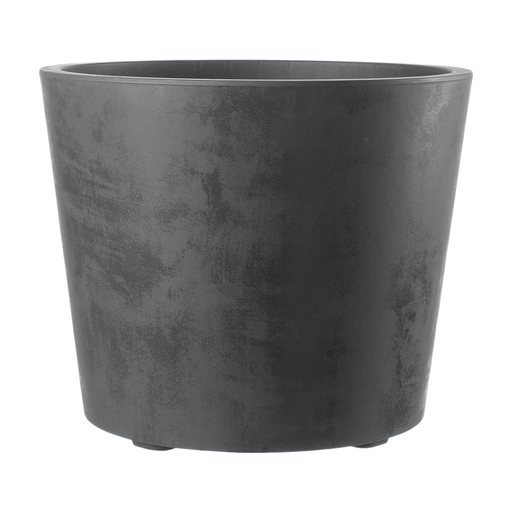
Why we chose it: Ideal for those who want an all-in-one solution for their terrace or large balcony. It combines a large capacity, mobility thanks to its discreet wheels, and water autonomy with its reservoir.
Made from recycled and recyclable plastic, it is clearly designed to be frost and UV resistant, sidestepping the false-durability trap. The water reservoir limits the risk of overwatering.
Its great versatility: mobility, weather resistance, and an integrated watering system make it a reliable and long-lasting ally.
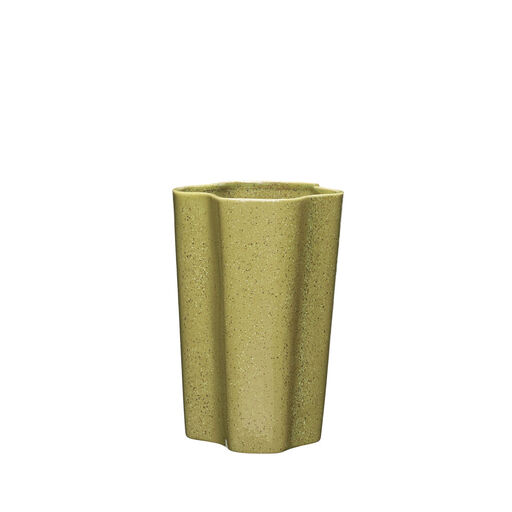
Why we chose it: For those who see a vase as a sculpture. Its organic shape and deep colour make it a statement piece, with or without flowers. It's a decorative object that stands on its own.
There's no pretence here. Made from ceramic for exclusively indoor use, it fully embraces its role as a decorative vase. No false promises of frost resistance.
Its sculptural design and large capacity (5.5 litres) allow for bold floral arrangements or a strong visual presence, even when empty.
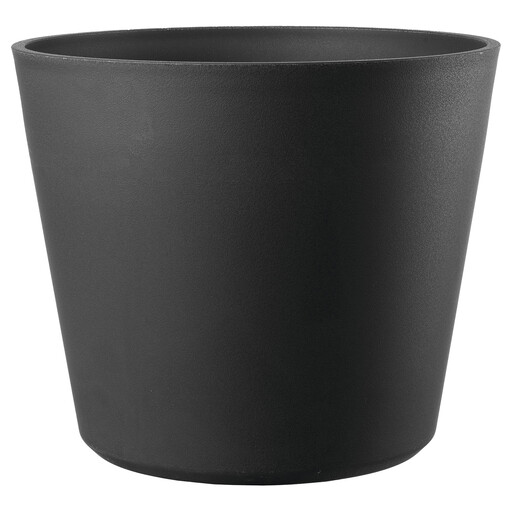
Why we chose it: Perfect as a starter pot or for adding greenery to a balcony or small interior with style, without breaking the bank. Its simple design and anthracite colour fit in anywhere.
It checks all the right boxes: recycled material, frost and UV resistance, and a removable plug for drainage. Proof that an accessible price doesn't have to mean compromising on quality.
Its excellent value for money and its indoor/outdoor versatility thanks to the drainage plug.
We have curated a complete range of products that meet our demanding standards.
Q1: How can I tell if a flower pot is truly frost-resistant? Look for an explicit "frost-resistant" or "frost-proof" claim from the manufacturer. Materials like high-quality injection-moulded plastic or fibre-stone are generally designed for this. Classic terracotta, unless specifically treated and certified, remains a risky bet for the winter.
Q2: Is a pot without a drainage hole unusable for a plant? Not necessarily, but it requires more vigilance. It can be used as a cachepot (where you place a plastic pot with holes inside) or you can add a layer of clay pebbles at the bottom for drainage. However, keep in mind that for most plants, especially outdoors, a drainage hole is the best insurance against drowned roots. Models with a removable plug offer ideal flexibility.
Q3: What is the difference between a flower pot and a decorative vase? A flower pot is designed to hold soil and a living plant; its priorities are therefore durability and drainage. A decorative vase, on the other hand, is intended for holding cut flowers in water or for being displayed as is, like a sculpture. It is often made of more fragile materials (glass, fine ceramic) and is not suitable for direct planting or outdoor use.