
Livraison le jour même ou le lendemain

Qualité garantie

Débloquez vos offres de bienvenue: Livraison GRATUITE | Jusqu'à -80 % | 30 jours d'essai gratuits à JoyPlus
Téléchargez l'application
A designer pendant light can transform a dining room, living room or reading nook. But a beautiful product photo does not guarantee the right choice in the long term. Incorrect dimensions, lighting that is too direct or a complicated installation: certain details can quickly make a light fitting awkward to use every day.
Before comparing a black fabric pendant light, a white Japandi pendant light or a modern chandelier, focus on three criteria: light diffusion, dimensions and electrical specifications. This approach helps you choose lighting that works harmoniously with the room, rather than being guided by aesthetics alone.
A striking lampshade can produce dazzling light if the bulb remains visible or if the material does not diffuse light effectively. Above a dining table or in a living room, it is better to look for soft, even light. Textile, specialist paper or frosted glass can help create gentle, atmospheric lighting, but the result also depends greatly on the bulb you choose.
A very cool-white LED bulb can also completely change the atmosphere. In a space designed for relaxation, a warm colour temperature will generally feel more pleasant. More neutral lighting is better suited to a reading nook or workspace.
A 50 cm diameter pendant light may seem discreet on a product page, then look imposing in a small room. Conversely, a model that is too narrow above a large table may not illuminate the surface sufficiently and could create a visual imbalance.
Measure the table, ceiling height and walkways. Above a table, the bottom of the pendant light should be high enough not to obstruct seated diners or interrupt their line of sight across the table.
The presence of a ceiling hook, cable length and total weight are often treated as secondary considerations. Yet these details directly affect how easy the light is to install. Paper or textile lampshades also require a little care: avoid water, abrasive products and significant sources of heat.
The E27 cap is widely used and makes replacing the bulb straightforward. However, check the maximum permitted wattage in the product details. The Tinto pendant light, for example, accepts an E27 bulb of up to 15 W and can be used with a dimmable bulb, provided it is compatible with the dimmer.
The term ‘dimmable’ therefore does not mean that every bulb can be used with a dimmer. You need to pair a bulb designed for dimming with a compatible control device.
An IP20 rating is intended for indoor use in a dry environment. It is not suitable for a bathroom, terrace or area exposed to splashing water. Class II, also known as double insulation, indicates that the appliance is designed without a mandatory earth connection, in accordance with its electrical construction. Always follow the instructions and switch off the power supply before carrying out any work.
For purchases in France, also check that the required regulatory information is provided, that instructions in French are included where necessary, and that the manufacturer’s or the responsible person’s contact details in the European Union are available. These points do not remove the need to have the installation carried out in accordance with the relevant requirements.
A black fabric pendant light creates a striking contrast against pale walls and fits easily into a contemporary interior. A white Japandi pendant light focuses more on visual lightness and natural textures. Delicate materials such as paper or Tyvek must be kept away from flames and sources of heat. Where recommended in the instructions, choose an LED bulb that produces little heat.
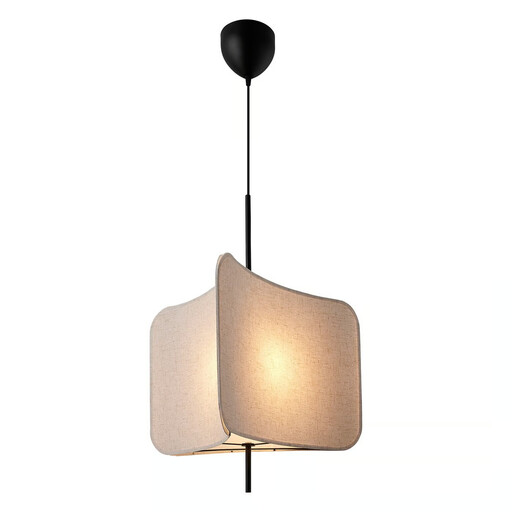
Why this choice suits this profile : With its black textile design and 50 cm diameter, it creates a well-defined pool of light above a table or in a living-room corner, without the need to add multiple light sources.
The product details specify indoor IP20 use, an E27 cap, a maximum power of 15 W and compatibility with a ceiling hook. This information lets you check compatibility before buying.
Textile lampshade, 200 cm black textile cable, one E27 lampholder, bulb not included, and dimming possible with a suitable bulb.
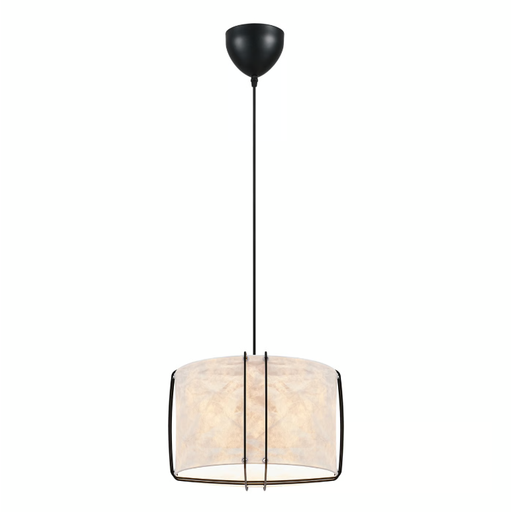
Why this choice suits this profile : Its lightly crinkled lampshade and slender structure fit naturally into a Japandi interior, whether in the living room, bedroom or reading area, where a discreet visual presence is preferred.
The material and care instructions need to be taken seriously : dry-clean only, and protect from moisture, direct sunlight, flames and strong sources of heat.
Japandi style, diffused light and a set comprising the lampshade and pendant fitting, combining Tyvek and metal.
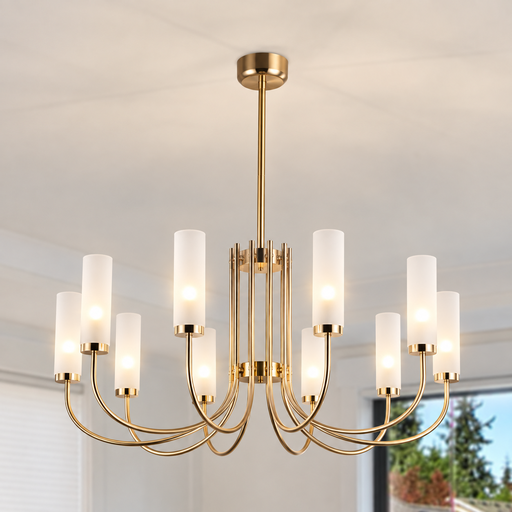
Why this choice suits this profile : Its ten light sources are suitable for large rooms or tables that need a stronger focal point than a living-room pendant light fitted with a single lampholder.
The number of light sources and the G9 cap are stated in the title. It is still essential to check bulb compatibility, available height and total wattage before installation.
Ten lights, a gold metal finish, frosted tubes and a format suited to a generous lighting arrangement.
The term E27 ceiling light is sometimes used for similar products. A pendant light is nevertheless distinguished by its cable or rod, as well as by its adjustable height, depending on its design. So check the mounting system rather than relying solely on the product name.
We have put together a complete, real-time updated list of products that fully meet these demanding selection criteria and European safety regulations.
The ideal height depends on the light fitting, the table and the flow of movement through the room. Measure the distance between the tabletop and the bottom of the lampshade to preserve clear visibility between diners. An adjustable cable makes positioning easier, but you should still check that the ceiling fixing is suitable.
It depends on the bulb’s wattage, how many hours it is used and the electricity tariff. An LED bulb generally uses less energy than an equivalent model based on older technology. With a dimmable pendant light, a dimmable bulb can also reduce the light output when maximum brightness is not needed.
Switch off the power supply before carrying out any maintenance. Gently dust the lampshade with a soft brush or a vacuum cleaner set to low power, without pressing on the material. For paper or Tyvek, avoid moisture and household cleaning products. Consult the instructions before removing any part of the light fitting.