
Livraison le jour même ou le lendemain

Qualité garantie

Débloquez vos offres de bienvenue: Livraison GRATUITE | Jusqu'à -80 % | 30 jours d'essai gratuits à JoyPlus
Téléchargez l'application
A designer pendant light can set the tone for your entire interior, but looks alone do not guarantee the right choice. An oversized light can obstruct movement, poorly diffused light can cause glare, and an unsuitable lampholder can make replacing the bulb more difficult.
Before choosing a ceiling pendant light, three common pitfalls are worth avoiding:
For a dining room pendant light, measure the table, ceiling height and available space around the fitting. A long model, such as a three-light pendant, will naturally work well above a rectangular table or kitchen island. Conversely, a compact hanging light fits more easily in a hallway, bedroom or reading nook.
Above a table, the bottom of the pendant should remain high enough not to block the diners’ line of sight. The ideal height depends on the room, the occupants’ height and the volume of the lampshade. Also remember to check the cable length: several models featured here have a 180 to 200 cm cable.
The lampholder determines the type of compatible bulb and the maximum permitted wattage. The most common formats in this selection are:
Always observe the maximum wattage specified by the manufacturer. For example, the Tinto model accepts an E27 bulb of up to 15 W, while the Grant 15 pendant with an E14 fitting is limited to 10 W. With a paper or textile lampshade, choose an LED bulb, which produces little heat, and follow the safety instructions carefully.
A pendant light compatible with a dimmer generally requires a dimmable bulb as well as a compatible dimmer. The term ‘dimmable’ does not mean that the bulb is included: several products are sold without a light source.
The material directly affects how the light is diffused and how easy the fitting is to maintain. An opal glass pendant partially conceals the light source and helps create more even illumination. Fabric adds a warm, tactile finish, but requires gentle dusting. Tyvek paper and paper lampshades must be kept away from moisture, flames and sources of heat.
The models featured have an IP20 rating, suitable for indoor use in a dry room. They are therefore not intended for bathrooms exposed to splashes of water. For a kitchen pendant light, also avoid installing it too close to a sink or hob without first checking the manufacturer’s recommendations.
A black pendant light can accentuate a contemporary interior, while a gold or brass model works particularly well with an Art Deco interior or modern glamorous style. Japandi style focuses on simple shapes, textured materials and a carefully balanced visual presence. For a living room pendant light, also consider the colours of your walls and furniture to avoid an overly stark contrast.
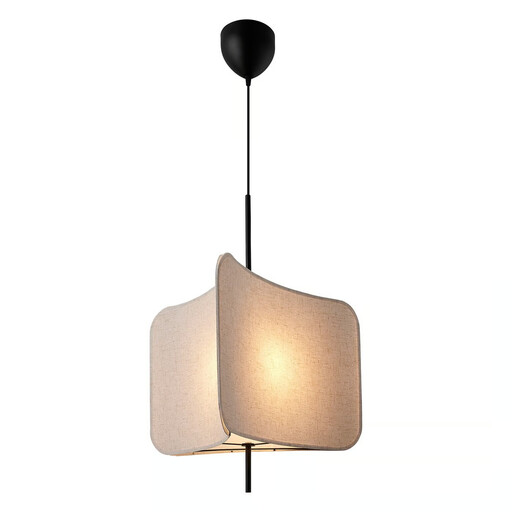
Why this choice suits this profile: With its 50 cm triangular lampshade and black fabric cable, it creates a striking focal light above a table or in a living room corner. It can be installed using a ceiling hook.
The dimensions, E27 lampholder and maximum wattage of 15 W are clearly specified. The bulb is not included, so there is no risk of assuming that a light source is supplied.
Textile lampshade, diffused light, 200 cm cable and dimmer compatibility when used with a suitable bulb.
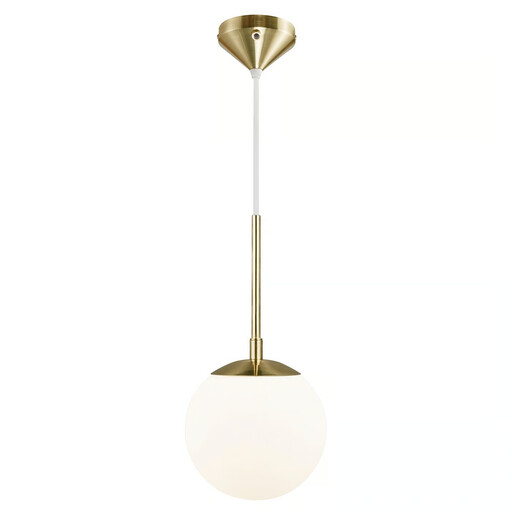
Why this choice suits this profile: Its mouth-blown opal glass and brass detailing add a decorative finish to a hallway, dining room or living room seeking a touch of glamour without going overboard.
The product details specify an E14 lampholder, a maximum wattage of 10 W and a fixing that is incompatible with a standard hook. Installation must therefore be planned in advance.
Opal glass, brass-coloured metal structure, 15 cm format and the option to combine it with other pendants from the range.
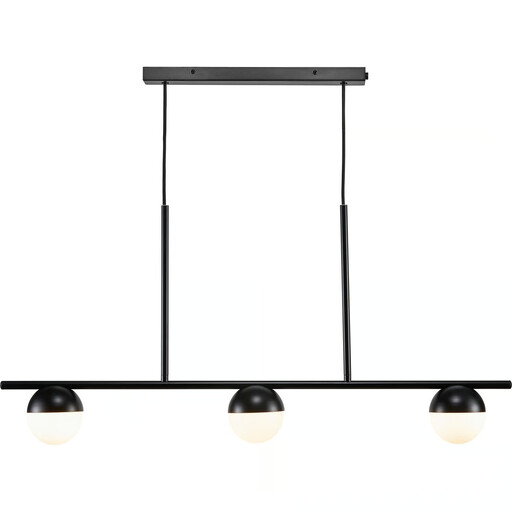
Why this choice suits this profile: At 90 cm long, it works well above a large table or worktop. Its three light sources spread illumination across a wider area.
The length, number of lampholders and maximum wattage of 5 W per source are specified. The fixing is not designed for a ceiling hook.
Three G9 lampholders, matt black metal and mouth-blown opal glass diffusers, with possible variations in texture.
Before drilling into the ceiling, check the type of surface, the weight of the light fitting and the fixing supplied. A model connected directly to the mains must be installed with the power switched off and, where recommended in the instructions, by a qualified electrician. Glass pendant lights should be handled carefully during assembly.
For care, use a soft, dry cloth. Dust paper and textile shades gently, without water. Avoid abrasive products on opal glass and metal. Always replace the bulb with the power switched off and never exceed the specified wattage.
We have put together a complete, real-time updated selection of products that meet these demanding criteria and European safety standards.
Start by measuring the table and the available circulation space. A long multi-light pendant suits a rectangular table, while a single light fitting works better with a round table or smaller surface. Also check the adjustable height, light diffusion and the space taken up by the lampshade.
Consumption mainly depends on the bulb, its wattage and how long it is used. E27, E14 or G9 LED bulbs generally help keep energy consumption moderate, while allowing you to adjust the colour temperature and brightness to suit your needs. Check the maximum wattage supported by the light fitting before buying.
Its lifespan depends on the quality of the materials, frequency of use, care and correct bulb replacement. A damaged cable, lampholder or lampshade must be checked before the fitting is switched on again. To preserve its appearance, limit the fitting’s exposure to moisture and avoid harsh cleaning products.