
Livraison le jour même ou le lendemain

Qualité garantie

Débloquez vos offres de bienvenue: Livraison GRATUITE | Jusqu'à -80 % | 30 jours d'essai gratuits à JoyPlus
Téléchargez l'application
Choosing the right designer pendant light can transform a room, elevating it from a mere functional space to a living area with a sophisticated atmosphere. However, with the sheer abundance of models available, the task can quickly become a headache. Between flattering photos and marketing jargon, it's easy to fall into traps that make a light fixture seem stunning on paper but disappointing in practice. Before you make a purchase, let's review the most common mistakes to help you make a truly informed choice.
The 3 Pitfalls to Avoid When Buying a Pendant Light:
To navigate the jungle of light fixtures, it's best to focus on a few technical criteria that guarantee a blend of aesthetics and functionality.
The way light is diffused depends directly on the shade's material and shape. This is the number one criterion for creating the right atmosphere.
For your designer pendant light to integrate harmoniously, a few rules of proportion are essential.
Before you check out, one last technical check is essential.
To illustrate these tips in practice, here is a selection of models that cater to different needs and styles.
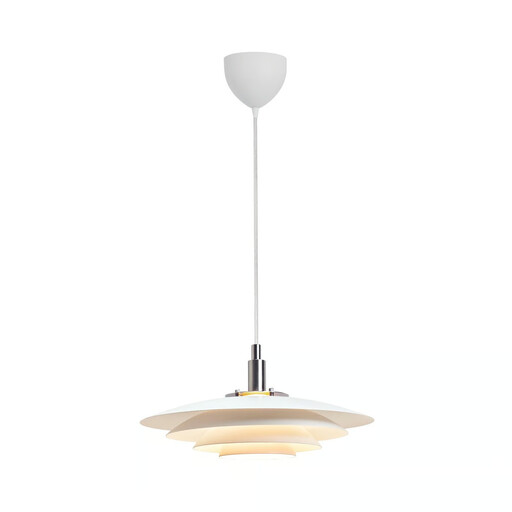
Why this model is a match: The ideal choice for fans of a minimalist and functional aesthetic. This fixture embodies the essence of Scandinavian design. Its clean shape and white metal finish will blend perfectly into a living room or over a contemporary dining table.
Its layered shades conceal the bulb and direct light downwards, eliminating any risk of glare. Its compatibility with a ceiling hook also greatly simplifies installation.
It provides soft, diffused lighting, optimised by the white interior of the reflectors, all in a timeless design that transcends trends.
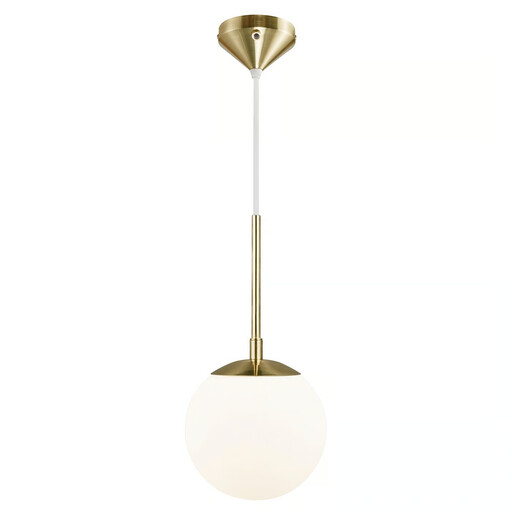
Why this model is a match: Ideal for those who want to embrace trends with refinement. The combination of brass and white opaline glass creates a decorative piece that adds a touch of modern glamour, whether used alone or in a cluster.
The white opaline glass dome ensures soft, diffused light, preventing any visual discomfort. Its compact dimensions (15 cm diameter) make it a perfect choice for accent lighting, thus avoiding the oversized fixture trap.
The glass is mouth-blown, giving each piece a unique character with slight variations—a true hallmark of its artisanal craftsmanship.
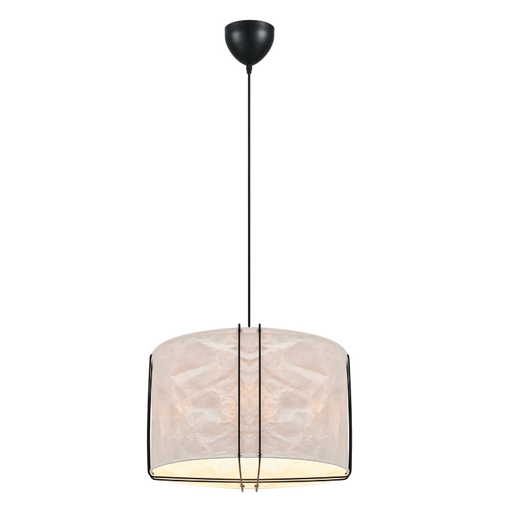
Why this model is a match: Perfect for anyone looking to create a soft, organic atmosphere. This Japandi-inspired pendant, with its slightly crumpled-looking shade, is ideal for bringing a touch of poetry and serenity to a living room or bedroom.
The paper-like shade acts as an excellent diffuser for warm, glare-free light. Its lightness and suspension by thin metal wires make it an object that seems to float in space without weighing it down.
Its Japandi design combines Nordic minimalism with Japanese philosophy for a harmonious and decidedly contemporary aesthetic.
Discover our full selection of products that meet our quality criteria and safety standards.
The golden rule is to position the lowest point of the pendant between 75 and 90 cm above the tabletop. This height effectively illuminates the surface without obstructing the view of your guests or causing glare. Of course, this measurement should be adjusted on a case-by-case basis, depending on the bulb's wattage and the shade's shape.
Not always. It's essential to check the technical specifications. Many designer fixtures, especially the most minimalist ones, are not designed to be attached to a standard ceiling hook (like a DCL box). They require direct mounting via drilling. Look for the mention “Compatible with ceiling hook.” Good to know: most models are Class 2 (double insulated), making them compatible with electrical systems that lack a ground wire at the light point—a common scenario in older buildings.
For a central pendant, here's a decorator's tip: add the length and width of the room (in metres), then multiply the result by 8. This will give you a good estimate of the ideal diameter for your fixture (in centimetres). For example, for a 5 m by 4 m living room: (5 + 4) x 8 = 72 cm. Of course, this is just a guideline; remember to adapt it to your ceiling height and the overall volume of your furniture for a perfectly harmonious result.