
Livraison le jour même ou le lendemain

Qualité garantie

Débloquez vos offres de bienvenue: Livraison GRATUITE | Jusqu'à -80 % | 30 jours d'essai gratuits à JoyPlus
Téléchargez l'application
Choosing a designer pendant light can transform a room, elevating it from a purely functional area to a space with genuine character. However, the market is flooded with models that, while appealing in photos, often prove disappointing in practice. As the Head of Product Recommendations at Joybuy, my mission is to help you navigate the options and find that hidden gem that will beautifully enhance your interior for years to come. Before you make a purchase, let's review the most common pitfalls to avoid.
To avoid these disappointments, focus on a few objective technical criteria. It's the only real guarantee of a successful purchase.
The way light is cast shapes the atmosphere of your room. There are three main types:
A pendant light should be proportional to the space. For a dining table, the fixture's diameter should be about half to two-thirds of the table's width. The ideal height is between 75 and 90 cm (30-36 inches) above the tabletop, so it doesn't obstruct your guests' view. Always check that the cable length is adjustable for a perfect fit with your ceiling height.
These two standards are crucial for your safety:
To illustrate our points, here are a few models that tick all the boxes, suited for different styles and needs.
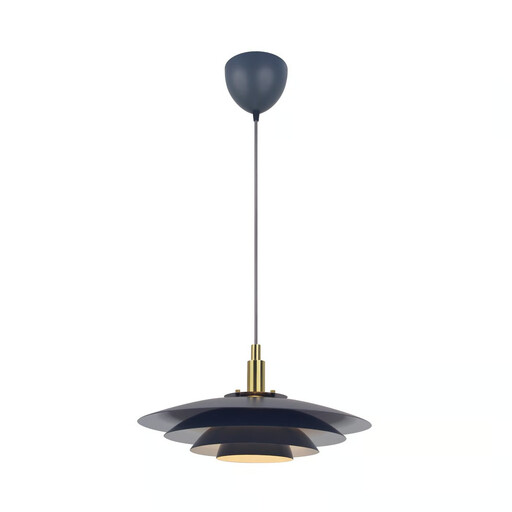
The editor's verdict: This fixture is the quintessence of the Scandinavian pendant style. Its clean, functional design is crafted to create a soft, inviting atmosphere, ideal for a living room or dining room.
Its layered shades conceal the bulb to diffuse a soft light, eliminating any risk of glare. Compatible with standard fixture boxes and rated as Class II, its installation is a breeze.
It casts a uniform light, optimised by a white interior that maximises reflection. Perfect for creating a welcoming atmosphere.
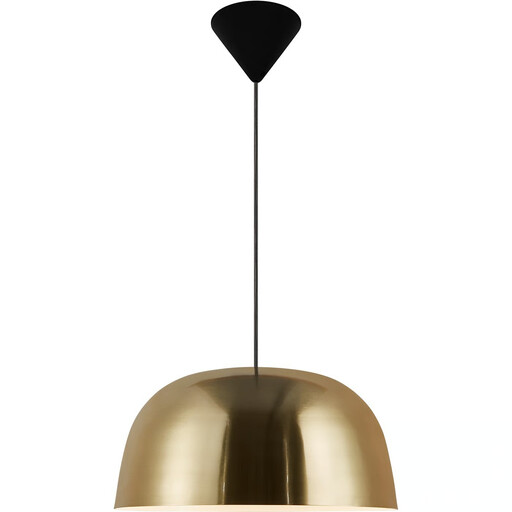
The editor's verdict: For lovers of the brass chandelier trend and Art Deco style, this model brings a touch of warmth and sophistication. Its rounded shape and metallic finish make it a true statement piece.
The pendant is made entirely of metal with a quality brass finish, far from a cheap, "painted-on" look. Its downward-facing light remains functional and limits glare in the room.
It provides visual warmth and a touch of elegance that pairs just as well with contemporary decor as it does with more classic styles.
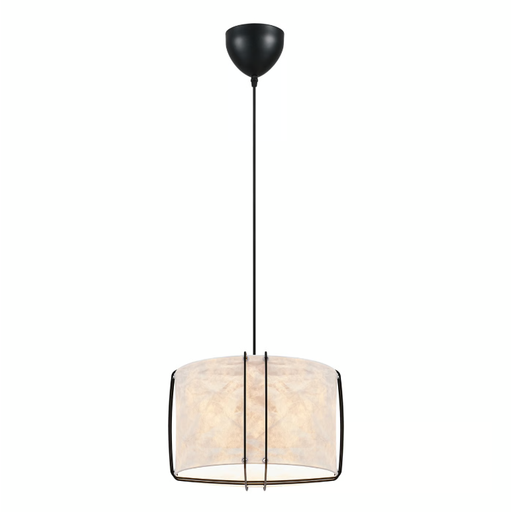
The editor's verdict: This Japandi lamp merges Nordic minimalism with the Japanese wabi-sabi aesthetic. Its textured paper shade and airy structure create an organic and soothing atmosphere.
The paper shade is designed to provide perfectly diffused light with no glare. The product page also recommends using low-heat LED bulbs, eliminating any risk associated with the material.
It creates a particularly soft and poetic lighting mood, perfect for a bedroom or a reading nook where calm and serenity are paramount.
Discover our complete selection of light fixtures that meet our criteria for quality and safety standards.
The golden rule: leave 75 to 90 cm (30-36 inches) of space between the bottom of the fixture and the tabletop. This perfectly illuminates the surface without blocking your guests' line of sight. Remember to check that your pendant's cable is adjustable.
Yes, and it's often an excellent choice. Integrated LEDs offer an exceptional lifespan (often over 25,000 hours) and minimal energy consumption. Some models, like the Clyde pendant, even allow you to vary the brightness (a dimmable function) with a standard wall switch. The only drawback: the light source cannot be replaced at the end of its life.
The number one rule: always turn off the power supply before any handling.