
Livraison le jour même ou le lendemain

Qualité garantie

Débloquez vos offres de bienvenue: Livraison GRATUITE | Jusqu'à -80 % | 30 jours d'essai gratuits à JoyPlus
Téléchargez l'application
Choosing a designer pendant light is about more than just love at first sight. It's a decision that will shape the atmosphere, ergonomics, and character of your room for years to come. The problem? The market is flooded with models that look sublime but often hide design flaws or low-end materials. To help you make an informed decision, we've broken down the common mistakes to avoid and the criteria that truly make a difference.
The wrong light fixture can quickly become a daily regret. Here are the three most common pitfalls that turn a promising purchase into a disappointment.
To make the right choice, you need to focus on a few key technical parameters that don't lie. These elements will allow you to judge a product beyond its looks.
The visual balance of your living room pendant light or kitchen fixture depends on the right proportions.
The type of light is as important as the design. It must be adapted to the room's function.
The material sets the tone: it defines not only the style but also the durability of your pendant.
To move from theory to practice, here are some models that tick all the right boxes, for specific profiles and needs.
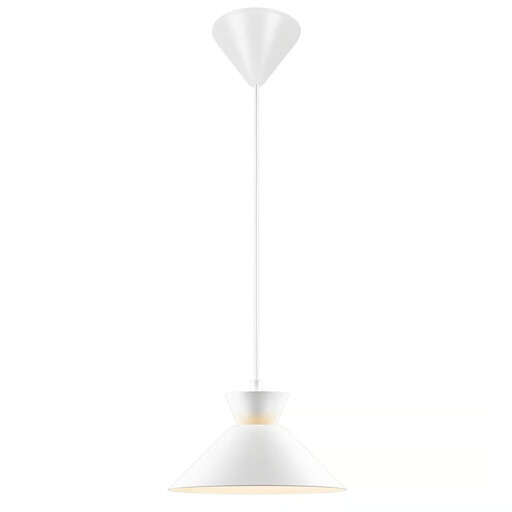
Why it's a perfect match: This profile swears by clean lines and Nordic aesthetics. With its 1950s-inspired geometric shape, the DIAL pendant fits perfectly into a contemporary kitchen or living room without ever overwhelming the space.
Its open shade ensures a wide diffusion of light, avoiding the pitfall of overly focused lighting. Its metal structure is a guarantee of durability, a far cry from painted finishes that age poorly.
Timeless Scandinavian pendant design. Beautiful decorative upward light effect. Compatible with dimmable bulbs.
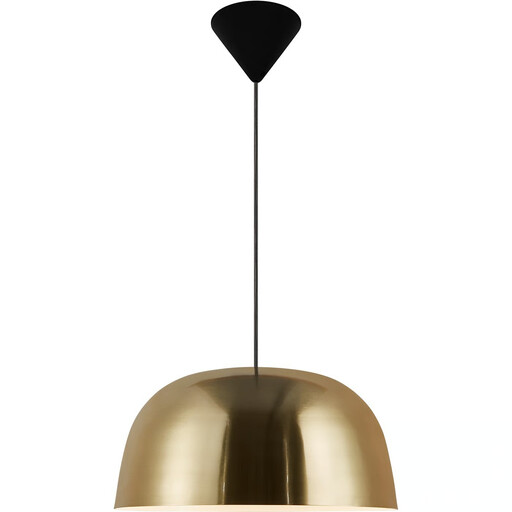
Why it's a perfect match: Drawn to noble materials and an Art Deco vibe, this profile is looking for the perfect centerpiece for their dining room. The CERA pendant, made entirely of brass, is the perfect answer: it brings warmth, character, and a touch of exclusivity.
No imitations here: the brass is not just a finish but the main material, a guarantee of excellent longevity. The shape of the shade concentrates light downwards for convivial, glare-free illumination.
Noble material (brass) for a chic and warm atmosphere. Direct lighting, ideal above a table. Modern take on Art Deco style.
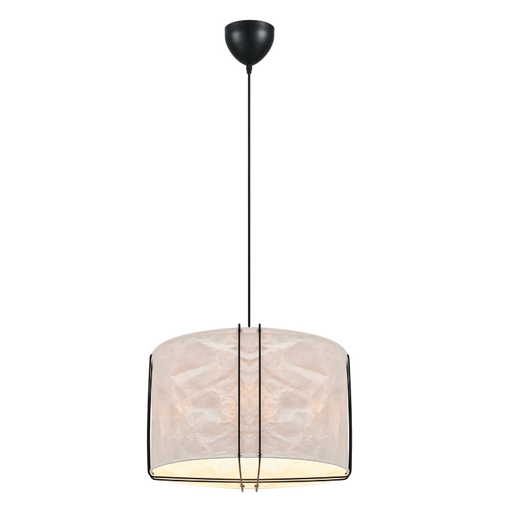
Why it's a perfect match: This profile loves interiors where Scandinavian minimalism meets Japanese serenity. With its crinkled paper-like shade and slender metal frame, the CARDINE pendant is the perfect embodiment of Japandi style.
Its Tyvek shade is designed to diffuse a soft, pleasant light with no risk of glare. Despite its generous diameter (50 cm), its visual lightness avoids the "bulky" effect and the pitfall of poor proportions.
Ultra-trendy Japandi aesthetic. Diffused and enveloping light. Organic and airy texture.
Discover our complete collection of light fixtures that meet our quality criteria and current safety standards.
1. At what height should I hang a pendant light over a dining table? The rule of thumb is to leave a space of 75 to 90?cm between the lowest point of the fixture and the tabletop. This is ideal for properly illuminating the table without blocking your guests' line of sight.
2. How do I choose the right size pendant for a living room? For a living room pendant light, it's all about volume. Here's a pro tip: add the length and width of the room (in metres), then multiply the result by 8. This will give you an approximate diameter in centimetres. For a 4?m x 5?m living room, that's: (4+5) x 8 = 72?cm. It's an excellent starting point, which you can then refine according to your preferences!
3. Are designer pendants compatible with LED bulbs? Absolutely. Virtually all modern pendants, including models from Nordlux, are designed for LED bulbs with a standard base (E27, E14…). It's even recommended for their low energy consumption and long lifespan. Just remember to check the maximum wattage supported by your fixture before choosing the bulb.