
Livraison le jour même ou le lendemain

Qualité garantie

Débloquez vos offres de bienvenue: Livraison GRATUITE | Jusqu'à -80 % | 30 jours d'essai gratuits à JoyPlus
Téléchargez l'application
Choosing a designer pendant light isn't just a matter of taste. It's a decision that will shape a room's ambience, define your visual comfort, and add the finishing touch to your decor. The problem is, the market is flooded with tempting models that sometimes hide serious flaws. To prevent an impulse buy from turning into a costly regret, it's crucial to know the pitfalls to avoid.
As a Product Expert at Joybuy, my mission is to help you see things more clearly. Here are the three mistakes you absolutely must not make:
black metal pendant or brass pendant finish might look elegant in photos, but low-quality finishes can chip or tarnish in no time. The same goes for budget-friendly paper or fabric lampshades, which risk warping or yellowing over time.To make the right choice, focus on a few technical criteria that determine both the effectiveness and the lifespan of your light fixture.
The way light is distributed is a fundamental criterion. There are generally three main types of lighting:
The diameter and height of your pendant light must be chosen carefully, based on the room and its use.
The choice of materials isn't just an aesthetic one: it also determines the longevity of your pendant light.
To help you better visualise how to apply these criteria, here is our curated selection for different profiles and needs.
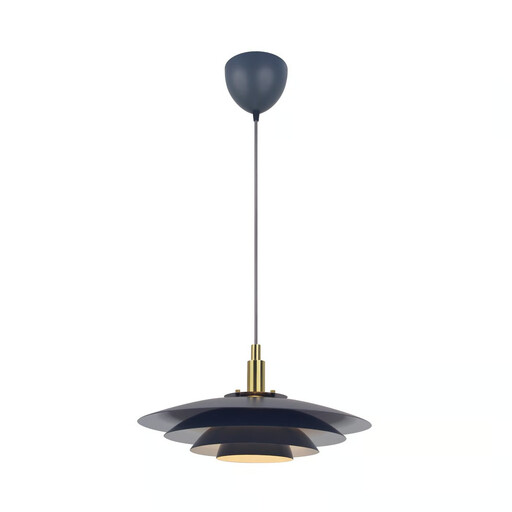
Why we chose it: Perfect for fans of Scandinavian simplicity. Its soft lines and ultra-functional design create a warm atmosphere, ideal for a contemporary living room or dining room.
Its structure of overlapping slats is designed to conceal the bulb and diffuse a soft, glare-free light.
The white interior of the shades optimises light reflection, ensuring excellent light output while maintaining a cosy atmosphere.
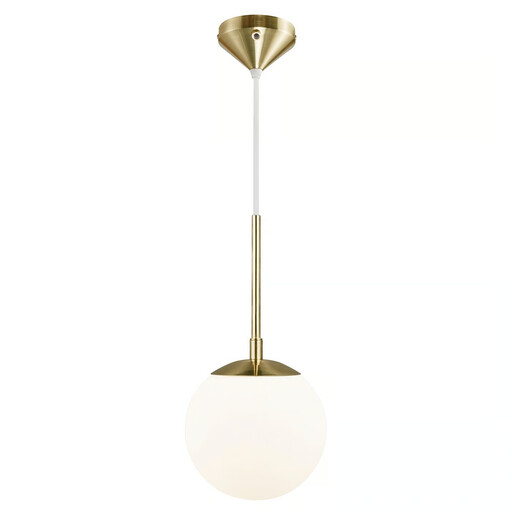
Why we chose it: For those who want a strong, glamorous statement piece. The combination of brass and opal glass is right on trend and adds instant character.
No imitations here: the genuine metal with a brass finish and the mouth-blown glass guarantee an aesthetic and longevity far superior to low-end models.
The white opal glass dome diffuses a soft, uniform light, while its compact size allows it to be used alone or in a cluster for a dramatic effect.
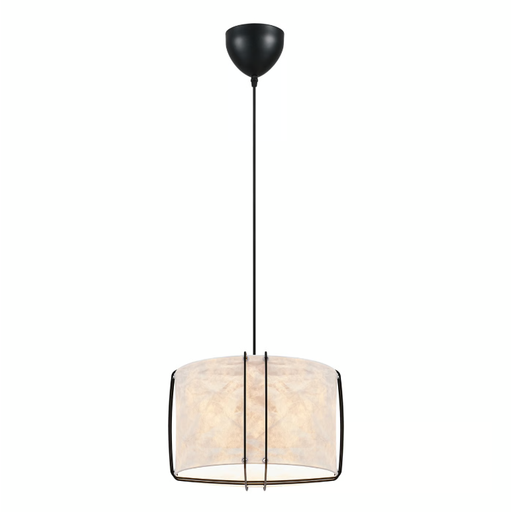
Why we chose it: The perfect partner for fans of the Japandi pendant style seeking a zen atmosphere and an organic aesthetic. It combines the airy lightness of paper with the finesse of metal.
The lampshade is made of Tyvek, an innovative material that has the delicate look of crumpled paper but with added strength and durability.
Its unique texture and airy shape create an exceptionally soft and warm diffuse light, ideal for a bedroom or a reading nook.
Discover our full selection of light fixtures that meet our quality criteria and European safety standards.
As a general rule, the base of the pendant should be 75 to 90 cm from the tabletop. This is the ideal height to properly light the surface without obstructing the line of sight of your guests or causing glare.
It all depends on your ceiling height and the room's surface area. For a standard ceiling (2.50 m), allow for at least 2.15 m of clearance under the fixture to not obstruct traffic. A tip for the diameter: add the length and width of the room (in metres), then multiply by 8. This will give you an approximate diameter in centimetres, which you can adjust based on the desired effect.
Absolutely. Almost all modern pendants are compatible with LED bulbs. You just need to check the required socket type (E27, E14, G9, etc.) and the maximum wattage allowed by the manufacturer. This information is always on the product page. LEDs are highly recommended for their low energy consumption and exceptional longevity.