
Livraison le jour même ou le lendemain

Qualité garantie

Débloquez vos offres de bienvenue: Livraison GRATUITE | Jusqu'à -80 % | 30 jours d'essai gratuits à JoyPlus
Téléchargez l'application
Choosing a designer outdoor wall light is about more than just aesthetics. It's an investment in security, ambiance, and enhancing your home's facade for years to come. Yet, the market is flooded with models that make tempting promises, often hiding serious design flaws. Our mission? To help you navigate the pitfalls and make a truly informed choice.
Before you fall for a model based on a photo, let's review the three most common mistakes that turn a great purchase into a costly disappointment:
To avoid these issues, you need to master a few technical criteria that make all the difference.
A quality outdoor wall luminaire is judged by its technical specifications far more than its appearance. Here are the three points to check without fail before you buy.
The IP (Ingress Protection) rating is a European standard that defines a device's level of resistance to dust (the first digit) and water (the second digit). For outdoor use, never go below IP44.
The material of your wall light will determine its ability to withstand external aggressors (rain, UV rays, salt air).
coastal wall light: If you live near the coast, salt air is enemy number one. Solid brass is a prime choice, as it develops a natural patina without degrading. Some manufacturers offer specific "seaside" ranges with extended warranties against corrosion.The lighting effect is just as important as the design of the fixture itself.
Dual-beam outdoor light: Casts light both upwards and downwards. This is the premier solution for architectural house facade lighting, as it highlights the wall's volumes and textures.GU10 or E27 base: The GU10 base is typical for spotlights and dual-beam wall lights. It allows for the use of directional LED bulbs, often compatible with a dimmer. The more traditional E27 base opens the door to decorative filament bulbs for a warmer style.To put theory into practice, here are a few models that meet specific needs, all while avoiding the pitfalls we've just discussed.
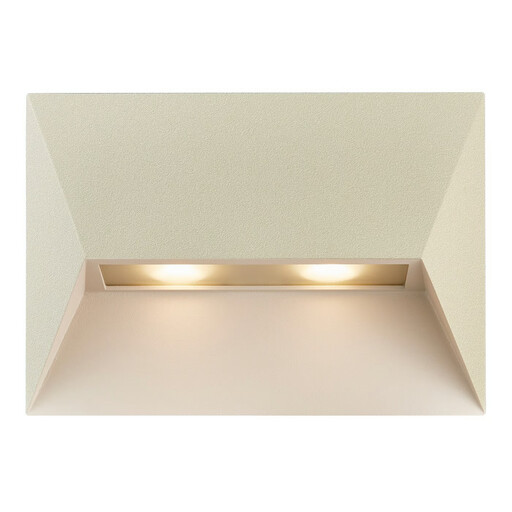
Why this model? For those who see lighting as a signature statement. Its geometric design by Says Who and its large light panel, perfect for displaying a house number, make it a true architectural piece.
Its IP54 rating effectively protects it from the elements, even on an exposed wall. Its textured aluminium body is designed to last in most environments, without risk of premature degradation.
The dual GU10 base provides powerful and adjustable lighting (compatible with dimmable bulbs) for a spectacular facade effect.
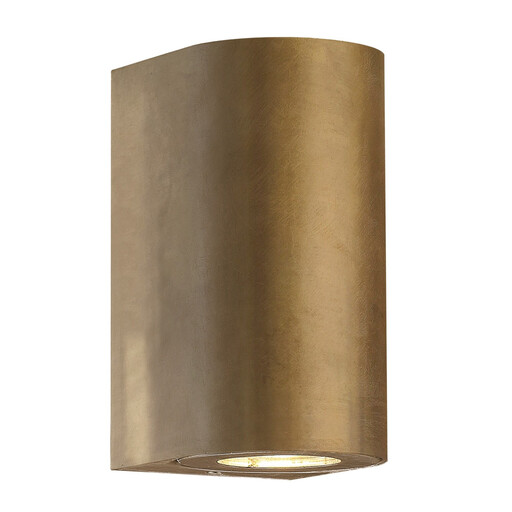
Why this model? The perfect solution for those living in coastal climates. Its minimalist, sculptural design is specifically engineered to withstand the harshest conditions.
It avoids the "wrong material" trap. Made of solid brass, it is naturally resistant to salt corrosion, where a standard metal would degrade in record time. It is the very definition of a coastal wall light.
This model is part of Nordlux's "Designed For Seaside" range, which offers a 15-year manufacturer's warranty against corrosion.
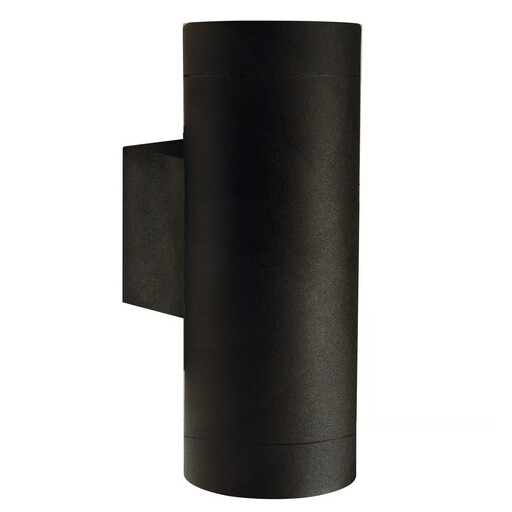
Why this model? For those seeking an effective solution with a clean, timeless design. Its cylindrical shape and black finish blend into almost any modern architecture.
It combines an IP54 protection rating, which guarantees excellent weatherproofing, with a well-defined dual-beam effect. It thus avoids the two most common pitfalls: lack of durability and a disappointing lighting result.
The ideal compromise between functionality and design. It offers the technical features of a high-end model (IP54, dual GU10 base, dimmer compatible) in an accessible and easy-to-install format.
We have selected a complete range of products for you that meet our quality criteria and current safety standards.
It depends on its location. If the light is installed under a porch, balcony, or a wide eave that protects it from direct rain, an IP44 rating may be sufficient. However, for any installation on a wall fully exposed to the elements, we strongly recommend upgrading to an IP54 model or higher for peace of mind.
Light output is no longer measured in Watts but in lumens. For ambient lighting, 300 to 500 lumens per light is usually enough. For more functional lighting, intended to secure an entrance or mark a pathway, aim for 500 to 800 lumens. The advantage of lights with replaceable bulbs (GU10 or E27)? You can adjust the light intensity by choosing the bulb that suits you.
Yes, and it's essential. Installing an outdoor luminaire involves the electrical system and must comply with local electrical codes for obvious safety reasons. Most wall lights are Class I and require a ground connection. Only a qualified electrician can guarantee an installation that is compliant, safe, and perfectly weatherproof.