
Livraison le jour même ou le lendemain

Qualité garantie

Débloquez vos offres de bienvenue: Livraison GRATUITE | Jusqu'à -80 % | 30 jours d'essai gratuits à JoyPlus
Téléchargez l'application
Far more than a simple light source, a designer fixture sculpts a room's atmosphere, highlights its architecture, and reveals your personality. But finding that perfect piece can often feel like an uphill battle. Between fleeting trends and obscure technical specifications, it's easy to make a misstep. Our mission: to help you navigate this dazzling world and find a fixture that is beautiful, functional, and built to last.
Before you start, let's review the three most common traps that can turn a promising purchase into a bitter disappointment.
To avoid these setbacks, let's scrutinise the few technical criteria that truly matter. Mastering them ensures you'll make the right choice, with full confidence.
The Ingress Protection (IP) rating is a European standard that assesses an electrical device's resistance to the intrusion of solid objects (like dust) and liquids (water). It consists of two digits:
For a designer light fixture, here are the ratings to know:
The socket is the base of the bulb that screws or clips into the fixture. Opting for a standard socket like the E27 (the classic large screw base) or GU10 for spotlights guarantees you'll easily find replacement bulbs and have a wide selection.
With the socket sorted, let's move on to the bulb—the element that will truly define your atmosphere:
The choice of material isn't just a matter of style; it determines the light diffusion and the final look.
To help you visualise how these criteria apply, here are a few gems we've uncovered, each meeting a specific need.
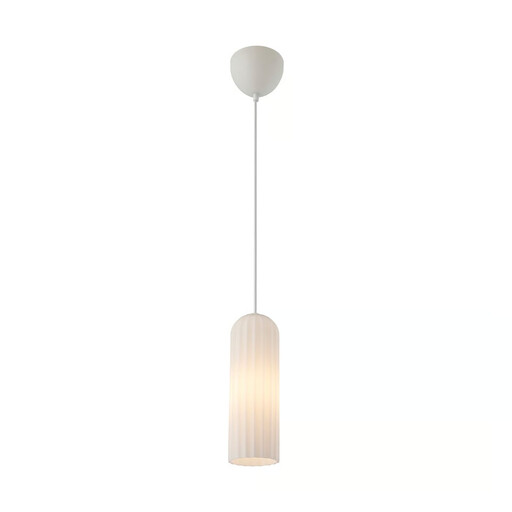
Why we love it: For its touch of modern glamour at an affordable price. Ideal as a series of multiple pendants for a spectacular effect over a kitchen island or bar.
Its ribbed glass, while very chic, remains simple to maintain. Its standard E27 socket gives you complete freedom in choosing a bulb, freeing you from the trap of overpriced proprietary formats.
Its ribbed glass, which catches the light ; a glamorous and customisable style achieved by clustering multiple lights.
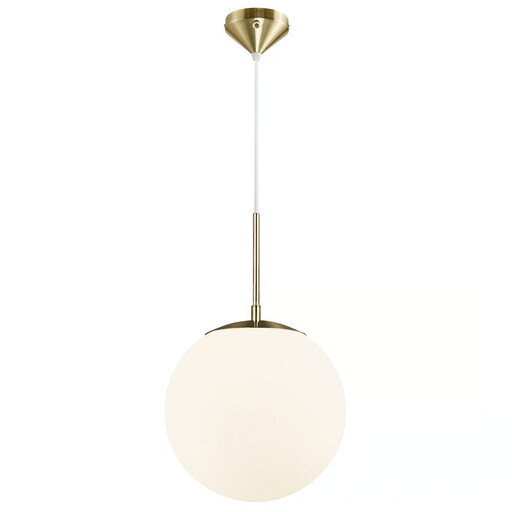
Why we love it: It's the ultimate centrepiece for a living or dining room. The combination of brass and opal glass makes it a sculptural object that single-handedly defines the room's ambiance.
Its mouth-blown opal glass globe diffuses a perfectly even light, without the direct glare typical of some designer fixtures. A build quality that ensures its beauty over time.
The perfect balance between the brass and the opal glass ; a soft and enveloping light diffusion.
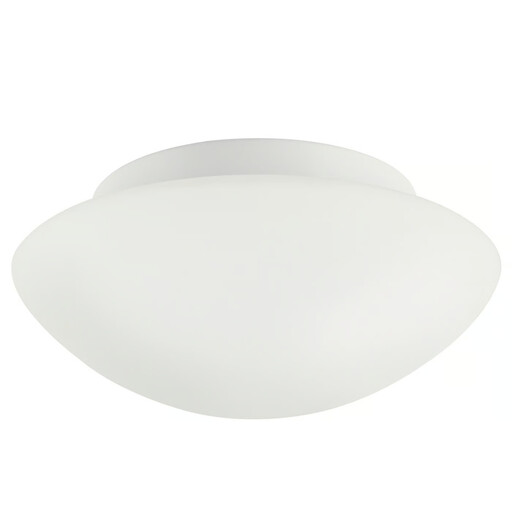
Why we love it: It's the ideal, safe solution for wet areas (bathroom, toilet, laundry room) where safety is paramount. Its simple, timeless design is a true all-rounder.
Its IP44 rating ticks all the boxes for safety in a wet room. No more risk of installing an unsuitable and dangerous product. It combines compliance and aesthetics without compromise.
IP44 certification for wet areas ; a versatile design that can be installed on the ceiling or as a wall light.
Discover our complete selection of light fixtures that strictly adhere to our quality criteria and safety standards.
It's all about colour temperature, expressed in Kelvins (K). A warm white light (around 2700 K) emits a yellowish glow, similar to a candle, for a cosy and relaxing atmosphere. It's best reserved for living rooms and bedrooms. A cool white light (above 4000 K) delivers a whiter, even bluish, light that promotes concentration and energises a space. It's the preferred choice for work areas like the kitchen, office, or garage.
The trick is to choose a pendant with a diameter that is half to two-thirds the width of your table. For example, for a 100 cm wide table, aim for a fixture between 50 and 65 cm in diameter for a perfect balance. As for height, hang it between 75 and 90 cm above the tabletop: low enough to illuminate well, but high enough not to dazzle guests or obstruct views.
Yes, but under certain conditions. An IP20 fixture is suitable for general kitchen lighting, provided it is kept at a safe distance from water sources (sink) and splash zones (hobs). However, for the critical area above the sink, an IP44 certified model (or higher) is not an option—it's a safety requirement.