
Livraison le jour même ou le lendemain

Qualité garantie

Débloquez vos offres de bienvenue: Livraison GRATUITE | Jusqu'à -80 % | 30 jours d'essai gratuits à JoyPlus
Téléchargez l'application
Dental treats for dogs can complement an oral-care routine, keep your companion occupied and help limit plaque buildup through chewing. However, not every product serves the same purpose. A soft treat used for training will never replace a dental chew. Likewise, a durable toy may suit a vigorous chewer without being appropriate for a puppy.
Before you reach for your wallet, watch out for these three common mistakes.
Start by checking the weight category shown on the packaging. Treats for small dogs are not designed in the same way as those intended for dogs weighing 10 to 25 kg or more than 23 kg.
Dentastix product listings generally indicate use from 4 months of age, with formats suited to dogs weighing under 10 kg, 10 to 25 kg and over 25 kg. The 56-stick PEDIGREE DENTASTIX product is intended for dogs weighing 5 to 10 kg, while the 28-stick version is aimed at dogs weighing 10 to 25 kg.
Follow the recommendation on the packaging and always supervise chewing. A dog that swallows a treat within a few seconds does not benefit from the same friction as a dog that chews it slowly.
A soft stick, a rawhide treat and a nylon toy offer different sensations and different levels of chewing resistance.
Dental chews for dogs with a mildly abrasive texture are designed to create friction as the animal chews. Dentastix sticks feature an X-shaped design and a texture that the brand says can reach certain hard-to-access areas. According to information published on PEDIGREE product listings, daily use may help reduce tartar formation by up to 80%: this is a brand claim, not a guaranteed result for every dog.
Dental toys focus more on extended engagement and textured surfaces. A nylon or natural-rubber toy should be large enough that it cannot be swallowed, without being so hard that it could damage the teeth. Inspect the edges regularly and replace the toy as soon as a piece begins to come loose.
For an edible treat, check the ingredient list, fat content, recommended daily quantity and any potential allergens. Treats should not unbalance your dog’s main diet: if the label advises it, reduce the usual food portion accordingly.
The PEDIGREE DENTASTIX products featured here are described as complementary foods. The usual serving is one stick per day, with fresh water available at all times. Vitakraft Pure Chicken treats, made with beef hide, chicken and cheese, are likewise presented as rewards rather than meals.
For a toy, check the material, dimensions, care requirements and the manufacturer’s warnings. The Blinkit model made from natural rubber and nylon measures 24 × 6 cm. The Nylabone Power Chew Chicken is intended for dogs weighing more than 23 kg and for aggressive chewers, according to its product listing.
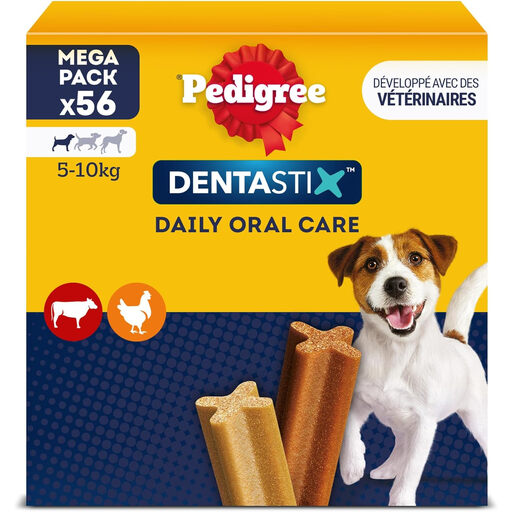
Why it suits this profile: individually wrapped sticks make it easy to establish a daily routine with a dog weighing 5 to 10 kg.
The recommended weight is clearly stated, helping you avoid choosing a stick that is too large or too small.
56 sticks, an X-shaped design, a texture described as mildly abrasive and a serving size of one stick per day.
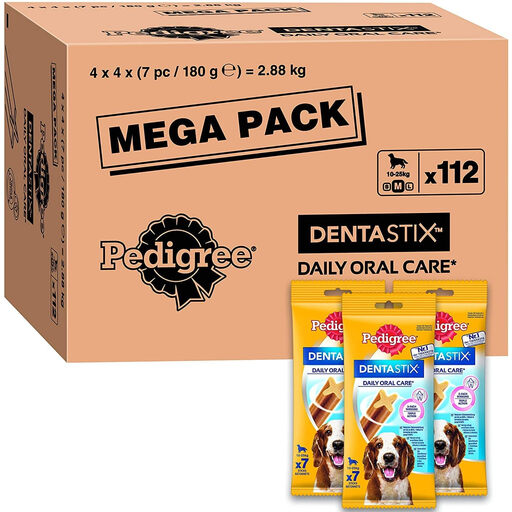
Why it suits this profile: a large pack designed for dogs weighing 10 to 25 kg, making it practical for maintaining a routine over several weeks.
The larger pack should not distract from the serving guidance: the listing recommends one stick per day, with fresh water available at all times.
112 pieces divided into 16 packs of 7, a format for dogs weighing 10 to 25 kg and a texture designed for chewing.
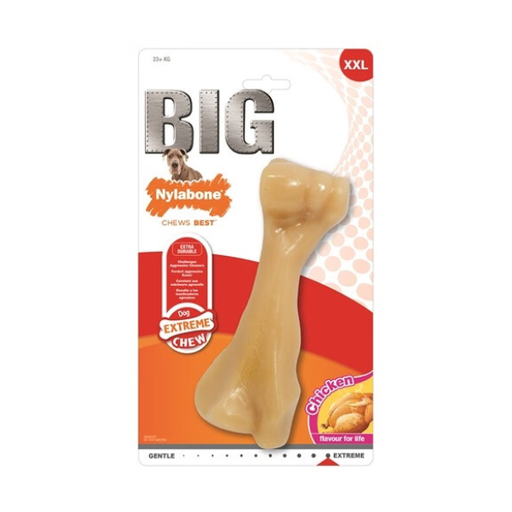
Why it suits this profile: its nylon construction is marketed for large dogs and intensive chewers.
The weight threshold and replacement guidance in case of wear reduce the risk of using a toy that is too small or unsuitable.
Reinforced nylon, chicken flavour and washing and inspection instructions to follow before replacement.
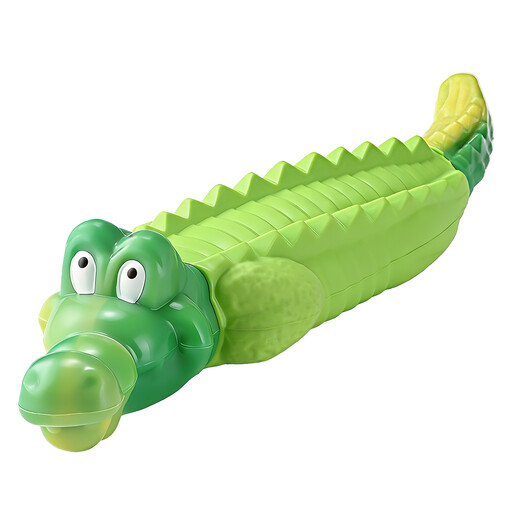
Why it suits this profile: an option designed for medium and large dogs, suitable for fetch, retrieval and chewing at home.
The toy is not marketed as indestructible: supervision and replacement at the first sign of damage remain essential.
A nylon and natural-rubber construction, a raised crocodile shape and easy cleaning with water.
Choose an edible treat if you are looking for a simple routine, a reward or a short period of engagement. Soft products, such as MeatyWay chicken strips, can be cut into small pieces for training. Their texture, however, is entirely different from that of a firmer dental chew.
Choose a dog chew toy if your pet needs a longer-lasting activity or an accessory for games of fetch. The nylon broccoli-shaped Blinkit toy is designed for both indoor and outdoor use. The bamboo-shaped zeze model combines nylon, wood shavings and Oxford fabric; like any toy intended for chewing, it should be inspected regularly.
To combine both uses, some products pair an edible section with a nylon shell, such as the Blinkit chicken-wing-shaped toy. This category calls for closer supervision, as the edible component gradually disappears.
Explore a regularly updated selection of long-lasting chews, treats and toys suited to different dog profiles and everyday needs.
It depends entirely on the directions provided on the packaging. For the Dentastix products mentioned here, the recommendation is generally one stick per day, without exceeding the stated amount. Always leave a bowl of fresh water available and adjust your dog’s main meals if necessary.
Chewing may contribute to oral hygiene, but the result varies according to the dog, the product’s texture and how consistently it is used. A treat will not necessarily remove tartar that has already formed. Persistent bad breath, red gums or difficulty eating should prompt a veterinary consultation.
There is no universal lifespan. An intensive chewer may wear out a toy within a few days, while it may last much longer for a dog that alternates between different activities. Check its condition before and after every use: cracks, loose pieces, sharp edges or a size that has become too small are all signs that it must be replaced immediately.