
Livraison le jour même ou le lendemain

Qualité garantie

Débloquez vos offres de bienvenue: Livraison GRATUITE | Jusqu'à -80 % | 30 jours d'essai gratuits à JoyPlus
Téléchargez l'application
A De'Longhi automatic coffee machine prepares an espresso, a long coffee or a milky drink at the touch of a button. But between the Magnifica, Dinamica and Autentica ranges, the differences go beyond just design. Some features highlighted in the spec sheets need to be put into context before you make a purchase.
Many models boast a pressure of 15 bars. This figure refers to the pump's nominal capacity, but on its own it cannot predict the quality of the coffee in your cup. The freshness of the beans, the fineness of the grind, the temperature, the water volume and the strength setting all play a major role.
So it's better to check the adjustment options for the grinder, strength and volume rather than choosing a machine based solely on its bar rating.
A machine with a built-in grinder produces coffee grounds and requires regular rinsing. The grounds container, drip tray, brewing unit and steam wand must all remain easily accessible. A descaling programme is also a welcome feature, especially in areas with hard water.
An automatic cappuccino machine with a milk carafe simplifies preparation, but its pipes need cleaning after every use. Your overall convenience therefore depends as much on ease of maintenance as on the number of drinks on offer.
Automatic machines are often deeper than you might expect. Before choosing, measure the available width, depth and height, not forgetting the space needed to open the water tank and the bean hopper lid.
For example, several Dinamica models have a depth of between 429 and 440 mm. On a narrow worktop, this measurement can matter more than the number of recipes available.
A De'Longhi bean-to-cup coffee machine grinds the coffee on demand. Some models also accept ground coffee in a dedicated compartment. This feature is handy for making a decaf or occasionally switching blends without emptying the hopper.
The number of grind settings is a useful indicator. Several models featured here offer 13 levels, allowing you to fine-tune the setting gradually depending on the coffee you're using. Bear in mind, though, that after a significant adjustment, you may need to brew several cups before you get a balanced result.
A 1.8-litre water tank is generally sufficient for a household that makes several coffees a day. Actual consumption, however, depends on automatic rinses and the volume you select. Meanwhile, bean hoppers of 200, 250 or 300 g offer varying levels of autonomy.
Avoid filling the hopper completely if the machine is used infrequently. When exposed to air, the beans gradually lose their aroma.
To make cappuccinos and lattes, distinguish between a simple coffee machine with a milk frother and an automatic system with a carafe. A steam wand requires a bit of practice, but gives you better control over the milk's texture. An integrated carafe reduces handling and often lets you prepare the drink with a single touch.
Settings for strength, temperature and quantity are worth prioritising so you can easily tailor drinks to everyone's taste.
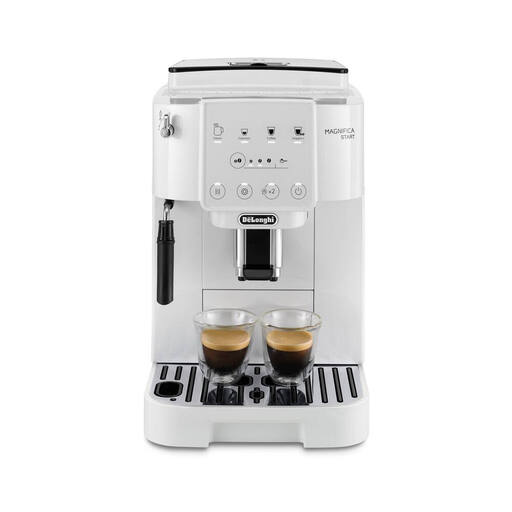
Why this choice suits this profile: Its digital interface and three directly accessible recipes make it a great entry point, without overwhelming you with settings.
The spec sheet clearly states the 1.8 L capacity, the 250 g hopper, the 13 grind levels and the cleaning programmes.
Integrated grinder, dual coffee preparation, adjustable steam wand and nominal pressure of 15 bars.
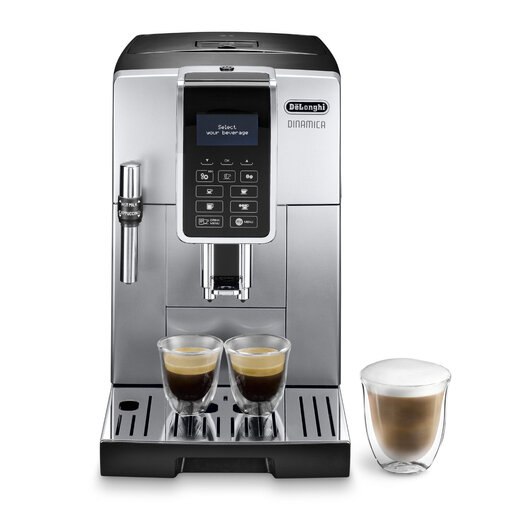
Why this choice suits this profile: This model is aimed at those who want to save their recipes and easily vary their coffee formats.
The My Menu function saves your aroma, temperature and volume settings, rather than confining you to pre-set recipes.
Six advertised recipes, 300 g hopper, 1.8 L water tank, display and dishwasher-safe removable parts.
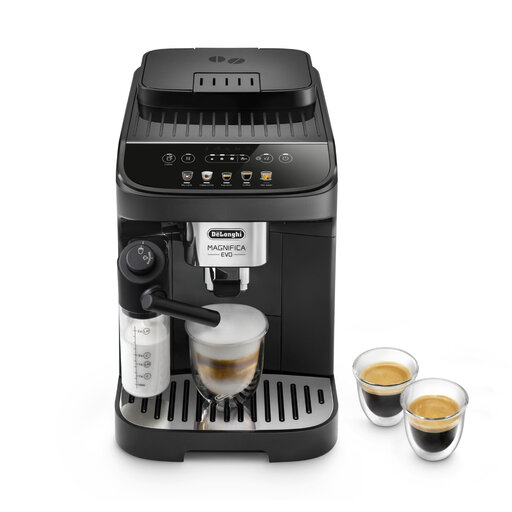
Why this choice suits this profile: Its milk carafe and MyLatte functions meet the needs of households that regularly make cappuccinos and other milky drinks.
The automatic milk system cleaning and the dishwasher-safe carafe reduce the hassle after each preparation.
Five drinks accessible at the touch of a button, 1.8 L water tank, 250 g hopper and 13 fineness levels.
We've selected a comprehensive, real-time updated list of products that meet these exacting criteria, while complying with European safety regulations.
Some automatic models, particularly several Magnifica and Autentica ones, have a dedicated compartment for pre-ground coffee. Check this point in the spec sheet of the model you're interested in. This feature is handy for making a decaf without replacing the beans in the grinder.
The cost depends mainly on the price of the beans, the volume of coffee consumed, the water and the cleaning products. You also need to budget for descaling, according to the machine's recommendations and the hardness of your local water. Regular maintenance helps keep it running reliably, but it doesn't eliminate the need to replace consumables.
The Dedica Style EC685.BK is a manual, compact espresso machine. It works with ground coffee or E.S.E. pods and has a manual steam wand. It can be perfectly suitable for a small kitchen, but it's not in the same league as an automatic machine with a grinder. For grinding beans and preparing a drink at the touch of a button, you're better off with a Magnifica, Dinamica or Autentica.