Households planning laundry and washing-up
You want to load the appliance in advance and fit the cycle into your routine. Distinguish between the start time and end time, then factor in the duration of the programme you’ll use.


To schedule a cycle around your daily routine, start by looking at washing machines and dishwashers where a delay start or delay end is documented for the specific model. Timing alone isn’t enough to make your choice: also compare programme duration, the consumption figures on the energy label, capacity and instructions for use. A fridge needs to keep food cold continuously; for cooking appliances, check the programming options and conditions in the manual.
You want to load the appliance in advance and fit the cycle into your routine. Distinguish between the start time and end time, then factor in the duration of the programme you’ll use.
A long programme may suit you if your laundry or dishes will be ready in time. Capacity and noise levels matter too when a cycle runs during a quiet time at home.
You want to know which uses can be scheduled without applying the same logic to every appliance. With a fridge, maintaining the correct storage temperature remains the priority.
First, decide whether you need to set a cycle’s start time or its end time. Then compare the programme details and the requirements of each appliance type. A connected control function doesn’t replace these checks.
| Criterion | What to check | Who it’s for |
|---|---|---|
| Cycle timing | Delay start or delay end on the exact model; duration of the programme you plan to use. | I want to load the laundry or dishes in advance and have the cycle finish at the right time. Around 36% of consumers may prioritise being able to schedule a cycle. |
| Consumption and duration | Energy per 100 cycles, water per cycle and the duration of the reference programme on the label; capacity to suit your household. | If a long programme fits into my day, I also want to compare its consumption and know when the appliance will be available again. Consumption and duration may come first for around 29% of consumers. |
| Continuous operation and usage instructions | Temperature maintenance for refrigeration; programming modes and conditions described in the manual for cooking appliances. | Before scheduling an appliance, I want to make sure it’s suitable for the appliance’s function, especially when storing food or programming cooking. This precaution may be a priority for around 21% of consumers. |
| Connected controls | Features available on the specific model and any compatibility requirements for using them. | I’d like to organise cycles from an app without losing sight of the appliance’s controls and programmes. Around 14% of consumers may put this type of control first. |
With a delay end function, the time you choose is when you want the cycle to finish, so the programme duration needs to be factored into the setting.
Check the wording on the product page and in the manual, then compare the cycle duration with when you’ll need your laundry or dishes.
The option to delay a cycle doesn’t tell you about its consumption, duration, the appliance’s capacity or how noisy it is.
Compare the energy label and dimensions, then check that the model’s scheduling function suits the way you’ll use it.
A fridge needs to keep food cold to preserve it. Anses recommends a temperature of 0 °C to +4 °C at the coldest point.
Choose a fridge based on its capacity, energy label and adjustment options, and don’t plan to interrupt refrigeration on a timer.
App-based scheduling depends on the model’s features and, on its own, doesn’t tell you the conditions for using each programme.
Read the manual for the appliance you choose, particularly if you plan to schedule cooking or start a cycle while you’re out.
Worth considering for a washing machine or dishwasher if you want to check the programming instructions before you buy.
Consider this brand if scheduling a dishwasher cycle via an app is one of your criteria.
A washing machine range to explore if you’re comparing capacity and programmes first, with connectivity as a possible extra consideration.
Worth exploring if you want to compare dishwasher formats and check whether delay start is available.
These appliances let you schedule laundry and dishwashing cycles. Depending on your routine, distinguish between delay start and delay end, then check programme durations and the model’s instructions.
 Image unavailable
If you’re looking for a countertop model to manage the washing-up in your household, check that the chosen programme duration fits the time you have in mind.
The title lists 7 programmes, a 24 h delay start and a noise level of 47 dB. Check the manual for settings and installation requirements.
 Image unavailable
To fit a wash into your routine, check the manual to see how delay start works and when the cycle will finish.
The title lists a top-loading design, a 1,200 rpm spin speed and Wi-Fi. Also check that top access is suitable for the space you have in mind.
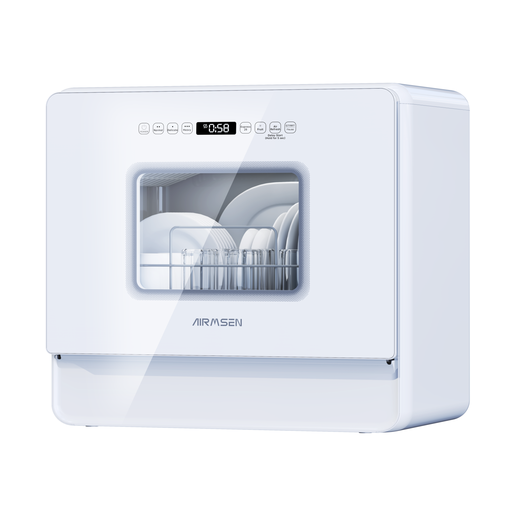 Image unavailable
If you want to prepare the washing-up in advance, check the timer and water supply option that best suit your kitchen.
The title mentions a 12 h delay start, an integrated 5 L tank and three spray arms. Check the connections needed if you plan to connect it to a tap.
 Image unavailable
To schedule your laundry, compare the delay start setting and the duration of the programme you’ll use with your target time.
The title lists a top-loading design, a 1,400 rpm spin speed, 17 programmes and Wi-Fi. Check that the plug is compatible and that there’s enough space before you buy.
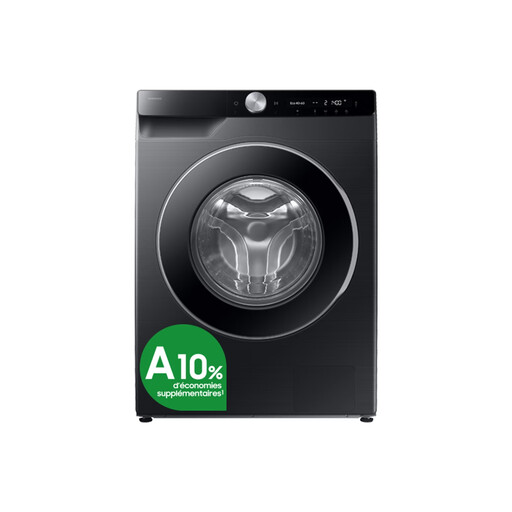 Image unavailable
If you’re working back from when your laundry needs to be ready, check the manual to see how to set the ‘Delay End’ function and what time range it allows.
The title lists a 9 kg capacity. Delay end shouldn’t be confused with delay start.
No. It changes when the cycle runs, but doesn’t necessarily reduce the amount of electricity used. When comparing washing machines or dishwashers, check the energy per 100 cycles and the duration of the reference programme on their energy labels.
No. One delays the start, while the other is set according to when you want the cycle to finish. Check the wording and instructions for your model, then factor in the duration of the programme you plan to use.
Don’t treat refrigeration as a cycle to interrupt: the fridge needs to maintain the right conditions for storing food. Anses recommends a temperature of 0 °C to +4 °C at the coldest point. Instead, check the appliance’s capacity, energy label and temperature settings.
Check the manual for the exact model to find out which programmes are available and what instructions apply. A feature shown on a washing machine, dishwasher or cooking appliance doesn’t tell you the conditions for using all its modes.