Students on a tight start-up budget
You’re looking for a few cupboard staples without choosing solely by the price on the pack. The number of portions and the unit you use to compare them matter too.


For your first student cupboard, choose individual sachets if you want to make one portion at a time, or a packet that needs cooking if you have the right equipment and plan to make several bowls. Before buying several packs, compare how many portions each one makes, then check the preparation instructions, ingredients, allergens and salt content for each recipe.
You’re looking for a few cupboard staples without choosing solely by the price on the pack. The number of portions and the unit you use to compare them matter too.
You want to be able to make a portion during your first few days. Before stocking up, check how much water you’ll need, what equipment is required and how many bowls the pack makes.
You compare recipes individually if you need to avoid certain ingredients or allergens. The name ‘vegetable soup’ alone doesn’t tell you what’s in it.
For your first student cupboard, start by thinking about how many portions you’ll actually make and what equipment you have. Then check the ingredients in each recipe before buying several packs.
| What to compare | What to check | Who should consider it |
|---|---|---|
| Cost per portion | Compare prepared portions of a similar volume; the weight of the powder and the number of bowls aren’t equivalent. | If I’m stocking my cupboard on a tight budget, I want to know how many bowls each pack will make. Around 29% of shoppers put this initial cost first. |
| Format and preparation | Check whether the portions are individually packed and whether the recipe needs just hot water or has to be cooked. | When my kitchen isn’t fully set up yet, I prefer a format I can prepare with the equipment I have. Around 29% of shoppers put this convenience first. |
| Ingredients and allergens | Read the ingredients list, check which allergens are highlighted and look for any ‘may contain’ warnings on the specific product. | If I need to avoid an ingredient, the recipe name alone isn’t enough to help me choose. Ingredients are the top priority for around 21% of shoppers. |
| Salt and nutritional information | Check the ‘salt’ line and see whether the values are given per 100 g, for the soup as prepared or per portion. | To decide how this soup fits into my meals, I want to understand what’s in the bowl I’ll be making. Around 21% of shoppers look at this nutritional information first. |
These units don’t describe the same quantity of soup ready to eat. The amount of water you need to add and the number of bowls can also vary from one recipe to another.
To compare two formats, work out the cost of a prepared portion of a similar volume, following the instructions on each pack.
The Knorr 9 Vegetable Soup listed by Carrefour contains, among other things, wheat, milk, celeriac and chicken fat. Another recipe, even one with a similar name, may have different ingredients.
Check the ingredients and allergens for the exact product before buying, including if you avoid ingredients of animal origin.
A soup that needs cooking requires different equipment from an instant portion. This is especially important if your kitchen isn’t fully equipped yet.
Check what equipment you’ll need, how much water to use and how many bowls the pack makes before stocking up.
How quickly a soup is ready tells you nothing about the portion size or salt content. The French Agency for Food, Environmental and Occupational Health & Safety (Anses) lists soups and broths among the foods that contribute to salt intake.
Read the nutritional information for your chosen soup, especially the ‘salt’ line, and consider what you plan to eat with it.
Carrefour’s range includes family-sized and instant dehydrated soups, including vegetable and tomato-and-vermicelli recipes.
E.Leclerc’s range includes Regal Soupe and Eco+ soups, with vegetable, mushroom and tomato-and-vermicelli recipes among the options.
Auchan’s range includes instant Royco soups in packs of three or four sachets, with each portion listed as 20 cl.
Carrefour’s range includes Maggi vegetable-and-vermicelli soup, tomato-and-vermicelli soup and spicy black mushroom noodle soup.
These products include individual portions, a spicy soup in a packet and Maggi soups that need cooking. Choose the format that suits you, then check the preparation instructions and ingredients on the packaging of the product you select.
 Image unavailable
The three individual portions are handy if you want to make one bowl at a time. Check the ingredients in this recipe if you need to avoid certain allergens or ingredients of animal origin.
 Image unavailable
This pack of eight may suit anyone looking for individual portions of miso soup. Before choosing this format, check the packaging for the amount of water needed per portion, the ingredients and the nutritional information.
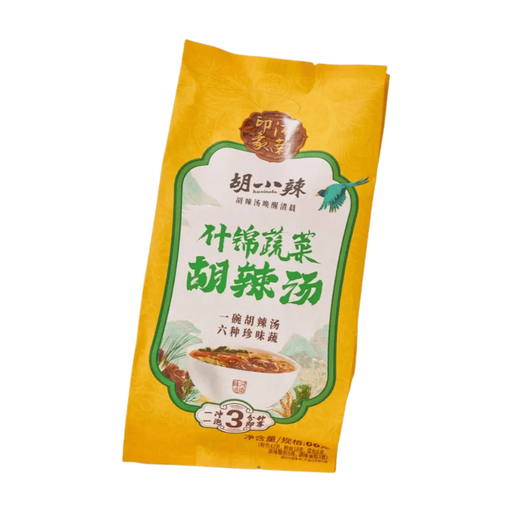 Image unavailable
This packet is worth considering if you’re after a spicy soup rather than a classic smooth soup. Check the amount of water and number of portions on the packaging to see if it suits your needs.
 Image unavailable
This packet is for anyone who has the equipment to cook a soup. Before buying several, check the packaging for the amount of water needed, the number of portions and the ingredients.
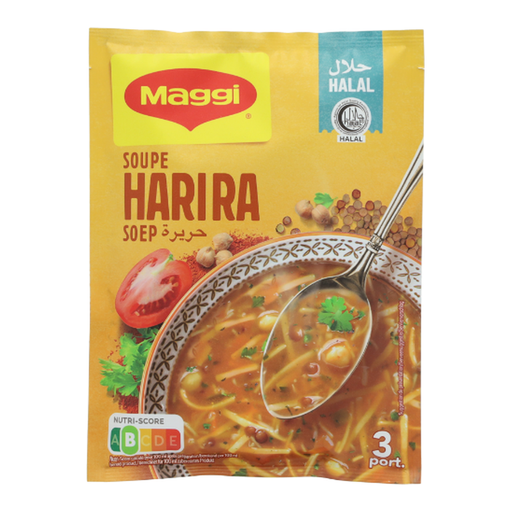 Image unavailable
This packet may suit you if you’re looking for a Harira recipe and have the equipment needed to cook it. Check the instructions on the pack to find out how much water you’ll need and how many portions to expect.
Yes, as long as you follow the date and storage instructions on each pack. Also check what to do with any sachets once they’ve been opened.
Read the ingredients list for the exact product. France’s Directorate-General for Competition Policy, Consumer Affairs and Fraud Control states that allergenic ingredients must be highlighted in the list. Also check for any ‘may contain’ warnings if they’re relevant to you.
No. A Nutri-Score label doesn’t replace checking the prepared portion, nutritional information and ingredients. In particular, compare salt on a like-for-like basis and check the allergens separately.
Don’t add salt automatically: taste the soup first and check its salt content on the label. Anses lists soups and broths among the foods that contribute to salt intake.