Shoppers comparing sugar content
You want to compare soups using their ‘of which sugars’ figure, based on the same amount of prepared soup.


To choose a lower-sugar dehydrated soup from several recipes, compare the ‘of which sugars’ figure per 100 ml of prepared soup, then check the salt on the same basis. The recipe name alone won’t tell you which is the better choice. If you’re having the soup for lunch rather than as a starter, also check the portion size, ingredients and allergens on the specific sachet.
You want to compare soups using their ‘of which sugars’ figure, based on the same amount of prepared soup.
You’re looking for something quick to prepare and need to choose between a soup to serve as a starter and a portion to build your lunch around.
You need to check the allergens in each recipe, especially when the soup contains vermicelli or croutons.
Start by comparing the nutritional values of soups prepared according to their instructions. Then check the portion size and ingredients of the recipe you choose.
| What to check | Look for | Who is it for? |
|---|---|---|
| Sugars | The ‘of which sugars’ figure per 100 ml of prepared soup, using the same basis for every recipe you compare. | I want to compare two soups without relying on the names of their ingredients alone. Around 40% of shoppers put this sugar comparison first. |
| Sugars and salt | The ‘of which sugars’ and ‘salt’ figures per 100 ml of prepared soup. Nutri-Score, if shown on the packaging, is an additional guide. | A soup with less sugar isn’t the right choice for me if I overlook its salt content. For around 40% of shoppers, balancing sugar and salt comes first. |
| Portion and preparation | The number of portions, the amount of water specified and whether vermicelli or croutons are included. | At lunchtime, I’m mainly looking for a convenient portion and want to know whether the soup will be a starter or the main part of my meal. This is a priority for around 20% of shoppers. |
The ingredients list tells you what’s in the soup, but it doesn’t tell you how many grams of sugar are in a serving of prepared soup.
To compare the recipes you’re considering, check their ‘of which sugars’ figures on the same basis.
Figures given per 100 g of dry product and per 100 ml of prepared soup don’t describe the same amount of product.
Check the units, the amount of water and the preparation instructions before comparing two nutrition tables.
Anses lists soups and broths among the foods that contribute to salt intake. So a comparison based on sugar alone overlooks another factor at lunchtime.
Check the salt per 100 ml of prepared soup too, and read the instructions before adding any more.
Ingredients and allergens vary between recipes, even when several sachets have similar names.
Check the ingredients list and allergen information on the exact sachet before buying.
The range includes a Bio Vegetable and Vermicelli Soup, described by Auchan.
The vegetable recipes described by Carrefour don’t all have the same ingredients.
The brand offers instant soups in individual sachets, among other options.
Carrefour describes a dehydrated 9 Vegetable Soup under this brand.
These dehydrated soups and noodle soups come in a range of formats for lunchtime. Only compare their nutritional values when they’re given for the same amount of prepared soup.
 Image unavailable
The pack of three portions could be handy for separate lunch breaks.
Compare the sugars and salt per 100 ml of prepared soup with other recipes you’re considering, and check the allergens for this product.
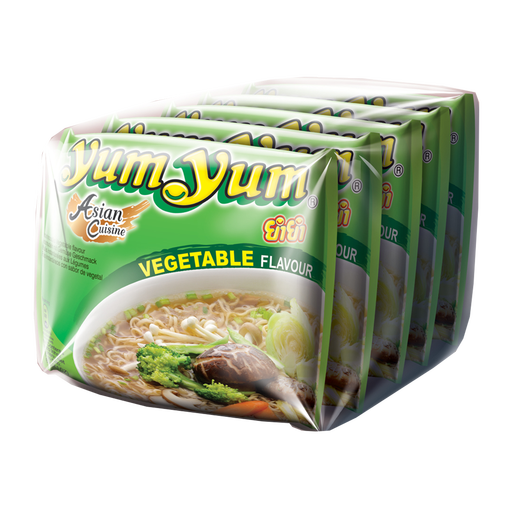 Image unavailable
The five 60 g portions are convenient if you need individual sachets.
Before comparing this soup with a recipe whose figures are given per 100 ml of prepared soup, check what its nutritional values refer to and check the allergens.
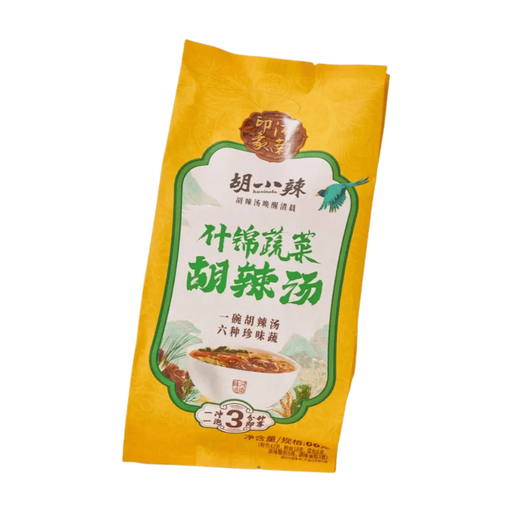 Image unavailable
This 66 g sachet is for shoppers looking for an individual portion of spicy soup.
To assess the sugar and salt in your bowl, check the figures for the prepared soup, as well as the ingredients and allergens.
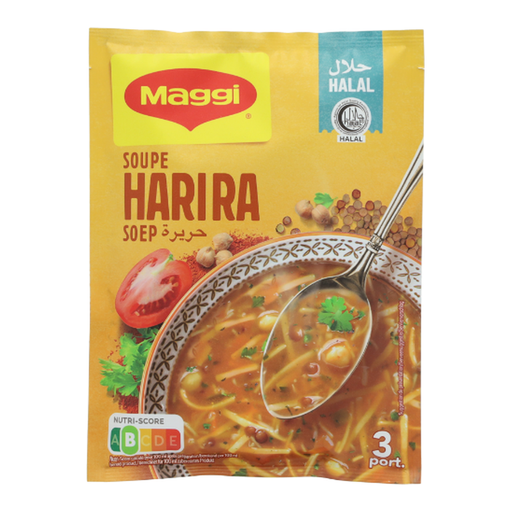 Image unavailable
This 90 gr sachet of harira soup may appeal if you prefer this recipe to noodle soup.
Check how much water to use before interpreting the nutritional values for a portion: the amounts shown in the table and the preparation instructions differ.
Compare the ‘of which sugars’ figure per 100 ml of soup prepared according to each product’s instructions. A figure per 100 g of powder can’t be compared directly with one per 100 ml of reconstituted soup.
No. Nutri-Score doesn’t replace checking the ‘of which sugars’ figure. Santé publique France explains that displaying it is voluntary. If it appears on the product, check the nutritional values and ingredients too.
It depends on the portion you serve and what else you eat. Manger Bouger suggests soup as one possible starter, for example. If you’re making it the main part of your lunch, consider how much soup you’ll prepare and plan the rest of your meal around your appetite.
Check the specific sachet, even if the recipe is called a vegetable soup. Product information for MAGGI, KNORR and ROYCO soups described by Auchan or Carrefour lists ingredients such as wheat, milk or celery, depending on the product. Ingredients and ‘may contain’ warnings vary.