What should you check first?
Start with how much soup you want to make, then check the ingredients and preparation instructions for each recipe.
| What to consider |
What to check |
Who it’s for |
| Amount prepared |
The stated number of bowls and the volume of soup made from one sachet. |
If you’re making several bowls, you’ll want the sachet to provide the amount that will actually be eaten. Around 31% of consumers would put this need first. |
| Allergens and ingredients |
The ingredients list, declared allergens and any ‘may contain’ warnings for the exact recipe. |
If you need to avoid certain ingredients, the flavour on the box isn’t enough to help you choose. This would be the top priority for around 31% of consumers. |
| Format and preparation |
Whether it comes in individual or family-size packaging, the volume per portion and how to prepare it. |
If you only make one bowl at a time, you’ll want a suitable format without having to use a whole sachet intended for several bowls. Nearly 23% of consumers would prioritise this. |
| Nutritional information |
Nutritional values, particularly sugar and salt, and the portion size they refer to; the Nutri-Score, if shown on the packaging. |
If you’re comparing the ingredients of two recipes, you’ll want to understand the values shown for the amount you plan to make. Around 15% of consumers would put this check first. |
Soups to explore on Joybuy
These products show a range of soup formats, from sachets intended to make several bowls to individually portioned sachets. Choose according to how much you plan to make and check the label for the recipe you select.
 Image unavailable
Maggi Harira Soup, 90 gr
Worth considering if you want a 90 gr sachet of harira soup. Check the pack for the amount of soup it makes and the allergens in this product.
Purchase link unavailable
 Image unavailable
Royco Noodle Soup with Carrot and Mushroom, 3 x 20 cl
The three 20 cl sachets are a good fit if you prefer to make separate portions. Check the ingredients and allergens for this recipe.
View on Joybuy
 Image unavailable
Knorr Thai Noodle and Mushroom Soup, 2 Assorted, 69 g, 0,70 L
Worth considering if you’re looking for a noodle and mushroom soup to make several bowls. The title states 69 g and 0,70 L; check the pack for the number of portions and allergens.
View on Joybuy
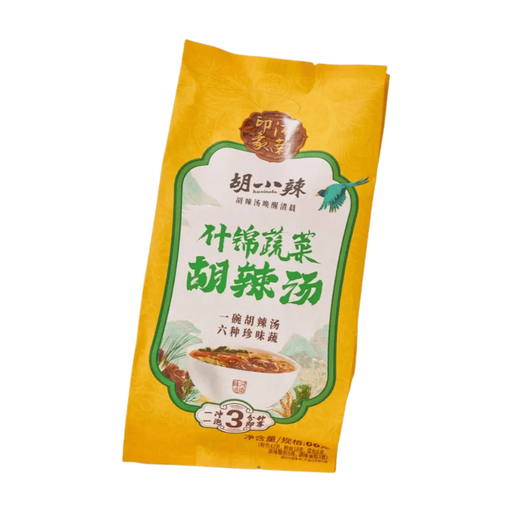 Image unavailable
Haoxiangni Spicy Assorted Vegetable Soup, 66g
Worth considering if you’re after a 66g sachet of spicy vegetable soup. Check the volume it makes, the ingredients and the allergens for this product.
View on Joybuy
Frequently asked questions
Is the Nutri-Score enough to help you choose a dehydrated soup?
No. According to Santé publique France, producers choose whether or not to display the Nutri-Score. When choosing a recipe, also read the nutritional information, ingredients list and declared allergens.
How do you choose between individual sachets and a family-size sachet?
Choose according to how much soup you plan to make each time. Compare the stated number of bowls, the volume per portion and the preparation instructions rather than assuming that two sachets make the same amount.
What should you check on prepacked dehydrated soup?
Start with the ingredients, allergens, net quantity and nutritional information. The DGCCRF also lists the product name and date as labelling details to check.
Can you still use dry soup after its best-before date?
A best-before date that has passed doesn’t automatically mean the product should be thrown away: according to the DGCCRF, it may still be safe to eat if the packaging is intact, although its quality may have deteriorated. Check the exact wording on the pack, its condition and the storage instructions. A use-by date follows a different rule and must not be exceeded.
Is vegetable soup always gluten-free or dairy-free?
No. The Knorr forest mushroom soup featured by Carrefour contains milk and wheat, while Carrefour Classic' minestrone contains wheat pasta. Check the ingredients and any ‘may contain’ warnings for the specific product before choosing it.


