If your child refuses certain soups, start with a texture they’ll accept, then compare the sugar and salt content for the same quantity of prepared soup. The words “reduced sugar” aren’t enough to help you choose. Check the ingredients and allergens too, and adjust the portion to your child’s age, appetite and the rest of the meal.
Who is this advice for?
Parents keeping an eye on sugar and salt
You’re looking for a soup that’s easy to prepare, without relying solely on the words “reduced sugar”. The nutritional information for prepared soup helps you compare recipes on a like-for-like basis. Anses notes that soups and broths contribute to salt intake.
Parents of children who are sensitive to textures
If visible pieces or vegetables put your child off, a smooth or blended soup can be a good starting point. The Manger Bouger guide for parents reminds us that tastes develop through food experiences over time.
Parents putting together a quick dinner
You want to make soup quickly, without assuming that the stated number of bowls is the right portion for your child. Manger Bouger advises adjusting commercial portion sizes to suit a child’s age. You should also check the ingredients and allergens in the recipe you choose.
What should you look for before buying?
If your child has a dietary restriction, start by checking the ingredients and allergens. Otherwise, begin with a texture they’ll accept, then compare the nutritional information for soups prepared on the same basis.
| Criteria |
What to check |
Who it’s for |
| Sugar and salt |
Compare the “sugars” and “salt” figures per 100 ml of prepared soup, using a similar preparation volume. |
I want to compare recipes without confusing the figures for the powder with those for a prepared bowl. Around 31% of consumers put comparing sugar and salt first. |
| Texture and taste |
Look for smooth, blended or chunky soups, or ones with vermicelli or noodles, depending on what your child will accept. |
If chunks are making mealtimes difficult, I’d rather start with a familiar texture without giving up on offering other foods. For around 31% of consumers, whether their child will accept the soup is the top priority. |
| Preparation and portions |
Check the preparation method and the stated number of bowls. Adjust the portion to suit your child’s age and appetite. |
When I’m short on time in the evening, I want a soup that’s simple to prepare, while still taking the rest of the meal into account. Convenience comes first for around 23% of consumers. |
| Ingredients and allergens |
Read the ingredients list, check the allergens highlighted and, where necessary, look for statements about possible traces. |
If an ingredient needs to be avoided, I must confirm the ingredients for the exact product before serving it. This is the main concern for around 15% of consumers. |
Mistakes to avoid
-
Assuming “less sugar” means “low in salt”
These figures describe different things. Anses says that soups and broths contribute to salt intake, so a claim about sugar doesn’t tell you how much salt a recipe contains.
Compare the sugar and salt content for the same quantity of prepared soup, then read the ingredients for each product.
-
Guessing the allergens from the name “vegetable soup”
A soup with this name may also contain cereals, milk, celery or ingredients of animal origin. The name alone isn’t enough to tell you whether it’s suitable for someone with a dietary restriction.
Check the ingredients list and allergen information on the product you’re buying, even if you already know the flavour.
-
Assuming the stated number of bowls is a child-sized portion
The number of bowls tells you how much the preparation makes, not how much each child should eat. Manger Bouger recommends adjusting commercial portion sizes to suit a child’s age.
Prepare the amount you need, then adjust what you serve to suit your child’s appetite and the rest of the meal.
-
Offering only smooth textures
A smooth soup can make mealtimes easier when chunks are a problem, but it won’t, by itself, address a child’s reluctance to try other tastes and textures. The Manger Bouger guide for parents highlights the role of repeated experiences in developing tastes.
Use a texture your child accepts as a starting point, and keep offering other foods without putting them under pressure.
Dehydrated soup brands to know
Royco
Royco’s classic soup range includes smooth and blended soups.
- These descriptions can help you spot textures worth considering if chunks are the main obstacle.
- Texture doesn’t tell you about sugar, salt or allergens, so compare the labels of the products you’re interested in.
Maggi
Auchan’s range includes an organic Maggi dehydrated vegetable and vermicelli soup.
- The vermicelli makes it easy to identify a recipe to consider if your child accepts this texture.
- Before buying, check the ingredients, allergens and nutritional information for the exact product.
Knorr
Carrefour and Auchan listings include a Knorr 9-vegetable soup and a Thai noodle soup.
- These recipes give you different textures and ingredients to consider, depending on your child’s preferences.
- The Carrefour listing for the 9-vegetable soup mentions wheat, among other ingredients. Check the full ingredients list and allergens for each recipe.
Marque Repère / RégAL Soupe
E.Leclerc listings for RégAL Soupe products show the ingredients and nutritional information for the prepared product.
- Figures per 100 ml of prepared soup make it easier to compare the sugar and salt content of products listed on the same basis.
- Check the recipe details and availability of the product you want with the store concerned.
Two noodle soups to consider
These two products are noodle soups to consider if your child accepts this texture. Their pack sizes are expressed on different bases, so check the preparation instructions before comparing portion sizes or nutritional information.
 Image unavailable
Royco Dehydrated Soup with Noodles, Carrots and Mushrooms, 3 × 20 cl
A recipe to consider if your child accepts noodles, carrots and mushrooms. The stated pack size is three 20 cl bowls, so adjust the portion to suit your child’s appetite.
If gluten, celery or milk need to be avoided, check the ingredients and any statements about possible traces before serving this soup. Don’t assume from the name that it contains less sugar than another recipe.
View on Joybuy
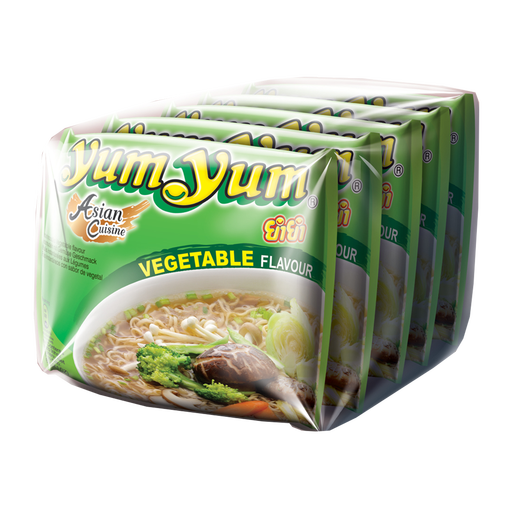 Image unavailable
Yum Yum Vegetable Noodle Soup HL, 5 × 60 g
This pack contains five 60 g portions and may suit families whose child accepts vegetable-flavoured noodles. The noodles need to be cooked, so check the instructions before preparing the meal.
If gluten, soya or celery need to be avoided, read the ingredients list and any statements about possible traces. To compare the sugar and salt content with another soup, use figures for products in the same prepared state.
View on Joybuy
Frequently asked questions
Is a soup labelled “less sugar” necessarily suitable for a fussy child?
No. On its own, this information doesn’t tell you whether your child will accept the texture, how much salt it contains or whether it has allergens. Compare the nutritional information on a like-for-like basis and check the ingredients in the recipe you’re considering.
Should you compare the powder or the prepared soup?
To compare what will be served in the bowl, use figures for reconstituted soups, expressed in the same units and prepared with a similar volume of water. E.Leclerc listings, for example, show figures per 100 ml of reconstituted product.
What can you offer if your child refuses vegetable pieces in soup?
A smooth or blended soup can be a good starting point if chunks are the main obstacle. The Manger Bouger guide for parents also encourages offering a variety of foods regularly, rather than relying on one texture for every meal.
Is vegetable soup always vegetarian or free from allergens?
No. The name doesn’t guarantee that it’s free from ingredients of animal origin or allergens. Check the ingredients list and allergen information for the product you choose, including when you buy it again.


