People responsible for planning group meals
You’re planning an additional soup option for several residents and need a pack size that suits the number of portions. Ease of preparation should never take priority over individual dietary requirements.


When planning a meal in a care home, first choose a soup that fits the menu and the resident’s individual requirements. Then check the nutrition information and allergens for the portion as prepared. The pack size should suit the number of portions you need to serve. However, a standard dehydrated soup is no substitute for assessing the risk of malnutrition or following individual texture guidance, as highlighted by the French National Authority for Health and the French health insurance service.
You’re planning an additional soup option for several residents and need a pack size that suits the number of portions. Ease of preparation should never take priority over individual dietary requirements.
You check the ingredients and allergens in the product intended for each resident. For prepacked foods, the French competition, consumer affairs and fraud control authority (DGCCRF) says that allergens must be clearly highlighted on the label.
Weight loss, a risk of malnutrition or a swallowing difficulty calls for individual guidance. The French National Authority for Health advises, in particular, that the required consistency level should be recommended for each person concerned.
Start by checking that the soup meets the resident’s requirements and fits into the meal. Then look at the portion you’ll actually serve and how the soup is prepared.
| Criterion | What to check | Who it matters to |
|---|---|---|
| Nutritional role | Energy and protein per prepared portion; how the soup fits into the overall meal. | If a resident’s intake is being monitored, I want to know what the portion served provides without treating soup as a solution to malnutrition. About 33% of consumers prioritise how well the menu meets nutritional needs. |
| Texture and allergens | Ingredients and allergens in the batch; any individual consistency requirements. | If someone has an allergy or swallowing difficulty, I need to be able to serve a preparation that meets their requirements. About 27% of consumers put this compatibility ahead of other criteria. |
| Salt | Salt per 100 ml as prepared and per portion; any relevant individual restrictions. | If salt intake at mealtimes needs to be monitored, I compare the amount in the portion that will actually be served. About 20% of consumers prioritise keeping salt intake in check. |
| Portions and preparation | Volume produced, number of portions and whether the pack size suits the planned service. | For group meals, I look for a pack size that matches the number of bowls to prepare and helps avoid leftovers. About 20% of consumers prioritise this practical consideration. |
A soup called “vegetable” or “velouté” may contain milk, celery or other ingredients that need to be taken into account. The Carrefour, Royco and Maggi recipes featured here do not all have the same allergen declarations.
Check the ingredients list and allergens on the packaging of the batch intended for service, rather than relying on the product name alone.
A standard soup, even if thickened, may not have the texture required by someone with a swallowing difficulty. The French National Authority for Health says the required consistency level should be recommended individually.
Follow your care home’s protocol and ask the appropriate professional to confirm how the soup should be prepared.
According to the French health insurance service, malnutrition involves insufficient intake of energy, protein and nutrients, among other factors. Choosing a soup alone cannot assess a resident’s nutritional intake.
If someone’s intake drops or they lose weight, tell the medical or dietetic team and consider the meal as a whole.
Maggi offers dehydrated soups including Harira and Beef, Vermicelli and Carrot.
Royco offers instant soups, including packs labelled as three 20 cl portions.
These ranges include several dehydrated soup recipes, including Vegetable Velouté and 9 Vegetables.
These products include individual sachets as well as soups to prepare in a larger quantity or in a bowl. For a meal in a care home, match each recipe to the menu, the portion served and the resident’s individual requirements.
 Image unavailable
A format to consider if your service calls for small portions prepared separately.
 Image unavailable
Consider this recipe if a pulse-based soup fits the menu and the resident’s dietary requirements.
 Image unavailable
This cook-in soup could work as part of a planned service if its ingredients and prepared portion suit the menu.
 Image unavailable
A noodle soup to consider if your service involves cooking a larger quantity and then dividing it into portions.
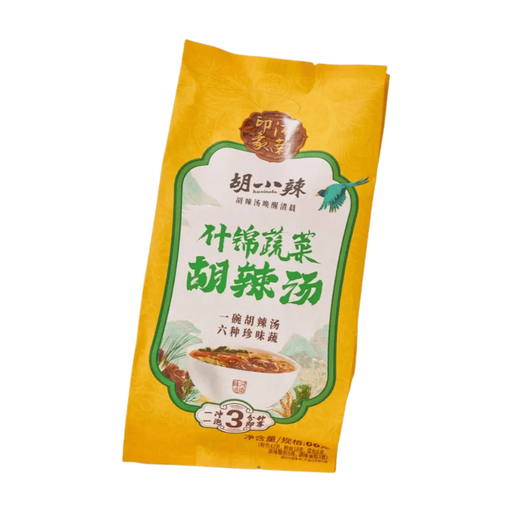 Image unavailable
If you’re preparing this in a bowl, first check that the spicy recipe and its ingredients suit the planned menu.
Not automatically: its place depends on the full menu and the resident’s needs. If someone’s intake falls or they start losing weight, the French health insurance service and the French National Authority for Health stress the need to assess the risk of malnutrition rather than relying on a single preparation.
Only choose it if the soup as served can meet the consistency requirements set for that resident. The French National Authority for Health says this level should be recommended individually by a healthcare professional. Don’t thicken soup by guesswork.
Check the ingredients list, highlighted allergens, nutrition information, quantity and date on the pack intended for service. The DGCCRF sets out the labelling rules for prepacked foods; the recipe name alone isn’t enough to show that it meets an individual diet’s requirements.
No. Compare the amount declared for each recipe on the same basis, then check the amount in the portion actually served. If a resident has an individual salt restriction, follow the medical or dietetic team’s guidance rather than drawing conclusions from the category “dehydrated soup”.