Students who want to compare sugars
You want to check the amount of sugars in the prepared soup, without confusing a difference between two recipes with a ‘reduced sugar’ claim.


For lunch at university, choose a dehydrated soup you can make using the facilities available, then compare the sugars and salt on a like-for-like basis. A sachet that needs rehydrating is suitable if you have access to the required water; a sachet that needs cooking requires the right equipment. A recipe name or a single nutrition figure isn’t enough to call it ‘reduced sugar’: check the claim on the exact product.
You want to check the amount of sugars in the prepared soup, without confusing a difference between two recipes with a ‘reduced sugar’ claim.
You’re looking for a portion you can prepare with the facilities available on campus. The volume and temperature of the water, the waiting time and whether cooking is required will determine if the sachet is right for you.
You compare salt as well as sugars, or need to check the ingredients in a specific recipe. Vegetable, noodle and crouton soups can have different ingredients.
Start by checking how you’ll prepare the soup during your break, then read the nutritional information and ingredients for the product you’re thinking of buying.
| What to check | What to look for | Who it matters to |
|---|---|---|
| Sugars and claims | Compare the ‘of which sugars’ line using the same unit, particularly per 100 ml of prepared soup if that figure is provided. Check separately for any ‘reduced sugar’ claim on the exact product. | If sugars are my main priority, I want to compare two soups without assuming there’s a reduction based on the recipe name alone. Around 28% of consumers prioritise this check. |
| Preparing it on campus | Check the volume and temperature of the water, the standing or cooking time, and the equipment needed. | For a short break without a kitchen, I need to be able to make my soup using the water and equipment I have available. This comes first for around 22% of consumers. |
| Salt per bowl | Check the salt per 100 ml and, where the label provides it, per prepared portion; compare sugars on an equivalent basis. | I don’t want to choose based on sugars alone if the salt in my bowl matters too. Around 22% of consumers prioritise this balance. |
| Ingredients and allergens | Check the ingredients list for the specific recipe, highlighted allergens and any ‘may contain’ statements. | If I need to avoid an ingredient, the flavour and the sachet’s ingredients matter more than the brand name. Around 17% of consumers make this check a priority. |
| Practical format | Check the number of portions and the final volume, then make sure you can prepare the amount specified. | If I’m having lunch on my own, I prefer a format where I can realistically prepare and eat the portions. Around 11% of consumers prioritise this fit. |
The recipe name tells you neither how much sugar is in a bowl nor whether it contains less than a similar product. Some of the recipes reviewed include sugar or glucose syrup.
Read the ‘of which sugars’ figure in the nutritional information, and only use the term ‘reduced sugar’ for products that actually carry this claim. EU rules on nutrition claims govern this type of comparison.
Anses lists soups and broths among dietary sources of salt. You can’t compare two bowls of different sizes using only the figure shown per portion.
Check sugars and salt using the same unit, then check what the portion you’ll prepare amounts to.
The Royco instant tomato soup sold by Auchan is made with 200 ml of boiling water and left to stand for two minutes. A Maggi noodle soup sold by Auchan needs 750 ml of water and five minutes of cooking.
Before taking a sachet to university, check its instructions against the time, water and equipment you’ll have available.
Depending on the product, vegetable or noodle soup may contain ingredients such as wheat, milk or celery. The ingredients in one flavour don’t necessarily apply to the brand’s other recipes.
Check the ingredients and any ‘may contain’ statements on the exact sachet. The DGCCRF says allergenic ingredients must be highlighted on the label.
Worth considering if you’re looking for an individual portion of instant soup, particularly a recipe with vegetables, vermicelli or croutons.
Worth considering if you have access to a saucepan and want to compare soups that need cooking, particularly noodle or vermicelli recipes.
Worth considering for soups that make several bowls, if you have a way to cook them.
A supermarket own-brand option to consider when comparing dehydrated vegetable soups.
These portioned soups and sachets that need cooking offer different ways to prepare lunch at university. Check the exact product before choosing it for its sugar or salt content, or ease of preparation.
 Image unavailable
The three 20 cl portions may suit you if you want to take a sachet with you for your break.
Check the packaging for the amount of water needed, preparation method, allergens, and the sugars and salt in the prepared portion. Don’t assume the individual format means it carries a ‘reduced sugar’ claim.
 Image unavailable
If you’re thinking of having this soup for lunch at university, check that you’ll have the equipment needed to prepare it.
The variant is listed as ‘2 Assorted’, and the product name specifies 69 g and 0,70 L. Check the instructions, ingredients and nutritional information for the variant you receive before comparing its sugars and salt.
 Image unavailable
This pack of eight is worth considering if you’re looking for a portion of miso soup to take with you.
Check the preparation instructions and ingredients on the packaging. To assess the sugars and salt in your bowl, look for figures that clearly relate to the prepared portion rather than comparing figures per 100 g directly.
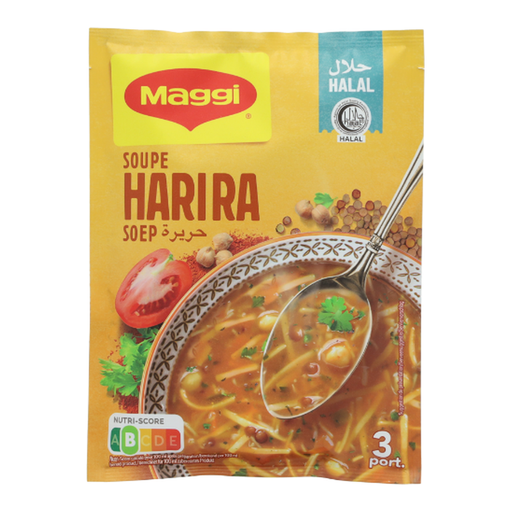 Image unavailable
If you’re taking this 90 g sachet to university, make sure you can follow its preparation instructions during your break.
Check the amount of water, whether cooking is required and the number of portions. Compare sugars and salt on the same basis for prepared soup, without treating a single figure as a ‘reduced sugar’ claim.
 Image unavailable
Consider this 85 g sachet if you can prepare it with the time and equipment available for lunch.
Check the amount of water, cooking instructions, portions and ingredients on the packaging. Then compare sugars and salt for a similar amount of prepared soup.
It’s a comparative claim governed by Regulation (EC) No 1924/2006, not simply an impression created by the soup’s name or sugar content. When choosing, check the claim on the exact product and read the nutritional information too; a different recipe alone doesn’t meet the comparison requirement.
Compare soups using the same unit, for example per 100 ml once prepared where this information is shown on the labels, then check the amount in your bowl. The DGCCRF states that nutrition information is given per 100 g or 100 ml; don’t compare a figure for the powder with one for the prepared soup.
No. Some recipes rehydrate with boiling water, while others need cooking. The instructions for Royco and Maggi soups sold by Auchan illustrate the difference; check the instructions for your sachet before taking it to university.
Read the ingredients list and any ‘may contain’ statements for the exact recipe, even if its name highlights the vegetables. The DGCCRF says allergenic ingredients must be highlighted on the labels of prepacked foods; they can vary from one flavour to another.