What should you check before buying?
First, check what’s allowed and available at your child’s school. Then choose a format and read the label for the specific recipe you plan to pack.
Individual instant sachets
Worth considering: for taking a pre-portioned serving, if your child can get hot water and use a suitable container.
Bear in mind: a dry sachet alone doesn’t take care of preparing lunch at school.
Family-sized sachets
Worth considering: for making several portions at home. Auchan, for example, lists Maggi products described as serving four people.
Bear in mind: you’ll need to divide up the portions and follow the product’s preparation instructions before relying on this format for lunch at school.
| Criteria |
What to check |
Consumers concerned |
| Preparing it at school |
Instructions, the amount and temperature of water, and whether your child is allowed to use the necessary equipment. |
If lunch needs to be prepared at school, I want to be able to follow the instructions without relying on equipment I can’t access. Around 31% of consumers say this is their main concern. |
| Ingredients and salt |
Ingredients list, highlighted allergens and the “salt” line in the nutritional information, compared on a like-for-like basis. |
If certain ingredients need to be avoided, I need to check the specific recipe rather than rely on its name. Around 31% of consumers put this check ahead of other criteria. |
| Format and portion |
Number of portions, amount prepared and how the soup fits into the planned lunch. |
If I’m packing the amount I want, I need to know how much soup a sachet will actually make and plan the rest of the meal. Format is the top priority for around 23% of consumers. |
| Stock and waste |
Number of usable portions and storage instructions after opening. |
If I’m buying soup for the family cupboard, I prefer a pack where all the portions can be used. Around 15% of consumers put this need first. |
Soups to explore on Joybuy
These dry soups suit different needs: portions to rehydrate, and soup whose preparation method should be checked before you consider taking it for lunch at school. Your choice depends on access to hot water, the container available and the recipe.
 Image unavailable
Hikari Instant Miso Soup Enjuku Tofu, 8 pieces
Worth considering if you want to pack a portion of miso soup, provided your child can get hot water and use a suitable container. Check the preparation instructions and salt content per portion on the pack.
View on Joybuy
 Image unavailable
Royco Carrot and Mushroom Noodle Soup, 3 × 20 cl
The three-portion format, with each portion making 20 cl, is suitable for packing soup in a sachet if it can be prepared at school. Joybuy states that this recipe contains wheat noodles. Check the instructions and allergens on the pack.
View on Joybuy
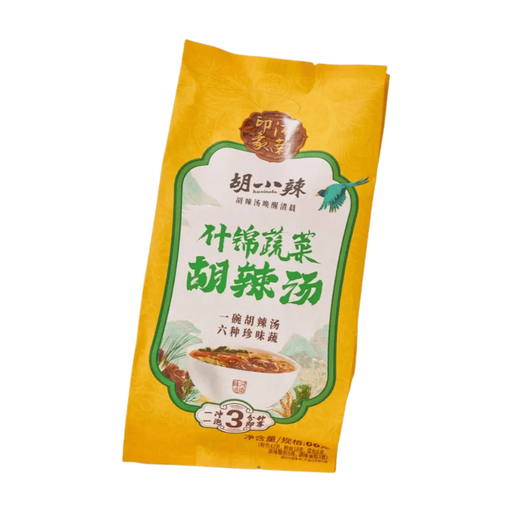 Image unavailable
Haoxiangni Spicy Vegetable Soup, 66 g
Consider this 66 g dry soup only if its preparation method is suitable for the facilities available at school. Check the pack to see whether it needs to be cooked or whether adding boiling water and leaving it to stand is enough.
View on Joybuy
Frequently asked questions
Can you take dehydrated soup to secondary school?
You can take a dry sachet, but your child can only make soup for lunch if they have the water, container and time they need. Check whether the product simply needs rehydrating or must be cooked, and make sure it complies with the school’s rules.
Which allergens should you check in dehydrated soup?
Read the allergens highlighted on each pack. Depending on the product, recipes featured by Joybuy, Carrefour and E.Leclerc may contain wheat, milk, celery or egg. The soup’s name is no substitute for reading the ingredients list.
Individual or family-sized sachet: which should you choose for a secondary school pupil?
An individual sachet makes it easy to take a single portion if it can be prepared at school. A family-sized sachet is better suited to making several portions at home. Check the stated number of bowls and the instructions for the product you choose.
How do you compare the salt content of two soups?
Compare the “salt” line in the nutritional information on a like-for-like basis, for example per 100 ml of prepared soup or per portion if those values are provided. Take account of the amount you’ll actually serve rather than comparing sachets of different sizes.
Do all dehydrated soups keep for the same length of time?
No. Check the best-before date and storage instructions on each pack. After opening a family-sized sachet, follow the product-specific instructions rather than assuming how long it will keep based on its dehydrated format alone.


