Parents who want to avoid measuring out a serving
For a separate portion in a lunchbox, the Royco recipes listed by Auchan in packs of three or four 20 cl sachets offer a clear starting point. Just remember that they need to be prepared.


For a secondary school lunchbox, a sachet with a clearly stated serving size saves you having to measure out a family-sized soup. Auchan, for example, lists Royco recipes in 20 cl sachets. These still need to be made with water, so before buying, check whether soup can be prepared at school, read the recipe ingredients and consider how it fits into lunch. A cup isn’t the only thing to consider: what’s inside and how it’s prepared matter too.
For a separate portion in a lunchbox, the Royco recipes listed by Auchan in packs of three or four 20 cl sachets offer a clear starting point. Just remember that they need to be prepared.
A sachet is only convenient to take with you if the pupil has access to hot water, can use a suitable container and is allowed to do so by their school.
The specific recipe matters more than the brand alone. Depending on the product, the Royco and Maggi listings published by Auchan and Carrefour mention wheat, milk or celery. Check the packaging of the product you buy.
First, distinguish a pre-portioned sachet from a large sachet that needs to be divided up. Whether you choose a cup or a sachet, read the preparation instructions too: the container itself doesn’t guarantee access to hot water or mean the soup can be prepared at school.
| What to consider | What to check | Who is this for? |
|---|---|---|
| Portion size and carrying | Check the number of sachets and the stated volume per serving. Don’t confuse the weight of the powder with the volume of soup once prepared. | To pack a lunchbox without weighing out the powder, I look for a pre-measured portion. Around 42% of consumers prioritise this kind of portioning. |
| Preparing it at school | Read the instructions, then check with the school whether pupils can access hot water and use a suitable container. | If the soup needs to be made at school, I want to know that the pupil will actually be able to prepare it. This is the first consideration for around 33% of consumers. |
| What else is in the lunchbox? | Check the ingredients and allergens for the exact product, then consider the rest of the meal. | When dietary requirements matter, I want to choose a recipe with all the facts and think about how the soup fits into lunch. For around 25% of consumers, ingredients come before format. |
Royco 20 cl sachets are portions of soup that need to be prepared, not ready-to-drink soups. Preparing them at school requires water and a suitable container, among other things.
Read the packet instructions again and ask the school what preparation options are available.
Two soups from the same brand can have different ingredients. Depending on the product, the Royco and Maggi listings published by Auchan and Carrefour mention wheat, milk, celery or poultry.
Check the ingredients list and allergen information on the exact product you’re buying.
A 65 g sachet or another large format isn’t necessarily a single serving. You’ll need to measure out a portion and store the rest.
If you choose this format, check the instructions and measure out the amount you need before leaving, rather than assuming the whole sachet is suitable for one lunch.
Auchan lists several Royco recipes in packs of three or four sachets, each making 20 cl of soup.
Carrefour lists Maggi Chicken and Vermicelli Soup, among other products, in a 65 g sachet.
Carrefour lists instant velouté soups in 4 × 20 g formats under its Carrefour and Carrefour Classic' brands, as well as other soups in sachets.
E.Leclerc lists Régal Soupe sachet soups, including vermicelli and vegetable recipes.
Auchan’s soup aisle separates instant individual soups from dehydrated family-sized soups.
The products below are grouped according to how clearly Auchan, Carrefour or Joybuy describes their individual packaging and how useful they may be as soup to take with you. They aren’t ranked by taste or nutritional quality.
| Rank | Product | Format | Why consider it? | Retailer |
|---|---|---|---|---|
| 1 | Royco Instant 12-Vegetable Velouté | 4 sachets of 20 cl | Auchan clearly states the number of sachets and the volume of soup per serving. The listing also mentions milk, celery and wheat. | Auchan |
| 2 | Royco Cream of Chicken | 4 sachets of 200 ml | Carrefour describes four separate servings; its listing mentions celery, milk and wheat, among other ingredients. | Carrefour |
| 3 | Royco Carrot and Mushroom Noodle Soup | 3 × 20 cl, around 3 servings | The Joybuy listing says to add water. Check the ingredients and whether it can be prepared at school before choosing this recipe. | Joybuy |
This selection includes Royco soup in 20 cl servings, Hikari instant miso soup and a Yum Yum noodle soup multipack. Compare the packaging and instructions with the options for preparing food at school: a multipack of small units isn’t necessarily a cup or a dehydrated soup.
 Image unavailable
Worth considering if you want to take a separate portion without dividing up a large sachet. The Joybuy listing says it makes around three 20 cl servings and is prepared by adding water. Check the ingredients on the packaging and whether pupils are allowed access to hot water at school.
 Image unavailable
Compare this if you’re looking for instant miso soup in a small pack. The title says 8 pieces. Before packing it for lunch, check the packaging, what type of soup it is, the ingredients and how to prepare it.
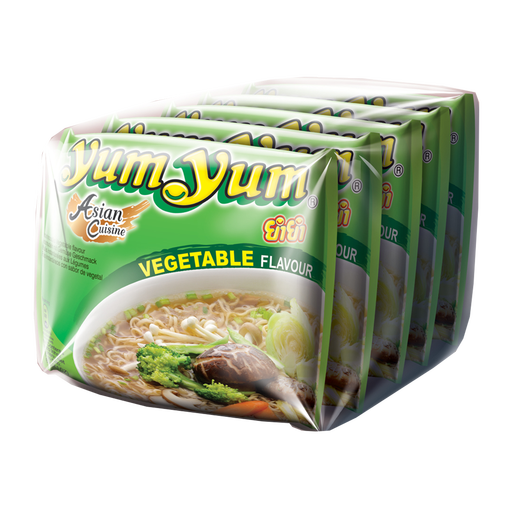 Image unavailable
Worth considering if the pupil enjoys vegetable noodle soup. The title states that it’s a 5 × 60 g multipack. Before taking it to school, check whether the units are individually wrapped, what type of product it is, the ingredients and the preparation instructions.
It depends on the school’s rules and facilities. Service-Public explains that each school’s internal rules set out what is permitted. Ask the school office whether pupils can get hot water, use a container and bring this kind of meal.
No. An individual sachet may simply contain a portion of soup that needs to be prepared. Royco products listed by Auchan and Carrefour state that they make 20 cl servings. Read the instructions for your chosen recipe to find out what to add and what container to use.
No. Check the information for the exact product and packaging you buy. Depending on the recipe, Royco and Maggi listings published by Auchan and Carrefour mention wheat, milk or celery. These details don’t apply to every soup from those brands.
Don’t assume that an individual portion of soup makes a complete lunch. To work out how it fits into a lunchbox, look at its ingredients and the rest of the meal. For teenagers, Manger Bouger provides guidance that takes into account vegetables, starchy foods or pulses and, depending on the meal, other foods.