Parents without access to hot water at school
If your child can’t get hot water at lunchtime, plan to prepare the soup before they leave home. In this case, the preparation instructions matter more than the size of the pack.


For a school lunchbox, start by considering where the soup will be prepared. A family-sized sachet that needs cooking is suitable if you can make the soup at home and then carry it in a suitable food container. Individual sachets make portioning easier, but still need hot water. Either way, check the school’s rules, allergens and salt content, and how much soup to serve your child.
If your child can’t get hot water at lunchtime, plan to prepare the soup before they leave home. In this case, the preparation instructions matter more than the size of the pack.
A family-sized sachet lets you make several bowls at home. Check how much water is needed and how many portions the pack claims to make, then adjust the amount you serve your child: Manger Bouger points out that portion sizes change as children grow.
If certain ingredients need to be avoided, compare each recipe rather than relying on its name. Carrefour and Joybuy product listings flag ingredients containing gluten, celery or milk, as well as possible traces of other allergens, depending on the soup.
Choose this if: an adult can prepare several portions before your child leaves home.
Bear in mind: the soup needs to be cooked, and your child’s portion will need a suitable container for the journey.
Choose these if: a portion can be made with hot water in a safe way that the school allows.
Bear in mind: the sachet is pre-portioned, but you’ll still need hot water and should check the recipe.
| What to consider | What to check | What matters to shoppers |
|---|---|---|
| Preparation | Read the instructions: does the soup need to be cooked, or just made up with hot water? Check with the school what preparation options are available and what its rules are for packed lunches. | I don’t want to give my child soup they can’t prepare at lunchtime; around 42% of shoppers might put this practical question first. |
| Ingredients | Check the allergens and any traces listed for the specific recipe. To compare salt content, use the same nutritional values basis. | If an ingredient needs to be avoided or I’m comparing salt, ingredients come before the format; around 33% of shoppers would make this their priority. |
| Portions | Compare the number of portions stated with the volume of soup the pack makes. Don’t assume a portion listed on the pack is automatically the right amount for your child. | If I’m also making soup for the rest of the family, I want to be able to divide it up to suit everyone’s needs; around 25% of shoppers would prioritise this flexibility. |
A family-sized sachet listed by Auchan needs water, bringing to the boil and cooking. The powder on its own isn’t a ready-to-eat lunch.
Before buying, decide where and who will prepare the soup. If it’s going to school ready-made, check that the food container is suitable for carrying it and for how it will be used.
Preparing soup at home takes time and may require a suitable container.
A vegetable or noodle soup may contain other ingredients and traces of allergens. The ingredients listed by Carrefour and Joybuy vary by product.
Check the ingredients list and highlighted allergens every time you buy, even if you already know the brand.
Anses lists soups and broths among the foods that contribute to salt intake. The amount shown can vary from one recipe to another.
Compare the values for prepared soup on the same basis, then consider how much you’ll actually serve.
The number of portions tells you how much the sachet makes; it doesn’t set an appropriate amount for every age. Manger Bouger says that portions for children aged 4 to 11 change as they grow.
Serve an amount that takes your child, their appetite and the rest of the meal into account.
Auchan lists Maggi soups that are advertised as serving four people. A 57 g Maggi beef, vermicelli and carrot soup is also available on Joybuy, although it isn’t the same family-sized format.
The brand offers several types of instant soup. Auchan, for example, lists boxes of four sachets, each designed to make 20 cl.
Carrefour lists dehydrated minestrone under its Classic' own-brand range.
E.Leclerc lists several sachet recipes, including a 72 g chicken, vermicelli and vegetable soup and a 104 g minestrone.
In its soup range, the retailer separates family-sized dehydrated soups from instant soups in individual sachets.
These soups show two ways to plan a school lunch: sachets made up with hot water, and recipes that need to be cooked before your child leaves home. Check the instructions for the product you choose and what the school allows before deciding on a format.
 Image unavailable
The individual sachets are convenient for preparing one portion at a time, provided hot water is available in a way the school allows. Check the ingredients before giving this recipe to a child: it includes gluten, celery, milk and chicken, and may contain traces of other allergens. Also compare the salt per portion on the label.
 Image unavailable
This soup is worth considering if you can prepare it before your child leaves home, rather than trying to make it in their lunchbox. The instructions say to bring the soup to the boil, then simmer for five minutes. It contains gluten, egg, soya, mustard and milk, and may contain traces of other allergens.
 Image unavailable
This recipe needs to be cooked before you pack a portion for school. Before deciding how much to make, check the water volume and number of portions on the pack: the preparation instructions and nutritional serving information don’t match. The ingredients include gluten and celery, and it may contain traces of egg, soya and milk.
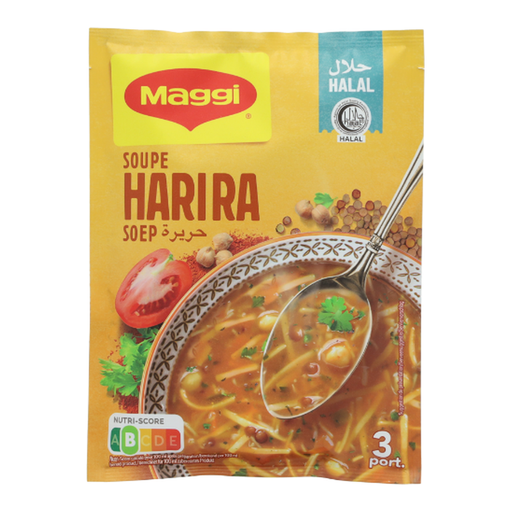 Image unavailable
This soup needs to be cooked before you pack it for a school lunch. Check the water volume and number of portions on the pack before dividing it up: the preparation instructions and nutritional serving information differ. It contains gluten and may contain traces of egg, soya, milk and celery.
No, not as soup that’s ready to eat. A family-sized sachet listed by Auchan needs 1 L of water, bringing to the boil and five minutes of simmering to make four bowls. Prepare it before your child leaves home, or check with the school whether it can be made there safely.
Read the ingredients list for the specific product and check its warnings about possible traces. For pre-packed foods sold in France, the DGCCRF says allergenic ingredients must be highlighted. The recipe name is no substitute for checking the label.
No. It doesn’t replace checking the ingredients list, allergens and nutritional values, especially the “salt” line. Also consider how much your child will actually eat rather than using the score alone to work out their portion.
Compare the preparation method, number of portions and volume of soup made before choosing. A family-sized sachet that needs cooking and a box of individual instant sachets can both make several portions, but they require different arrangements for a school lunch.