Which format is right for you?

Small groups with access to hot water

If everyone wants to make their own portion, individual sachets make it easy to share them out. Just make sure you have the water and time the recipe requires. The ranges from Carrefour France and Auchan France include individual portions.

Family picnic organisers

If you know how many people are coming and can prepare everything together, it’s worth comparing a family-size sachet with individual portions. Check the amount of water, cooking method and ingredients before choosing a recipe to share.

Larger groups with cooking facilities

A large tin is designed to make several litres of soup, so you’ll need enough water, utensils and containers to serve it. Roger de Lille, for example, lists a KNORR tin that makes around 12.5 litres of soup. That calls for a different set-up from a picnic for just a few people.

What should you check before buying?

Individual sachets

Choose these if: everyone should be able to make their own soup and hot water will be available.

Bear in mind: you’ll need more sachets if the group gets bigger.

Family-size sachet

Choose this if: everyone will share a recipe prepared in one go.

Bear in mind: this format is less flexible if the number of people or their preferences change.

Large catering tin

Choose this if: you’re catering for a large group and have the space and equipment needed to prepare and serve the soup.

Bear in mind: a tin of dehydrated soup that needs preparing is not a ready-to-eat tin; the finished quantity may be more than you need for a small picnic.

What to consider What to check What matters to shoppers
Portions and leftovers Compare the number of sachets and the quantity of soup they make, rather than looking only at the weight of the powder. If the number of people changes, I’d rather make the portions one at a time so I don’t end up with too much. Around 42% of consumers prioritise this kind of portion control.
Preparing it on site Check the amount and temperature of water, and the cooking or rehydration time given for the recipe. Without cooking facilities, I need to be able to make the soup with the water and equipment I’ll actually have with me. This is the top priority for around 33% of consumers.
Serving a group Check the stated finished quantity and bring the utensils and containers you’ll need to serve it. For a large group, my first priority is being able to serve everyone efficiently, without making an unmanageable amount. Around 25% of consumers prioritise being able to serve a group.

Picnic pitfalls to avoid

  • Mistaking stock for soup you can serve

    A soup base may need other ingredients. If you were planning to serve it as it is, you’ll need to adjust what you bring.

    Before buying, check the instructions, any ingredients you need to add, the amount of water and the preparation time.

  • Choosing a large tin for just a few people

    Roger de Lille, for example, lists a 1.125 kg KNORR tin that makes around 12.5 litres of soup. That’s more than most small groups need.

    Save large packs for a properly equipped group meal. For a few people, compare individual portions and family-size sachets first.

  • Assuming you know the allergens from the recipe name

    Ingredients vary from one product to another. Product listings checked at Carrefour France flag gluten, milk or celery in some ROYCO and MAGGI recipes, as well as possible traces of other allergens depending on the product.

    Check the label on the product you buy rather than relying on the brand name alone. In France, the Directorate-General for Competition Policy, Consumer Affairs and Fraud Control says that allergens must be highlighted on pre-packed foods.

  • Forgetting about perishable foods to go with the soup

    An unopened dry soup and chilled accompaniments need different storage conditions. According to Anses, you should limit how long perishable foods are kept at room temperature.

    Follow the storage instructions on the packaging and make sure any perishable accompaniments and leftovers are kept chilled.

Brands to know when comparing formats

MAGGI

Auchan France lists MAGGI dehydrated soups in family-size sachets, including 60–65 g options stated to serve four people.

  • A format worth considering when everyone will share the same preparation.
  • Check each recipe: the organic chicken, vermicelli and carrot recipe listed by Carrefour France flags wheat and possible traces of celery, eggs and milk.

ROYCO

The ranges at Carrefour France and Auchan France include boxes of three 18.5 g sachets and options in four 20 cl portions, depending on the recipe.

  • Individual sachets let you adapt how much you prepare to the number of people.
  • Ingredients vary by recipe: Carrefour France’s ROYCO Moroccan-style soup listing mentions barley and wheat containing gluten, as well as milk and celery.

CARREFOUR CLASSIC'

Carrefour France’s range includes dehydrated soups in different pack sizes, as well as instant soups in individual portions.

  • The range lets you compare the packaging and stated finished quantity for each recipe.
  • Don’t assume the weight of a sachet tells you how many portions it makes; check the preparation instructions for the product you choose.

RÉGAL SOUPE (Marque Repère / E.Leclerc)

E.Leclerc lists RÉGAL SOUPE dehydrated soups in sachets, including a 70 g cream of asparagus soup.

  • The listing for your chosen recipe lets you check its ingredients and nutritional information.
  • Check how to buy the product with the relevant store: some E.Leclerc listings say it is not sold directly on the website.

KNORR

The range also includes catering-size packs: Roger de Lille lists a 1.125 kg KNORR cream of asparagus soup that makes around 12.5 litres.

  • This kind of quantity could work well when organising a meal for a large group.
  • For a picnic with just a few people, check how many portions it makes before choosing a large tin.

Soup sachets to explore on Joybuy

These options include individual portions as well as sachets intended for a shared preparation. To choose between them, start with the number of people, then check whether you’ll have just hot water or the equipment needed for cooking too.

ROYCO dehydrated noodle soup with carrot and mushroom, 3 × 20 cl

ROYCO Dehydrated Noodle Soup with Carrot and Mushroom, 3 × 20 cl

Worth considering if several people want to make individual portions. The pack is labelled 3 × 20 cl; check the packaging for preparation instructions and the allergens in this recipe.

View on Joybuy

Hikari Instant Miso Soup Enjuku Tofu, 8 units

Hikari Instant Miso Soup Enjuku Tofu, 8 units

Compare it with other portioned soups if you’re planning to prepare each serving separately. The pack contains 8 units; check the instructions, ingredients and allergens in this miso soup before taking it with you.

View on Joybuy

MAGGI Chorba Soep, dehydrated soup, 85 g

MAGGI Chorba Soep, dehydrated soup, 85 g

Worth considering for a shared preparation rather than individually packed portions. For this 85 g sachet, check the amount of water and cooking instructions on the packaging, along with the allergens in the recipe.

View on Joybuy
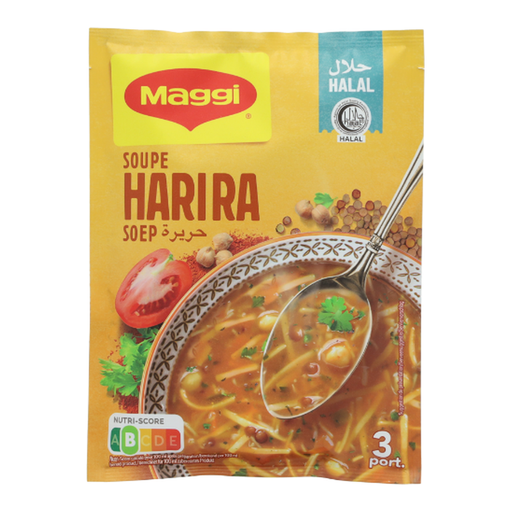
MAGGI Harira Soep, dehydrated soup, 90 g

MAGGI Harira Soep, dehydrated soup, 90 g

Consider this if you can organise a shared preparation on site. For this 90 g sachet, compare the cooking instructions and finished quantity with what you need, then check the allergen information.

View on Joybuy

Frequently asked questions

Can you eat dehydrated soup without preparing it?

No, you need to follow the preparation instructions for your chosen recipe. Check whether it needs only hot water, cooking or extra ingredients. A stock base won’t necessarily make a soup that’s ready to serve once rehydrated.

Is it better to bring individual portions or a family-size sachet?

Individual portions are a good choice if the number of people might change or everyone will make their own soup. A family-size sachet suits a shared preparation when you’ve planned for the group and have the right equipment. For example, Auchan France lists MAGGI options stated to serve four people, while the ROYCO formats checked include packs with several sachets.

How can you check the allergens in a soup sachet?

Read the label for the exact recipe you’re buying, including any warnings about possible traces. In France, the Directorate-General for Competition Policy, Consumer Affairs and Fraud Control says that allergens must be highlighted on pre-packed foods. The brand or soup name alone won’t tell you what it contains.

How do you compare the salt content of two dehydrated soups?

Compare the nutritional values on the same basis and check how much corresponds to the portion you’ll prepare. The Directorate-General for Competition Policy, Consumer Affairs and Fraud Control says that nutrition information is given per 100 g or 100 ml. Before comparing two recipes, check whether the figures are for the dry product or the prepared soup.

Should you bring a cool bag to the picnic?

For unopened dehydrated soup, follow the storage instructions on the packaging. If your meal includes chilled accompaniments or you’ll have perishable leftovers, make sure they’re kept cold: Anses recommends limiting how long perishable foods are kept at room temperature.