For a secondary school lunchbox, start by considering how the soup can be prepared. An instant portion needs hot water at lunchtime, while a soup sachet that needs cooking is better suited to being prepared before you leave home. Next, check the amount it makes, the ingredients, allergens and nutritional values for the recipe you choose. A more visible garnish alone doesn’t tell you whether the soup is suitable for lunch.
Who are these formats suitable for?
Parents who prepare lunch in advance
A soup sachet that needs cooking can fit into this routine if you prepare the soup before leaving home and put it in a suitable container. Check the recipe instructions: the family-size tomato and vermicelli format listed by Auchan for Maggi needs to be cooked before serving.
Families keeping an eye on portion sizes
The stated number of portions doesn’t always tell you how much soup will actually go into a lunchbox. Compare the amount of soup prepared with the size of the container you plan to use, and check whether you can store or share any leftovers.
Families checking ingredients and salt
A recipe name is no substitute for reading the label. Some products listed by Joybuy or retailers contain gluten, celery or milk, for example. To compare salt, use figures given on the same basis, such as per 100 ml of reconstituted soup.
What should you check before choosing?
For a secondary school lunchbox, first decide whether the soup will be prepared at home or at lunchtime. Then check how much will be served and read the label for each recipe, rather than assuming what it contains from the dish name alone.
| Criteria |
What to check |
For whom |
| Preparation at lunchtime |
Whether it needs hot water only or cooking; preparation instructions. |
If the soup needs to be reconstituted at school, I need to know whether hot water will be available without having to cook. Around 36% of consumers prioritise this. |
| Amount actually served |
Number of portions, amount prepared and how much is needed for the lunchbox. |
For a single lunch, I look for an appropriate quantity so I don’t prepare more soup than needed. The amount actually used is the priority for around 29% of consumers. |
| Type of recipe |
Stated ingredients and toppings; nutritional values on the same basis. |
If the soup is part of a larger lunch, I want to know what it contains rather than assume that a vegetable, pasta or vermicelli recipe is much the same as any other. Around 21% of consumers prioritise their choice of recipe. |
| Allergens and salt |
Ingredients list, declared allergens and salt per 100 ml of reconstituted soup. |
If certain ingredients need to be avoided, I check the specific recipe and its nutritional information before packing it. For around 14% of consumers, this comes before the other criteria. |
Mistakes to avoid
-
Assuming you can eat the soup straight from the sachet
The dehydrated soups listed by Auchan, Carrefour and Joybuy need hot or boiling water; some also need cooking. So, while a sachet may be easy to carry, it isn’t necessarily easy to prepare at school.
Read the instructions before choosing between making the soup at school and preparing it at home in a suitable container before you leave.
-
Judging by the size of the sachet alone
Two sachets of different weights won’t necessarily make the same amount of soup or provide the same number of useful portions for lunch.
Check how much soup the instructions say you’ll get and how much will actually be served.
Preparing a large sachet for one lunchbox may leave you with a portion to store or use separately.
-
Guessing allergens from the recipe name
A noodle or chicken soup may contain several ingredients that need checking. The Joybuy product listing for Royco carrot and mushroom soup names gluten, celery, milk and chicken among its ingredients.
Read the ingredients list and any ‘may contain’ warnings on the packaging of the product you buy, even if you already know the brand.
-
Assuming vegetable soup contains less salt
Values vary by recipe. E.Leclerc listings for Marque Repère minestrone and Eco+ tomato and vermicelli soups give salt values of 0.9 g and 0.6 g per 100 ml respectively.
Compare the ‘salt’ value per 100 ml of reconstituted soup, then take the rest of the lunch into account.
Brands to know when comparing recipes
These brands offer different recipes and formats. Always compare the specific product, as ingredients and preparation instructions can vary from one product to another.
Maggi
Dehydrated soups in sachets, including a tomato and vermicelli recipe listed by Auchan as serving four.
- The multi-portion format may suit preparing soup at home.
- Check the instructions and label for each recipe before packing it in a lunchbox.
Royco
Single-portion soups, including noodle recipes.
- The carrot and mushroom product listed by Joybuy contains three 20 cl portions to be prepared with hot water.
- This recipe contains gluten, celery, milk and chicken, so an individual portion is no reason to skip checking the ingredients.
Carrefour Classic'
A Carrefour own-brand range that includes dehydrated soups, such as a 9-vegetable recipe.
- The range includes several recipes, so you can compare different types of soup in sachets.
- Check the product listing and packaging for the ingredients and preparation instructions for your chosen recipe.
Marque Repère / Regal Soupe
E.Leclerc’s range of soups in sachets includes minestrone and other recipes to compare individually.
- The minestrone described by E.Leclerc combines vegetables and pasta.
- The presence of pasta and the amount of salt depend on the recipe, so check its ingredients and nutritional values.
Soups to consider on Joybuy
This selection includes portions to reconstitute with hot water and soups that need to be prepared before you leave home. Choose according to how the lunchbox soup will be prepared, then check the recipe and instructions on the packaging.
 Image unavailable
Royco carrot and mushroom noodle soup, 3 × 20 cl
An individual portion may be suitable if hot water is available at lunchtime. The recipe contains gluten, celery, milk and chicken; check the packaging for any other allergen information too.
View on Joybuy
 Image unavailable
Knorr Thai noodle and mushroom soup, 69 g, 0,70 l
Consider this if you can prepare the soup before leaving home: the recipe needs to be brought to the boil, then simmered for five minutes. It contains gluten, eggs, soya, mustard and milk; other allergens are also listed as possible.
View on Joybuy
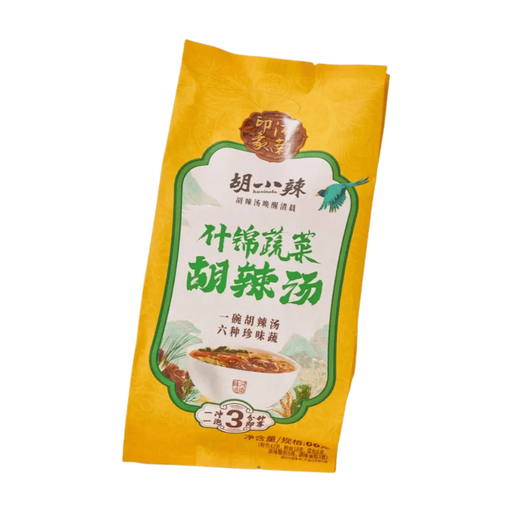 Image unavailable
Haoxiangni spicy vegetable soup, 66 g
This recipe may be suitable for preparing at school only if boiling water is available. It contains gluten, soya and sesame. To compare its salt content with another prepared soup, look for a value given for the reconstituted soup.
View on Joybuy
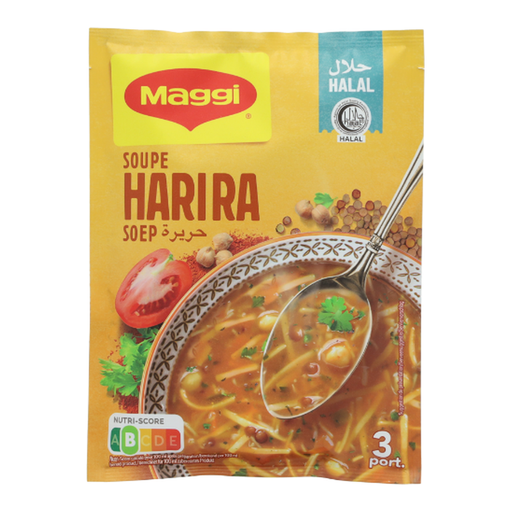 Image unavailable
Maggi Harira Soep, 90 g
This soup suits a routine where you can prepare it at home: after mixing with water, it needs to cook for ten minutes. It contains gluten. Before dividing the sachet into portions, check the packaging for possible traces of other allergens and the amount of soup it makes.
View on Joybuy
 Image unavailable
Hikari Enjuku Tofu instant miso soup, 8 sachets
The individual sachets are suitable for preparing at lunchtime if hot water is available. The recipe contains soya and may contain gluten. Check the label for possible traces and to compare the nutritional values for a prepared portion.
View on Joybuy
Frequently asked questions
Can you put a sachet of dehydrated soup straight into a lunchbox?
You can pack it, but you can’t eat it without preparing it first. The products listed by Auchan, Carrefour and Joybuy need hot or boiling water, and some need cooking. Check the instructions and what preparation facilities are available at school.
How can you compare the nutritional values of two formats?
Use the same basis for comparison, such as per 100 ml of reconstituted soup if that figure is given for both recipes. The DGCCRF states that nutritional information is shown per 100 g or 100 ml. Also check the amount you’ll actually serve if the stated portion sizes differ.
Which allergens should you check in noodle soup?
Read the ingredients list for the specific recipe, as well as any warnings about possible traces. The DGCCRF states that allergens must be highlighted in the ingredients list. Joybuy’s Royco carrot and mushroom soup contains gluten, celery and milk, among other ingredients.
Does vegetable soup always contain less salt?
No. You can’t tell how much salt a soup contains from its name alone. E.Leclerc’s listings for Marque Repère minestrone and Eco+ tomato and vermicelli soups show different values. Compare the ‘salt’ value on the same basis for reconstituted soup.


