Hotels serving few savoury breakfasts
A few sachets let you try serving hot soup without making a large quantity straight away. Carrefour France and E.Leclerc catalogues feature several recipes in smaller packs.


To add a hot, savoury option to a hotel breakfast, choose smaller packs if demand is occasional; consider a larger format only if you serve a regular number of bowls. In either case, check the preparation instructions, ingredients and allergens for the product you choose instead of relying on the recipe name alone.
A few sachets let you try serving hot soup without making a large quantity straight away. Carrefour France and E.Leclerc catalogues feature several recipes in smaller packs.
The exact recipe matters when you need to give customers information about ingredients and allergens. An asparagus soup listed by E.Leclerc contains wheat, milk-derived ingredients and celery, among other things, so the name alone doesn’t tell you what’s in it.
A larger pack may be worth considering if you can predict how much you’ll serve. As a guide for one specific product, EpiSaveurs says its Maggi onion soup makes 16 L when reconstituted, or 64 portions of 250 ml.
When serving soup alongside breakfast, start by considering how many bowls you expect to serve and how you’ll prepare them, then look at each recipe. This advice is for anyone considering this option for a hotel.
Consider these: when you want to try one or more recipes and demand is irregular.
Bear in mind: you’ll need to prepare and keep track of more sachets during service.
Consider this: when you serve a regular number of bowls and your team can follow the stated measurements.
Bear in mind: you may have more than you need on quieter mornings, and you’ll need to plan the preparation.
| Criteria | What to check | What matters to customers |
|---|---|---|
| Preparation and leftovers | Check the preparation steps and the volume after reconstitution before planning how you’ll serve it. A Knorr product featured by Auchan France needs to be brought to the boil, then simmered for five minutes. | When only a few bowls are wanted, I want to serve hot soup without making too much. Around 25% of consumers put a smooth service and keeping leftovers under control first. |
| Ingredients and allergens | Read the ingredients list and allergen declaration for the product you’re serving; don’t assume you know what’s in it from the recipe name. | If customers ask about the ingredients, I need information about the soup actually being served. Clear information about ingredients and allergens is a priority for around 31% of consumers. |
| Pack size and serving volume | Compare the number of portions and the final volume with your hotel’s usual consumption, without treating the dry weight as the volume served. | To restock without building up a supply of large packs that are rarely used, I first check how many bowls each pack will serve; around 25% of consumers prioritise choosing a pack size that matches demand. |
| Recipe choice | Try a limited number of flavours and check the ingredients for each one before expanding your range. | If I offer a savoury option at the buffet, I want to choose recipes my customers will want to ask for without opening lots of sachets. Around 19% of consumers prioritise variety. |
An asparagus soup listed by E.Leclerc contains wheat, milk-derived ingredients and celery, among other things. A vegetable-based name doesn’t tell you all the ingredients in that particular product.
Keep the packaging or product information for each soup you serve, and check the ingredients again if the recipe or supplier changes.
The professional-size Maggi onion soup pack featured by EpiSaveurs makes 16 L when reconstituted, or 64 bowls of 250 ml. Compare this yield with how much you actually serve.
Try smaller packs first, then keep track of how many bowls customers ask for over several mornings before switching formats.
Two sachets with different weights won’t necessarily make the same volume of soup or serve the same number of bowls.
Check the reconstituted volume and portion information for each product, taking into account the size of the bowls served at your hotel.
The recipe name doesn’t tell you about its allergens or nutritional information.
Check the ingredients, allergen declaration and ‘salt’ line on the nutritional label for the product you choose. Don’t make claims about its dietary suitability unless the information states this.
Royco offers several ranges of dehydrated soups, including creamy recipes, vermicelli soups and soups with croutons.
Carrefour France features its own dehydrated soups in several recipes, including ‘9 vegetables’.
The E.Leclerc catalogue features asparagus soups and vermicelli recipes, among other options.
Auchan France product listings include Knorr vegetable cream and onion soups.
The Maggi onion soup featured by EpiSaveurs is an example of a professional-size pack to consider when demand is regular.
These soups in portions or smaller packs can help you try a hot, savoury option at breakfast. Each recipe is different, so compare the ingredients and preparation instructions before adding it to your buffet.
 Image unavailable
The pack of three portions could be a good choice for a trial when demand for soup is low. The stated ingredients include gluten, celery, milk and chicken, so check the label on the batch you serve. Also check the measurements and preparation instructions before serving.
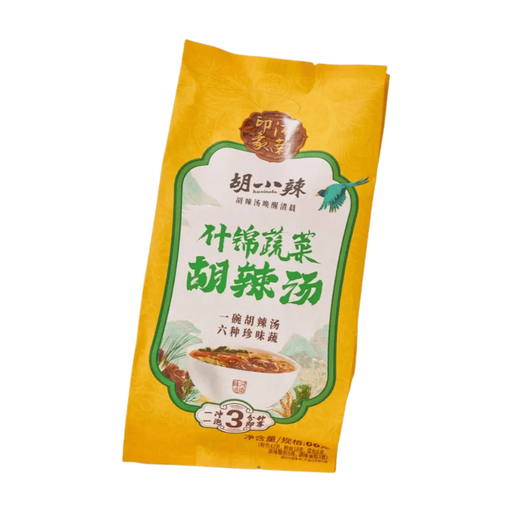 Image unavailable
This spicy recipe could be tried as a distinct savoury option rather than added to the whole buffet straight away. The stated ingredients include barley, wheat bran, soya and sesame, so check the ingredients on the batch before serving.
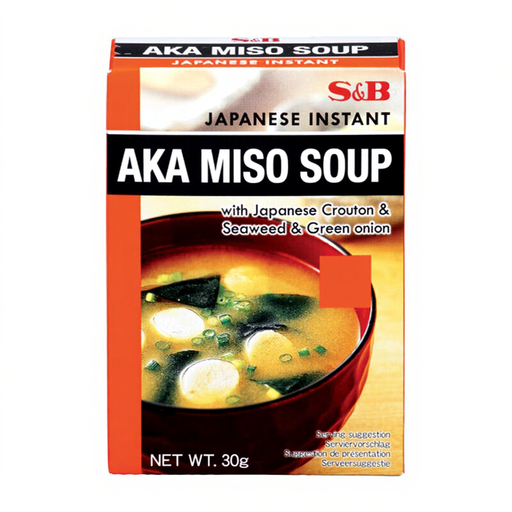 Image unavailable
Miso soup is a flavour you could try separately if it suits your customers’ tastes. The stated ingredients include soya and wheat, including in the croutons. Check the pack to see how many sachets it contains and the instructions for each one.
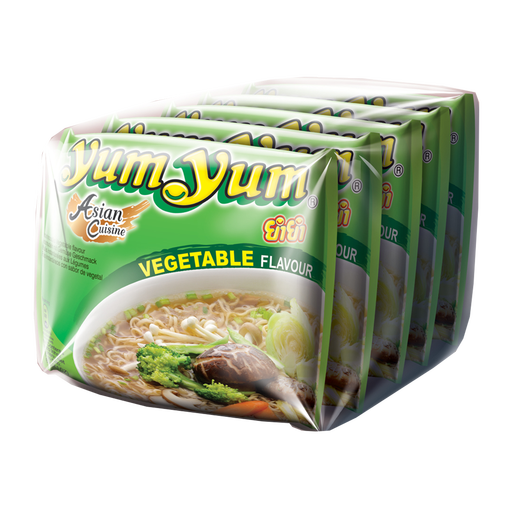 Image unavailable
This pack of five is handy for trying a portioned noodle soup, which is different from a simple smooth soup. The stated ingredients include gluten, soya and celery, and it may contain traces of crustaceans, fish, milk and sesame. Check the pack for the amount of water and preparation required before serving.
For a buffet, it’s best to think of soup as a hot, savoury option to complement breakfast rather than as breakfast in itself. Whether it works depends on customer demand and your team’s ability to prepare it and answer questions about its ingredients.
First compare the prepared volume, number of portions and preparation steps, then check the ingredients and allergens for each recipe. The sachet’s dry weight alone doesn’t tell you how many bowls you’ll be able to serve.
Check the label for the product you’re serving. Examples listed by E.Leclerc include wheat, milk-derived ingredients or celery, depending on the recipe. Ingredients can vary between products, so keep the information for the batch you use.
A best-before date (DDM) is not a use-by date. The DGCCRF says that a product may still be safe to eat after its best-before date if the packaging is intact, although it may lose some of its flavour. Before serving soup at your hotel, check the packaging, the stated storage conditions and your internal procedures.