For a fussy child, start with a flavour and texture they already accept, then choose a pack size that suits the amount you plan to serve. Next, compare the ingredients, allergens and salt per 100 ml of prepared soup, as well as per bowl served. Dehydrated soup can come in handy on an unexpected evening, but it isn’t automatically a complete dinner on its own.
Who is this option for?
Parents of children who are selective about taste or texture
A familiar flavour and a small portion make it easier to offer soup without preparing a large quantity straight away. The Manger Bouger guide for parents of children aged 4 to 11 points out that tastes also develop through a variety of food experiences.
Families planning a quick store-cupboard dinner
The number of people eating matters just as much as how quickly the soup can be made. A single-serve sachet is suitable for one small bowl, while a family-size sachet means checking the volume it makes and how many portions it will actually serve.
People keeping an eye on allergens and salt
Ingredients vary from one recipe to another, even within the same brand. Read the label for the exact product you’ve chosen and compare salt on a like-for-like basis, then check how much there is in the portion you’ll actually serve.
What should you look for first?
For soup aimed at a selective eater, start with the flavour and the portion you want to try. Then use the label to compare recipes and check what’s in the prepared bowl.
| Criterion |
What to check |
Who is this for? |
| Taste, texture and trying it out |
A flavour your child already accepts and a single-serve or family-size pack; check how much space vermicelli and vegetables take up in the ingredients. |
If my child is unsure about a new texture, I’d rather start with a small bowl of a familiar flavour. Around 45% of consumers are said to put enjoying the soup first. |
| Ingredients and allergens |
The allergens in the exact recipe and the salt per 100 ml as prepared, then per serving. |
I need to be able to rule out a recipe that doesn’t meet my child’s needs and know what’s in their bowl. For around 33% of consumers, ingredients are said to be the main concern. |
| Preparation and portions |
The volume of water, stated yield, preparation method and storage instructions. |
On an unexpected evening, I want to prepare the right amount without getting the measurements wrong. Ease of preparation and portion control are said to come first for around 22% of consumers. |
To compare the salt content of two soups, use the figures for each product prepared according to its instructions. The DGCCRF presents nutrition information per 100 g or 100 ml as a basis for comparison; how much you consume then depends on the size of the bowl. The ingredients list can also help you tell the difference between a vegetable soup and a recipe where vermicelli makes up a substantial part.
Mistakes to avoid
-
Assuming the picture on the sachet tells you what’s inside
A soup’s name or the vegetables shown on the packaging won’t tell you how much of them it contains. For example, the Carrefour listing for Maggi chicken and vermicelli soup states that vermicelli makes up 63% of the ingredients.
Read the ingredients list and any percentages given for the recipe you’re considering, while keeping in mind the flavours your child already accepts.
-
Checking salt per 100 ml but not per bowl served
The Joybuy listing for Royco carrot and mushroom soup states 0.91 g of salt per 100 ml as prepared and 1.82 g per 200 ml serving. The amount served therefore affects how you should interpret this figure.
Compare recipes per 100 ml as prepared, then work out the figure for the volume you plan to pour into the bowl.
-
Assuming two recipes from the same brand contain the same allergens
Ingredients vary between recipes. The Carrefour listing for Maggi chicken and vermicelli soup mentions wheat and milk-derived ingredients, among other things. Information for another recipe cannot replace the label on the one you’re considering.
Check the ingredients, highlighted allergens and any ‘may contain’ warnings whenever you switch recipe or pack size.
-
Choosing a large pack for the first try
If your child turns out to dislike the flavour or texture, a family-size portion could leave you with a quantity nobody else wants to eat.
Offer a small portion first. A family-size pack makes more sense when several people enjoy the same recipe.
Brands to know when comparing recipes
Royco
Royco offers instant soups in individual 20 cl portions, including a range of different flavours.
- The individual portion is handy for making a small bowl to try a recipe.
- The carrot and mushroom recipe shown on Joybuy contains 1.82 g of salt per 200 ml. Check its ingredients and allergens separately from those of other Royco recipes.
Maggi
Maggi offers dehydrated soups, including recipes with vermicelli.
- Product listings let you check the ingredients and preparation instructions for each recipe.
- A Maggi chicken and vermicelli soup listed by Carrefour contains 63% vermicelli and milk-derived ingredients. The details of one recipe don’t apply to the whole range.
Carrefour Classic'
The Carrefour range includes dehydrated vegetable soups, as well as tomato and vermicelli or leek and potato recipes.
- There are several flavours and pack sizes to compare.
- A name such as ‘9 vegetables’ isn’t enough to tell you the salt content, allergens or full ingredients.
Marque Repère, Régal Soupe et Eco+
These brands, sold at E.Leclerc, offer soups including tomato, vermicelli and vegetable varieties.
- Listings for some products give the ingredients and nutritional values per 100 ml.
- The E.Leclerc listing for Eco+ tomato and vermicelli soup states that it contains 35.9% vermicelli and 17.3% tomato. Check the exact recipe rather than relying on its name alone.
Auchan
The retailer stocks dehydrated and instant soups from different brands, in single-serve or family-size sachets.
- You can compare a range of pack sizes and recipe styles.
- Compare the labels of the products you’re considering. A varied range won’t tell you which ingredients or flavour your child will prefer.
Soups to explore on Joybuy
These products include a small carrot and mushroom option, two Maggi soups in the chorba and harira style, and an Aburaage miso soup. Start by choosing flavours your child accepts, then check the ingredients and preparation instructions for each sachet.
 Image unavailable
Royco carrot and mushroom noodle soup, 3 × 20 cl
The individual sachets are handy for making a small bowl if your child already likes this combination of flavours and noodles.
The Joybuy listing states 0.91 g of salt per 100 ml as prepared, or 1.82 g per 200 ml serving. Check the allergens on the packaging for this recipe before serving.
View on Joybuy
 Image unavailable
Maggi Chorba Soup 85 gr
This chorba is worth considering if your child already likes this type of spiced soup, rather than as a way to introduce a very different flavour during a rushed meal.
Check the allergens and instructions on the sachet. The directions for preparing it with 750 ml of water and the nutritional information for a 250 ml portion refer to different amounts, so take care when measuring out a bowl.
View on Joybuy
 Image unavailable
Maggi Harira Soup 90 gr
This harira is better suited to a first try if your child is already familiar with soups containing pulses and spices.
Before preparing a small amount, check the measurements on the sachet: the instructions for preparing it with 750 ml of water and the nutritional information for a 250 ml portion refer to different amounts. Check the allergens for this product too.
View on Joybuy
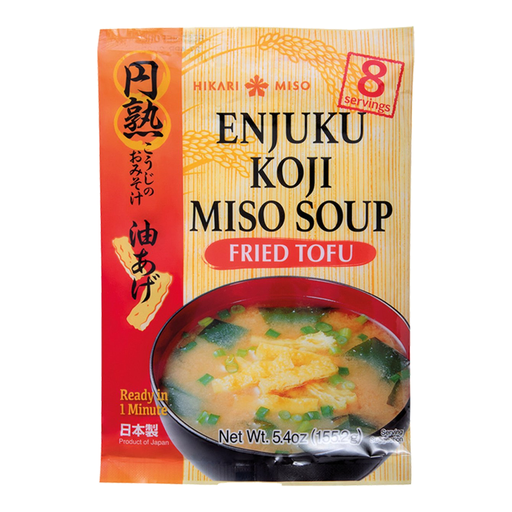 Image unavailable
Hikari Miso Enjuku Miso Soup Aburaage 155.2g
This Aburaage miso soup is worth considering if your child already enjoys the taste of miso, which is quite different from the vegetable or vermicelli recipes mentioned above.
For this variety, check the packaging for the ingredients, allergens, salt per portion and number of portions before deciding how much to serve.
View on Joybuy
Frequently asked questions
Is the Nutri-Score enough to choose soup for a child?
No. It doesn’t replace checking the exact recipe. Look at the ingredients, allergens, nutritional information per 100 ml of prepared soup and the amount in the bowl you’ll serve. The Nutri-Score alone can’t tell you whether this soup is right for your meal.
What should I check if my child needs to avoid an allergen?
Read the ingredients and highlighted allergens on the packaging for the exact recipe, along with any ‘may contain’ warnings. Another soup from the same brand may have different ingredients. If your child has a specific dietary restriction, base your choice on the label of the product in question.
How should I store dehydrated soup in the cupboard?
Follow the date and storage instructions shown on the sachet. After opening or preparing the soup, follow the guidance for the exact product you’ve bought rather than relying on the instructions for another soup.
Is a bowl of dehydrated soup enough for a child’s dinner?
Don’t assume a bowl on its own makes a complete dinner. Your child’s age, appetite, how much they eat and what else is served all matter. Manger Bouger’s recommendations for children encourage a varied diet. Tailor the meal to your child and add something to the bowl if needed.


