What should you check before choosing?
First decide how many bowls you’ll make, then compare recipes using the same nutritional basis and the amount you’ll serve. Assurance Maladie recommends checking values per 100 g or 100 ml when comparing products. For your meal, also consider the portion you’ll actually eat.
| What to check | Check this | Who is it for? |
|---|
| Carbohydrates and sugars |
Compare the values per 100 g or 100 ml, then check those for the prepared bowl. |
If I need to account for carbohydrates in my meal, the amount in the bowl I serve matters more than the sachet format. Around 33% of consumers make this their priority. |
| Salt and ingredients |
Check the salt per 100 g or 100 ml and per portion; also read the ingredients list. |
If I’m watching my salt intake or avoiding certain ingredients, I can’t tell how much a product contains from the words ‘single-serving’ or ‘organic’. This is a priority for around 27% of consumers. |
| Portion and preparation |
Check the stated number of portions and the amount of water needed to prepare the sachet. |
If I’m eating alone or sharing the soup, I want to know how much each person will get without confusing the whole sachet with one bowl. Around 27% of consumers prioritise this. |
| Availability and substitutions |
Check availability through your chosen retailer or shopping channel, and read the label again if you switch recipes. |
If I plan my meals around a specific product, I want to be able to find it or compare a substitute carefully. This is the priority for around 13% of consumers. |
Brands and retailers to know
These products are examples of formats and recipes you can compare. A product’s characteristics don’t necessarily apply to the brand’s entire range.
Royco
Auchan’s Tomato Velouté comes in four individual sachets, each to be prepared with 200 ml of water.
- The stated volume gives you a guide for preparing one bowl.
- For this recipe, Auchan lists 13 g of carbohydrates and 1.4 g of salt per 200 ml prepared. Check the allergens on the pack too.
Maggi
Auchan’s Organic Vegetable and Vermicelli Soup comes in a 60 g sachet, stated to make four portions when prepared with one litre of water.
- The sachet makes several bowls that you can portion out.
- Auchan lists 9.2 g of carbohydrates and 1.6 g of salt per 250 ml prepared portion. The organic label doesn’t mean you can skip checking the nutrition information and allergens.
Carrefour / Carrefour Classic'
Carrefour’s range includes Tomato Velouté in four 20 cl cartons, as well as other soups.
- The 20 cl cartons provide a useful volume guide when comparing formats.
- The Tomato Velouté product information lists ingredients including potato, sugar, dried glucose syrup and potassium chloride. Check the ingredients and nutrition information for the product you choose.
ECO+ (E.Leclerc)
E.Leclerc’s Tomato and Vermicelli Soup comes in a 66 g sachet stated to make four bowls.
- The stated number of bowls helps you plan a batch to share.
- E.Leclerc lists 4.1 g of carbohydrates and 0.6 g of salt per 100 ml prepared. Measure how much you serve to work out the values for your bowl.
Soups to compare on Joybuy
These products include individual sachets for making one portion and a sachet intended for several bowls. Compare the format with how you plan to use it, then check the preparation instructions, nutrition information and allergens for your chosen recipe on the pack.
 Image unavailable
Royco carrot and mushroom noodle soup, 3 x 20 cl
The individual sachets are handy if you want to make one bowl at a time. The pack is stated to contain three 20 cl portions. Check the nutrition information and allergens for this recipe on the pack.
View on Joybuy
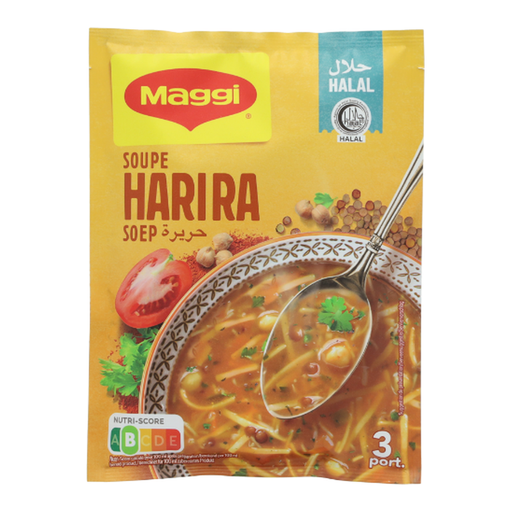 Image unavailable
Maggi Harira Soep, 90 gr
Consider this 90 gr sachet if you’re looking for a soup to prepare using a whole sachet. Before working out the nutrition information for your bowl, check the stated portion against the preparation instructions on the pack.
View on Joybuy
 Image unavailable
Maggi Chorba Soep, 85 gr
This 85 gr sachet lets you compare another recipe prepared using a whole sachet. Check the amount of water required and the portion size used for the nutrition information on the pack before working out what’s in your bowl.
View on Joybuy
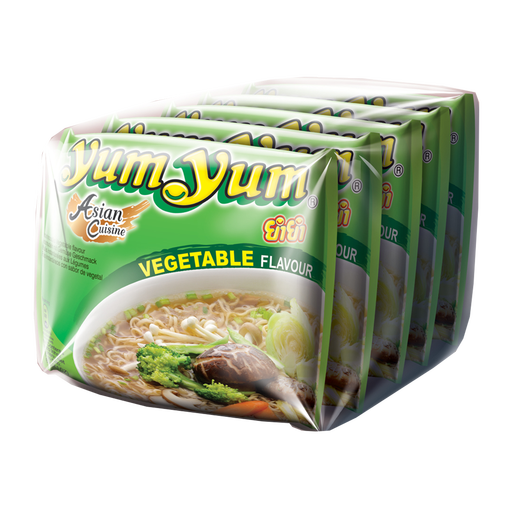 Image unavailable
Yum Yum HL vegetable noodle soup, 5 x 60 g
The five individual sachets let you prepare one at a time. Each sachet is listed as 60 g. Check the water volume and the basis used for the nutrition information on the pack to compare the prepared soup with other recipes.
View on Joybuy
 Image unavailable
Knorr Thai Noodle Soup with Mushrooms, 2 Assorted, 69 g, 0.70 L
This sachet is intended to make two bowls, so it’s better suited to sharing than to a single bowl defined by the sachet. Measure how much you actually serve before working out the nutrition information per portion of prepared soup.
View on Joybuy
Frequently asked questions
Should you avoid all dehydrated soup if you have diabetes?
No. Dehydrated soup doesn’t need to be ruled out just because of its format. Assurance Maladie recommends an eating plan tailored to individual needs. When choosing a recipe, pay particular attention to carbohydrates, sugars, salt and how much you’ll eat with your meal.
Should you compare the powder or the prepared soup?
Compare products using the same basis shown in their nutrition information, then work out the values for the amount of soup you’ll actually eat. The nutrition declaration per 100 g or 100 ml, as set out by the DGCCRF, makes comparisons easier. The preparation instructions then help you work out the amount in your serving.
Is Nutri-Score enough to choose a soup?
No. It doesn’t replace checking the carbohydrates, sugars, salt, ingredients and portion size. Compare the nutrition information for similar recipes, then take into account the bowl you’ll actually prepare.
Why check whether a recipe contains potassium chloride?
This ingredient appears in the ingredients list for Carrefour’s Tomato Velouté. Anses notes that potassium-based salt substitutes may pose risks for some people, but this doesn’t tell you how much potassium is in this particular soup. If you need to limit your potassium intake or follow specific dietary advice, ask your healthcare professional how to account for this ingredient.
What should you check on the label of prepacked soup?
Read the ingredients list, any highlighted allergens, the nutrition information, the quantity and the preparation instructions. The DGCCRF sets out the labelling information required for prepacked foods sold in France. When comparing two soups, make sure the values you’re checking refer to the same amount of product.


