Households dealing with damp after showering or cooking
You mainly notice condensation or a damp feeling after activities that create steam, and are looking for extra support in a particular room without compromising ventilation.


Start by checking the humidity in the room concerned, along with its air circulation and ventilation. A portable dehumidifier provides local support, but it does not replace the removal of moisture from your home. When choosing a model, compare the conditions behind its stated capacity, the room temperature, noise level, tank, drainage and maintenance requirements.
You mainly notice condensation or a damp feeling after activities that create steam, and are looking for extra support in a particular room without compromising ventilation.
You use a living room, utility room or bedroom to dry laundry and need to balance lower humidity with noise, tank capacity and continuous drainage.
The actual room temperature matters: compressor dehumidifiers do not remain equally effective as the room gets colder.
Start by measuring conditions in the room concerned, then choose the appliance according to the likely cause of the damp and the demands of everyday use.
| Priority | What to check | Your needs |
|---|---|---|
| Measurement and ventilation | Place a hygrometer in the room with air able to circulate around it. Compare readings before and after showering, cooking or drying laundry, then check the air circulation and ventilation if the signs persist. | I want to know whether the humidity spike is limited to a particular activity or keeps returning over time. A hygrometer helps you monitor a room, but it cannot diagnose a leak or inadequate ventilation. |
| Capacity and temperature | Compare the L/day figures with their test conditions, the room temperature and the room volume. With a compressor model, also check how it performs in cold conditions and how it defrosts. | My room is heated and the humidity mainly comes from laundry or everyday activities. I do not treat a capacity figure as a guarantee of results in my home. |
| Noise | Check the noise level at each speed, not just the lowest quoted figure or whether a night mode is available. Look for tests of the exact model. | The appliance needs to operate in a bedroom or living space without becoming too intrusive. Where possible, I prefer to position it away from the sleeping area. |
| Emptying and maintenance | Compare the tank capacity, full-tank shut-off, continuous drainage, the slope required for the hose and access to the filter. Check which accessories are actually included. | I want to avoid emptying the water too often. Continuous drainage may suit a utility room if the location allows a suitable connection. |
A dehumidifier works in the room where it is installed, whereas mechanical ventilation continuously removes moisture and pollutants. ADEME particularly recommends airing the room after showering and cooking.
Measure the conditions in the room concerned, air it after activities that create moisture, and have the ventilation system checked if condensation, musty smells or damage persist.
A stated capacity is measured at a given temperature and humidity level. Compressor appliances may also extract less water in a cold room and go through defrosting cycles.
Record the room temperature and check the test conditions shown on each product page before comparing L/day figures.
A small tank may need emptying repeatedly. Continuous drainage is only useful if the hose, its route and the drainage point are suitable for your installation.
Choose the tank capacity according to how often you are at home, and check the drainage slope, supplied accessories and the possible height of the drainage point.
Noise varies according to the selected power level. Les Numériques found the night mode disappointing on the Duux Bora 20L DXDH20 and noted significant noise at full power on the H.Koenig DSH520.
For a bedroom or occupied living space, compare the stated noise range and feedback for the specific model, then plan a position away from the bed.
The Tasciugo/AriaDry range may suit a living space or laundry drying when simple controls and continuous drainage are priorities.
The Bora range is aimed at users looking for a humidistat, continuous drainage and, depending on the model, connected control.
This brand offers dehumidifiers and hygrometers, including desiccant models worth considering for cooler rooms.
An option to consider for a utility room, or where there is no floor drain and emptying the tank is a major concern.
This brand may appeal for a living space or utility room when tank capacity and Wi-Fi connectivity matter in everyday use.
Joybuy options for measuring humidity in a room or using an electric dehumidifier as local support, particularly after showering, cooking or drying laundry.
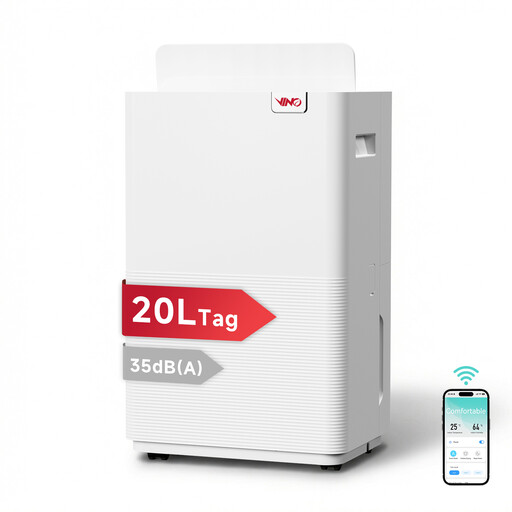 Image unavailable
Worth considering for a heated room or utility room where drying laundry increases humidity.
Stated capacity of 20 L/day at 30 °C and 80% RH, 2.5 L tank, Auto, Dry and Sleep modes, with continuous drainage option. Check what is supplied and the hose length before buying.
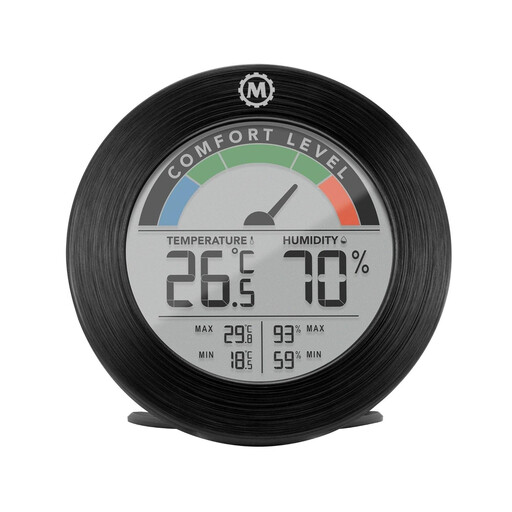 Image unavailable
Useful for monitoring changes in humidity and temperature before choosing a dehumidifier.
Measures temperature and humidity, with a comfort indicator and daily recording of minimum and maximum values. Keep it out of direct sunlight and away from windows or doors.
 Image unavailable
Worth considering for a utility room or drying area with access to a low-level drain.
Stated capacity of 25 L/day at 95 °F and 90% RH, 2.8 L tank, automatic defrost and continuous drainage hose included. The product details warn of a risk of icing below 15 °C.
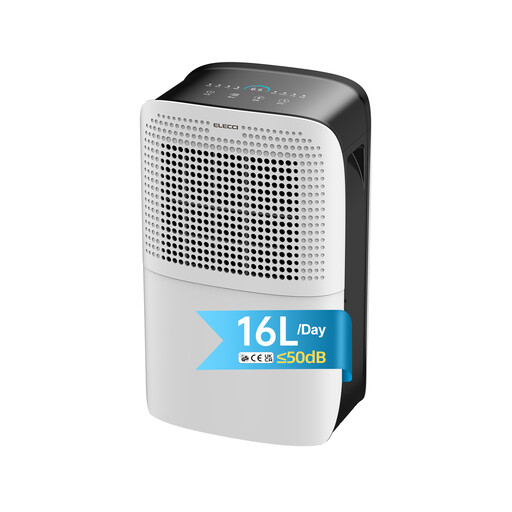 Image unavailable
An option for a medium-sized room, shower room or laundry area, provided the hose can reach a lower drain.
Stated capacity of 16 L/day at 86 °F and 90% RH, 3.1 L tank, four modes, timer and continuous drainage. Check the noise level and operating range before using it in a bedroom or cold room.
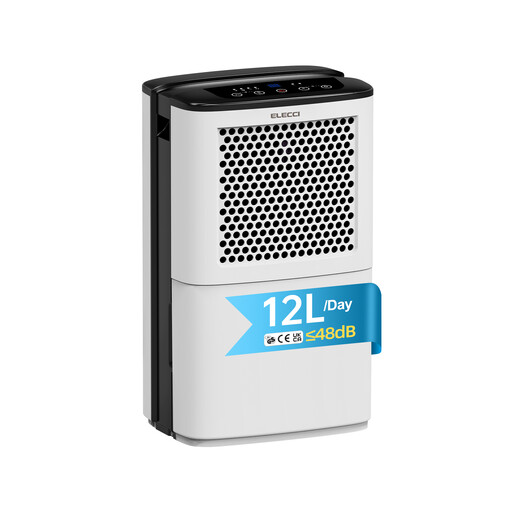 Image unavailable
Worth considering for a bathroom, bedroom or small utility room where the stated coverage is up to 25 m².
Stated capacity of 12 L/day at 86 °F and 90% RH, 3.8 L tank, dehumidification, drying and fan modes, with continuous drainage. Check the noise level and suitability for cold conditions at the intended location.
Repeated condensation, a musty smell, traces of mould or deteriorating coverings are reasons to first investigate how moisture is being removed. ADEME recommends airing the room after showering and cooking, and points out that mechanical ventilation continuously removes moisture and pollutants; a portable appliance remains a local support measure.
Capacity depends on the measurement conditions. For example, De’Longhi states 14 L/24 h for the DEXD214RF at 30 °C and 80% relative humidity. Compare L/day figures when the test conditions are provided and similar, then take the actual room temperature into account.
Not automatically. Duux states that its Bora becomes less effective as the room gets colder. Check the temperature range and defrosting performance of the exact model; a desiccant appliance may be another option to consider in a cold room.
Compare the tank capacity and expected extraction rate with how often you are at home. If the location allows it, continuous drainage can reduce the need for emptying; a condensate pump may help when the drainage point is higher than the appliance. Check the accessories and installation requirements for your chosen model.
Yes. A study published by the ADEME library describes air-drying laundry as an activity that releases a significant amount of moisture into indoor air. Air the room and reduce this source where possible; a dehumidifier with a laundry mode can complement these measures, while still requiring you to manage noise, maintenance and collected water.