Which features should you prioritise?
First, work out whether you need to treat an occupied room, dry laundry or deal with a very small area that gets damp occasionally. For an electric appliance, compare the conditions used to measure extraction, as well as noise and drainage requirements. A passive moisture absorber should not be seen as an established substitute for a room that is persistently damp.
| What matters |
What to check before buying |
What consumers are looking for |
| Cause of the damp |
Look for recurring signs and note which rooms are affected. Record what you find and tell your landlord if you suspect a leak or ventilation problem. |
If mould keeps coming back, I don’t want a comfort purchase to delay an inspection of the property. For around 26% of consumers, getting the problem acknowledged would be more important than choosing an extraction capacity. |
| Extraction to suit the room |
Compare L/24 h figures alongside the temperature and humidity at which they were measured, then consider the room and any laundry drying there. |
If the damp affects a living space or is made worse by drying laundry, I’m looking for a capacity that suits that use. This would be the priority for around 26% of consumers. |
| Noise and portability |
Check the noise level at the setting you plan to use. Also check for a handle, castors and the appliance’s weight if you need to move it between rooms. |
If I’m using the appliance near a bedroom, I want to be able to take noise into account and move it if necessary. Around 21% of consumers would prioritise this ease of use. |
| Water collection |
Check the tank capacity or where a hose could run. Find out whether a pump is needed if water has to be drained upwards. |
If the appliance is running for a long time near laundry, I’d prefer to avoid frequent emptying without leaving an awkward hose in the home. Water management would come first for around 16% of consumers. |
| A very specific area |
Before considering a passive absorber, work out whether the problem is genuinely limited to a very small area and a short period. |
For an occasional problem in a small space, I want to avoid an unnecessarily powerful electric appliance, but I wouldn’t expect an absorber to treat a damp room. Around 11% of consumers would prioritise this more limited need. |
Electric dehumidifiers on Joybuy
These electric appliances are suited to temporary home use in a damp room. Their stated capacities and features vary, so choose based on the room that needs treating, the level of noise you can tolerate and whether you can empty the tank or connect a drain hose.
 Image unavailable
VINO Smart 20 L/day, 2.5 L tank
Worth considering for a room where you’d like to switch between automatic, laundry-drying and sleep modes.
The title states a capacity of 20 L/day, a 2.5 L tank, Wi-Fi control and three modes. The 35 dB figure shown in the product details should be checked against the setting you plan to use. Also check the conditions under which the extraction rate was measured.
View on Joybuy
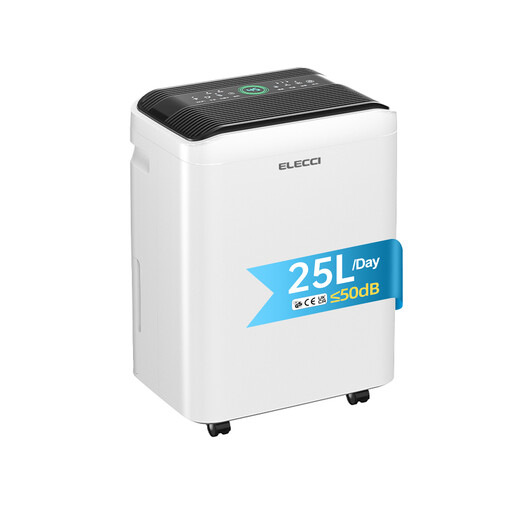 Image unavailable
ELECCI 25 L/day, 4.8 L tank
Worth considering if drying laundry or running the appliance for long periods makes water collection especially important.
The title states 25 L/day, a 4.8 L tank, three speeds and a hose for continuous drainage. The stated extraction rate is at 30 °C and 80% relative humidity, so check whether it’s suitable for your room. If the drain needs to be higher than the appliance, the pump is sold separately.
View on Joybuy
 Image unavailable
Comfee MDDN-10DEN7, 10 L/24 h
Worth comparing for a localised damp problem, once you’ve confirmed the room size this model is designed for.
The title states 10 L/24 h and approximately 40 m³ (16 m²). Other stated coverage figures for this product differ, so check which one applies to the room you want to treat. If you plan to use it near a bed, also check the noise level at the setting you intend to use.
View on Joybuy
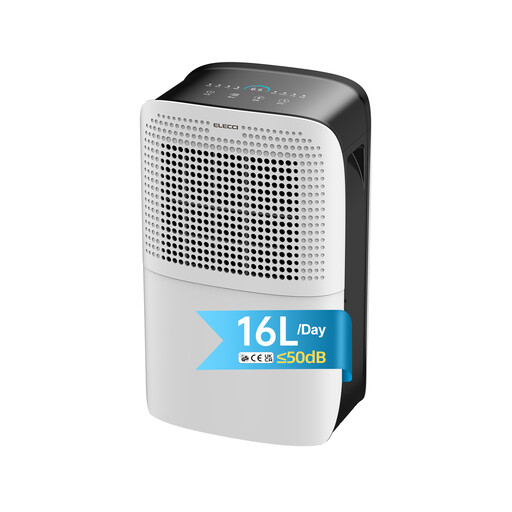 Image unavailable
ELECCI 16 L/day, 3.1 L tank
Worth considering if you’d like a choice of modes and the option to connect a hose to drain the water.
The title states 16 L/day, a 3.1 L tank, four modes and a drainage hose. The stated extraction rate is at 86 °F and 90% relative humidity. If you plan to use it in a bedroom, check the noise level at the setting you intend to use.
View on Joybuy
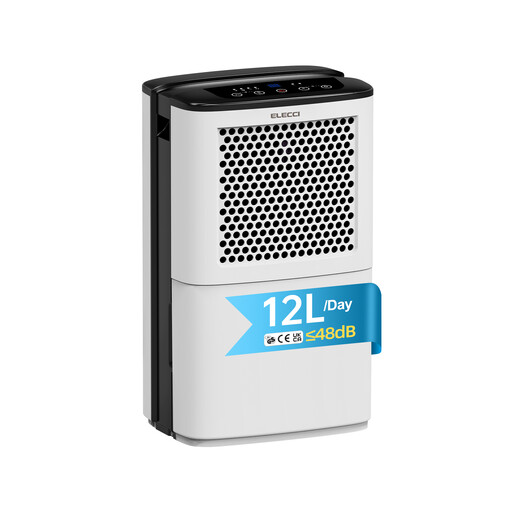 Image unavailable
ELECCI 12 L/day, 3.8 L tank
Worth considering for a specific room if you can check whether its stated capacity is suitable for the conditions there.
The title states 12 L/day, a 3.8 L tank, automatic defrost and continuous drainage. The stated capacity is at 86 °F and 90% relative humidity. Check whether the hose is included and, if you plan to use it in a bedroom, check the noise level at your intended setting.
View on Joybuy
Frequently asked questions
Is a dehumidifier enough if mould keeps coming back in a rented home?
No, not as the only response to recurring mould. The appliance may temporarily reduce moisture in the air, but a leak or inadequate ventilation needs to be assessed separately. ANIL recommends taking these issues into account when dealing with problems in a property. Record the signs and tell your landlord.
Should I look at litres per day or square metres first?
Start with the room you want to treat and how it’s used, then check the L/24 h figure alongside the temperature and humidity at which it was measured. A stated coverage in m² doesn’t, by itself, tell you how damp your room is or whether laundry is being dried there.
Can you use a dehumidifier in a bedroom?
Yes, if the model’s instructions allow it and you follow its installation guidance. To judge how much noise it may make, check the level at the setting you plan to use rather than relying on the ‘night mode’ label alone.
Is a tank or continuous drainage better?
A tank is fine if you can empty it easily. Continuous drainage can save you having to do this as often when the appliance is running for long periods. Before buying, check where the hose can run and where the water will drain. You only need a pump if the water has to be lifted.
Should you stop ventilating the room when using a dehumidifier?
No, a dehumidifier doesn’t replace fresh air. ADEME recommends opening the windows wide for 5 to 10 minutes every day and ventilating after activities that create moisture, such as showering.


