Who might need this extra help?
A dehumidifier can help you manage damp air temporarily while the cause of an ongoing problem is investigated.
A tenant dealing with recent condensation
You want to tackle damp in a room without immediately assuming that your habits are to blame. ANIL and ADIL des Pyrénées-Orientales point out that inadequate ventilation, water ingress and other problems with the property could be responsible. Keep an eye on how the marks develop, and have their cause checked if they persist.
Someone drying laundry indoors
You’re looking for extra help in the room where you dry your laundry, while keeping it ventilated. ADEME identifies indoor laundry drying as a major source of moisture. Check the stated capacity, tank size and drainage options on the model you’re considering.
Someone using a cold or lightly heated room
Before comparing stated capacities, take the usual temperature of a cellar, garage or other cold room into account. Meaco suggests considering desiccant dehumidifiers below 10 °C. Check the operating range and measurement conditions for each appliance.
What should you check?
First, distinguish between damp that needs managing temporarily and an ongoing problem with the property. Then consider the room and its temperature before comparing stated extraction rates, followed by practical day-to-day factors such as noise, emptying and moving the appliance.
| What matters |
What to check |
What consumers say |
| Cause of the damp |
Note where and when the marks appear; check accessible vents and look for signs of leaks or water ingress. |
If the marks return despite airing the room, I want to understand what’s causing them rather than rely on an appliance alone. Around 36% of consumers would put finding the cause first. |
| Room and laundry drying |
Compare the stated floor area or room volume for the specific model, and check the temperature and humidity conditions used to measure its capacity in L/jour. |
When I’m drying laundry in my room, I look for a capacity suited to the task without assuming the stated figure will be achieved in my home. Around 29% of consumers would share this priority. |
| Noise and day-to-day maintenance |
Check the stated noise level, tank capacity, automatic shut-off, drainage options and power consumption in W. |
Near a bed, I want to use the appliance without overlooking noise, emptying the tank or how long it needs to run. Almost 21% of consumers would prioritise these day-to-day considerations. |
| Temperature and portability |
Find out the room’s usual temperature. If you’ll need to move the appliance around, check its weight and whether it has handles or castors. |
In a cold room, or if I need to move the appliance often, I choose a solution that suits those conditions first. Around 14% of consumers would take this approach. |
Brands to compare
The specifications below are for specific models and are stated by their manufacturers; they don’t apply to every product in these brands’ ranges.
Rowenta
The Extrême Dry Compact+ DH5260F0 offers a useful benchmark for a living room, bedroom or laundry-drying use.
- Rowenta states that this model offers 16 L/jour, covers up to 40 m² or 100 m³, and has a 3 L tank, a full-tank alert, a 1 m hose and castors.
- The brand states a noise level of less than 40,5 dB(A). Compare the conditions behind the stated figures and check the specifications of the model you’re actually considering.
De’Longhi
The Tasciugo AriaDry Multi DEXD214RF gives you a chance to consider what matters in a compressor dehumidifier with continuous drainage.
- De’Longhi states a capacity of 14 L/24 h at 30 °C and 80 % relative humidity, power consumption of 300 W, a noise level of 40 dB(A) and continuous drainage.
- A capacity stated under these conditions can’t be compared directly with a figure measured in a cooler room or using a different test method.
Meaco
Meaco’s desiccant range is worth considering if the room you need to treat stays cold.
- Meaco recommends considering desiccant dehumidifiers below 10 °C and features the DD8L as one option for this type of use.
- This guidance comes from the manufacturer. Check the operating range, noise level and power consumption of your chosen model rather than assuming it will always outperform compressor dehumidifiers.
Electric dehumidifiers for rented homes
These electric appliances can provide extra support in a damp room or when drying laundry indoors. Compare the stated room coverage and practical considerations. This selection isn’t a substitute for investigating persistent damp, or for choosing a model specifically designed for a room that stays cold over a long period.
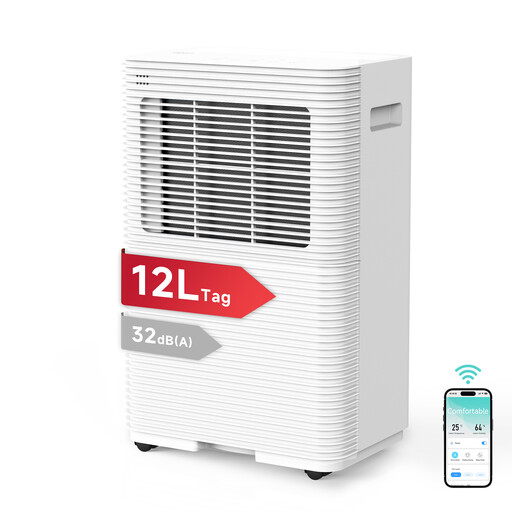 Image unavailable
VINO Smart WiFi 12 L/jour, 1,8 L tank
Worth considering for a room that matches the stated coverage. Check the conditions used to measure the stated capacity too.
The product name states coverage of up to 24 m², three modes (Auto, Dry and Sleep), WiFi control and R290 refrigerant.
If you’ll be running it near a bed, check which mode and conditions its noise rating applies to.
View on Joybuy
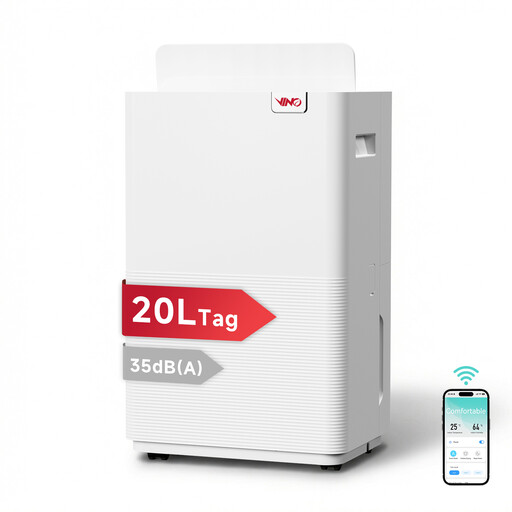 Image unavailable
VINO Smart WiFi 20 L/jour, 2,5 L tank
Consider this if the room you have in mind matches the stated coverage. Don’t assume the L/jour figure reflects the extraction rate at the room’s actual temperature.
The product name states coverage of up to 40 m², three modes (Auto, Dry and Sleep), WiFi control and R290 refrigerant.
Check the noise level for the mode you’ll use and whether the tank will need emptying often for your needs.
View on Joybuy
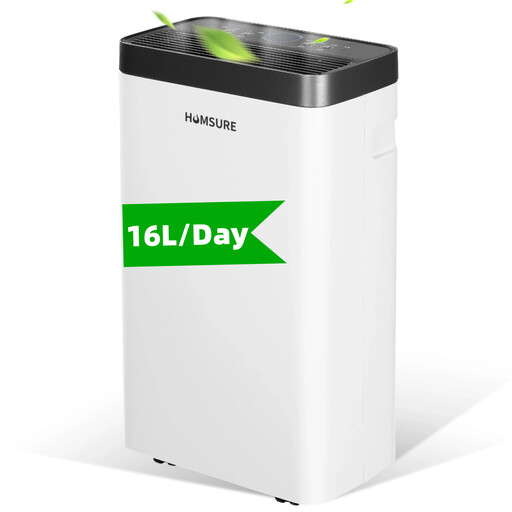 Image unavailable
HUMSURE 16 L/jour, 1,4 L tank
Worth considering for a room that matches the stated coverage, particularly if you can manage emptying the tank.
The product name states coverage of up to 25 m², a 24-hour timer, three modes, automatic defrost, automatic shut-off and R290 refrigerant.
If you’ll be using it for several hours at a time, check how the tank is managed and the conditions behind the stated capacity.
View on Joybuy
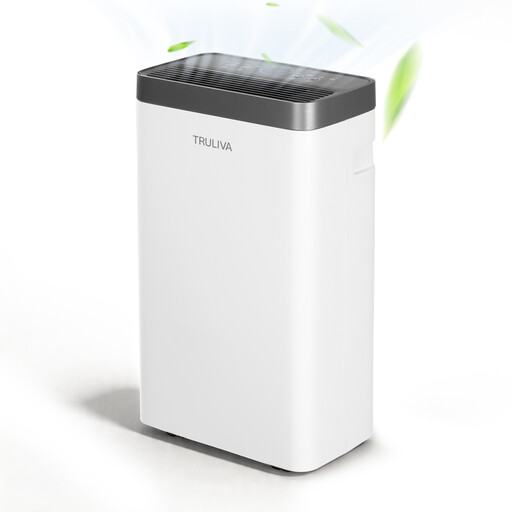 Image unavailable
TRULIVA AP10-2012EE, approx. 32 m²
Worth considering for a damp room or laundry-drying use, taking the room’s usual temperature into account.
The product name states a 24-hour timer, a laundry-drying mode, automatic defrost and continuous drainage.
Before using it near a bed, check the model’s noise level. Also make sure its operating conditions are suitable for a cold room.
View on Joybuy
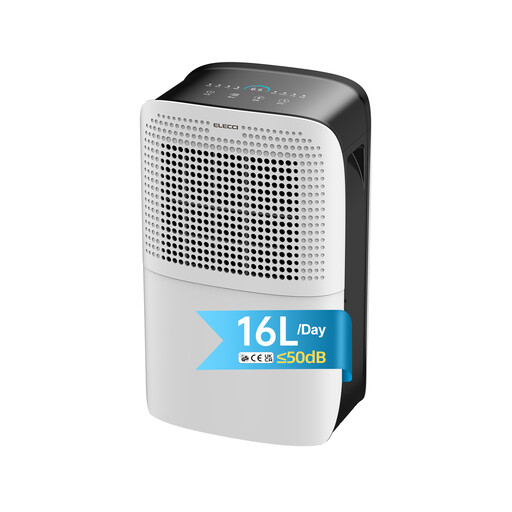 Image unavailable
ELECCI 16 L/jour, 3,1 L tank with hose
Consider this if you’re looking for an appliance for a room that matches the stated coverage and want to explore continuous drainage.
The product name states coverage of up to 32 m², four modes, a 24-hour timer, automatic defrost and R290 refrigerant.
Check that the hose can be routed appropriately in your home, and confirm the noise level if you’ll be using the appliance near a bed.
View on Joybuy
Frequently asked questions
Is a dehumidifier enough if damp marks keep coming back?
No. It can provide extra support, but recurring marks need to be investigated to find their cause. ANIL lists water ingress and ventilation problems among the possible causes. Keep a record of how the marks develop and report any that persist to your landlord.
How should I compare two capacities stated in litres per day?
First compare the temperature and relative humidity conditions used to measure them, then check the stated floor area or room volume for each model. For example, De’Longhi states that the DEXD214RF extracts 14 L/24 h at 30 °C and 80 % relative humidity. That figure alone doesn’t tell you how much it will extract in a cooler room.
Will a hose always save me from emptying the tank?
It can provide continuous drainage if the model is designed for it and the installation suits the room. Before choosing this option instead of emptying the tank by hand, check that a hose is included, that the water can be routed appropriately and what happens when the tank is full.
Should I keep airing the room while using a dehumidifier?
Yes. A dehumidifier doesn’t replace airing the room or ventilating the property. ADEME points out that ventilation continuously removes moisture alongside airing. Keep ventilation openings clear, and have any suspected fault investigated.
When should I consider a desiccant dehumidifier?
Consider one for a room that stays cold over a long period: Meaco recommends this technology below 10 °C. This is the manufacturer’s guidance, not a comparison that applies to every model. Check the chosen appliance’s operating range, noise level, power consumption and extraction conditions.


