People who regularly dry their laundry indoors
If you hang laundry in a ventilated room, a dehumidifier can provide extra help while it dries. It doesn’t replace airing the room or extracting the air.


A portable dehumidifier can be useful from time to time when laundry is drying in a ventilated room and humidity rises during washing. Choose one based on the room, noise levels and how you’ll drain the water. If humidity persists outside laundry days, look for the cause rather than relying on the appliance alone.
If you hang laundry in a ventilated room, a dehumidifier can provide extra help while it dries. It doesn’t replace airing the room or extracting the air.
If the appliance needs to run near a living or sleeping area, its size and noise levels matter just as much as its stated room capacity.
Before you buy, work out whether the damp is caused by laundry or by a leak, water ingress or poor ventilation. ADIL des Pyrénées-Orientales recommends identifying the source of the problem and, if it appears to be related to the property, taking the appropriate steps with your landlord.
First, check what’s causing the damp and whether air is circulating properly. A hygrometer can then help you monitor the room before and during drying. When choosing a dehumidifier, start with the room where you’ll put the clothes airer, then consider the practicalities of using it.
| What to consider | What to check before buying | Who it matters to |
|---|---|---|
| Cause of the damp | Compare humidity levels on laundry days and other days. Look for signs of leaks and check the condition of air inlets and outlets. | If I can still see signs of damp when no laundry is hanging up, I want to understand the cause before buying an appliance. Around 31% of consumers in this situation would make this their priority. |
| Room and drying | Check the room size or volume stated for the model, its advertised capacity and test conditions, and whether it has a laundry mode. | If I regularly hang a load of laundry in the same room, I want an appliance sized for that space rather than relying on a standalone extraction figure. This would be the main requirement for around 25% of consumers in this situation. |
| Noise and water drainage | Check the stated noise level, tank capacity and whether you can connect a hose to a suitable drain. | In a studio flat or near a bedroom, I need to be able to put up with the noise and manage the tank while the laundry dries. Around 25% of consumers in this situation would put ease of use first. |
| Electricity and maintenance | Check the power rating in W, humidity controls and the filter and tank maintenance instructions. | If I plan to use the appliance with every load of laundry, I want to know how long it will run and what maintenance it needs. Around 19% of consumers in this situation would make this their priority. |
A dehumidifier removes water from the air, but it won’t fix water ingress or replace stale air. ADIL des Pyrénées-Orientales advises finding the cause of persistent damp before deciding how to deal with it.
Check for signs of leaks and inspect the ventilation grilles. If the problem appears to be related to the property, contact your landlord or a relevant adviser.
Running the appliance continuously can use electricity while delaying the search for the underlying cause.
The stated capacity depends on the model and its test conditions. For example, De’Longhi specifies 10 L/24 h at 30 °C and 80% relative humidity for the DEX210SF. That figure alone doesn’t tell you how the appliance will perform in a different room.
Also compare the stated room size, test conditions and where you’ll actually put the clothes airer.
An appliance near a living area can be disruptive, while a full tank will stop it working unless the water is drained another way.
Decide where it will run, then check the noise level and tank capacity. If you’re considering continuous drainage, make sure it’s compatible with the instructions and your drainage point.
Without a suitable drainage setup, frequent emptying takes time and can interrupt a drying session.
Checking humidity helps you work out when the appliance is useful and when it’s running unnecessarily. If the model has a filter, this will also need maintenance as set out in the instructions.
Check humidity with a hygrometer, set a target level if the model allows it, and follow the tank and filter maintenance instructions.
The range includes the Extrême Dry Compact+ DH5260F0, which Rowenta presents as suitable for drying laundry and for rooms up to 40 m² or 100 m³.
According to De’Longhi, the Tasciugo AriaDry DEX210SF combines a laundry function with an electronic humidistat and the option of continuous drainage.
The Aquaria S1 range includes the 16 P, which has a Dry mode for laundry, and the 20 P, which is stated to suit a larger room volume.
Meaco presents the Arete One 6L as a compact model for spaces up to 25 m², including studio flats and student bedrooms.
These models are intended to provide extra help while drying laundry indoors. Compare the stated room size and water drainage options with your setup, and don’t treat the appliance as a solution to a leak or poor ventilation.
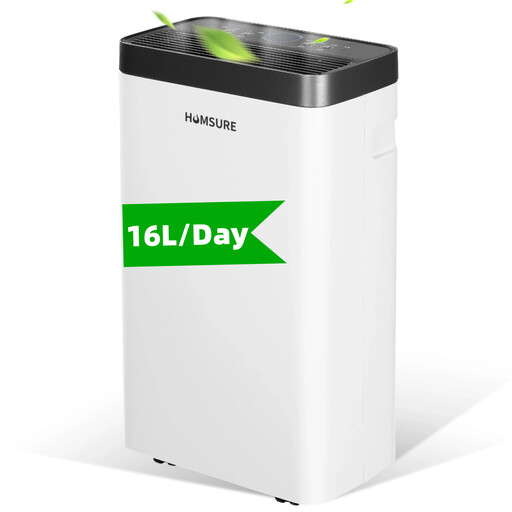 Image unavailable
Worth considering if you dry laundry in a room that matches the stated floor area. The title lists a rated capacity of 16 L/day, a 25 m² coverage area, a 24-hour timer and automatic shut-off. If noise matters near a bedroom, check the conditions for the stated noise level before choosing.
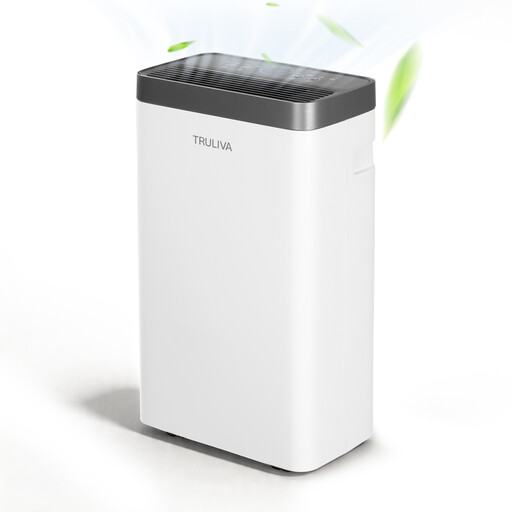 Image unavailable
Consider this if you want a laundry setting and have a compatible drainage point. The title mentions laundry drying, continuous drainage and a 24-hour timer. For a studio flat or bedroom, check the noise level at the intended location too.
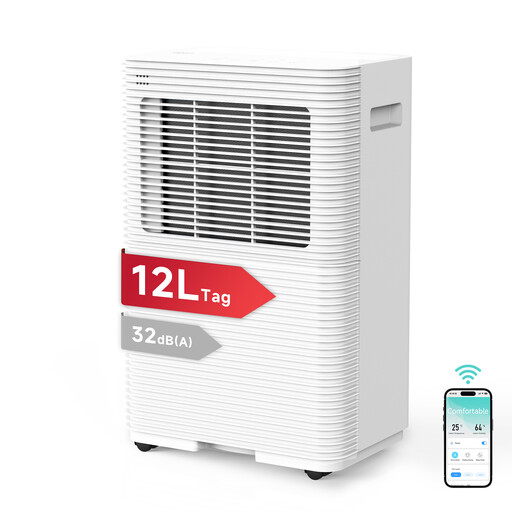 Image unavailable
Worth considering for a room that matches the stated coverage of 24 m², if you want a Dry mode for laundry. The title lists three modes—Auto, Dry and Sleep—as well as WiFi control. Different noise figures are listed for this model, so check which one applies to the mode you’ll use.
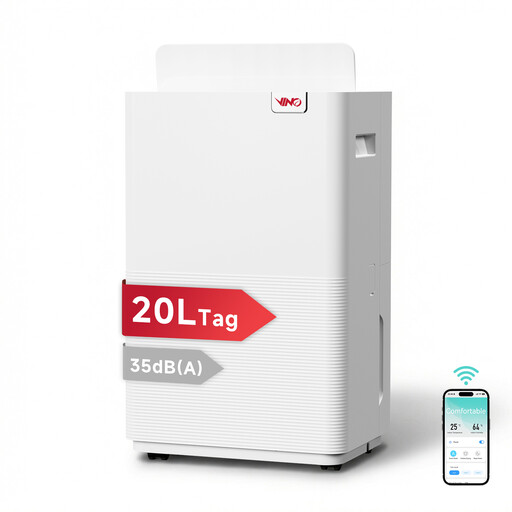 Image unavailable
Compare this model if the room where you dry laundry matches the stated coverage of 40 m². The title lists Auto, Dry and Sleep modes and a 2.5 L tank. Its rated capacity can’t predict how much water it will extract in your room. If noise is a deciding factor, also check the figure for the mode you’ve chosen.
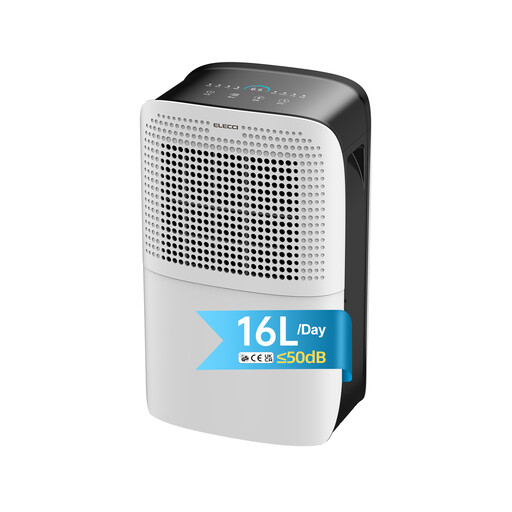 Image unavailable
Consider this if you want to choose between using the tank and draining water through a hose when doing laundry. The title mentions a drainage hose, four modes and a 24-hour timer. Check the noise level before placing it near a bedroom.
No. It can remove some of the moisture released as laundry dries, but it doesn’t replace ventilation. France Rénov’ notes that ventilation removes moisture produced by everyday activities, so choose a well-aired room or one with working air extraction.
Use a hygrometer to measure humidity in the same room before, during and after drying. ADEME recommends a relative humidity range of 40 to 60% in the home. These readings help you track changes, but they can’t identify a leak or water ingress on their own.
A tank is suitable if you can keep an eye on it and empty it. Check its capacity and what happens when it’s full. Only consider continuous drainage if the model supports it and your drainage point allows you to install it in line with the instructions.
Multiply the model’s power rating in kW by the number of hours it runs to calculate its energy use in kWh. Then apply your electricity tariff. Actual running time depends in part on the room’s humidity and the setting you choose.
Look for the cause rather than relying on a dehumidifier. After checking the airflow, ventilation grilles and signs of leaks, ADIL des Pyrénées-Orientales advises telling your landlord if the damp persists and appears to be related to the property.