Which factors should you check first?
First, work out whether damp mainly occurs while your laundry is drying. If it does, and the room is properly ventilated, choose a technology suited to its usual temperature. Then make sure the tank capacity and installation requirements fit the way you dry your laundry.
| Factor |
What to check |
Shoppers it matters to |
| Cause of the damp |
Check whether it persists on days when you aren’t drying laundry. Before choosing an appliance, check the ventilation and look for any signs of water. |
If the walls stay damp even when I’m not drying laundry, I want to understand the cause before buying an extra appliance. Around 33% of shoppers prioritise this check. |
| Capacity and running time |
Compare the stated capacity in L/jour with the conditions it was measured under, then check the tank capacity and whether continuous drainage is possible. |
When several loads of laundry are drying regularly, I want an appliance I won’t have to stop often to empty; around 25% of shoppers put this kind of uninterrupted use first. |
| Temperature and comfort |
Check the operating range if the room is cold. If the appliance will be near an occupied space, also check the noise level and power consumption of the specific model. |
In a cool utility room or near a space where I spend time, I want to know how the appliance will work in those conditions. This is the priority for around 25% of shoppers. |
| Drainage and placement |
For gravity drainage, make sure the water outlet is lower than the appliance. In a bathroom, have the placement checked against electrical safety requirements. |
If I want to leave laundry to dry without keeping an eye on the tank, or put the appliance near a bathroom, the drainage route and placement are crucial; around 17% of shoppers put them first. |
When interpreting a capacity in L/jour, don’t rely only on the stated room size. The temperature, starting humidity and amount of laundry may differ from the conditions used to calculate that figure. Continuous drainage using a simple hose also needs a downward route: Air&Me explains this principle for gravity drainage.
Brands to know
These examples show configurations worth comparing for drying laundry. The specifications mentioned apply to the named models, not to every product from each brand.
De’Longhi
The Tasciugo AriaDry Multi range includes the DEXD216RF, which is a useful point of comparison for a heated room where laundry dries regularly.
- Les Numériques lists the DEXD216RF with a stated capacity of 16 L/jour, a 2,1 L tank and continuous drainage.
- Consider how often you’ll need to empty it based on your usage and the actual conditions in the room, rather than judging its running time from the L/jour capacity alone.
Duux
The Bora 20L DXDH20 is worth considering if you’re comparing a configuration that combines a stated capacity with a larger tank.
- Les Numériques lists this model with a stated capacity of 20 L/jour, a 4 L tank and continuous drainage.
- These figures don’t necessarily reflect the amount of water it will extract at the temperature and humidity level in your room.
Wood’s
The MDX20P is worth considering when the drainage route makes simple gravity drainage impractical.
- Les Numériques describes the MDX20P as having an integrated pump and a large tank.
- Check the intended drainage route and the MDX20P instructions. The pump on this model isn’t a feature of every Wood’s appliance.
Air&Me
The brand offers desiccant models for rooms that aren’t heated much, as well as a small Peltier model.
- Air&Me presents its desiccant range as suitable for unheated spaces.
- The brand states a capacity of 0,75 L/jour for the ORAIN Noir Peltier model. Check the capacity of the model you’re considering before choosing it for regular laundry loads.
Meaco
Meaco offers compressor models and DD8L desiccant models, making it useful to compare technologies for different room temperatures.
- Meaco’s published range includes models using both technologies.
- Suitability for low temperatures is a brand positioning; compare the operating range and specifications of the exact model.
Dehumidifiers for drying laundry
These Joybuy models are dehumidifiers offered to help with indoor laundry drying. To compare their features, look at the tank, the stated drying mode and whether you can actually drain the water in your room. If the room is cold, also check the temperature the appliance is designed to operate at.
 Image unavailable
VINO 20L Smart, 2,5 L tank
Worth considering if you regularly dry laundry in a room where you can manage the tank or install suitable drainage.
The product name specifies a 2,5 L tank, Wi-Fi control and Auto, Dry and Sleep modes. The stated coverage is 40 m².
Before placing it near an occupied space, check its noise level: the figures in the title and detailed specifications don’t match.
View on Joybuy
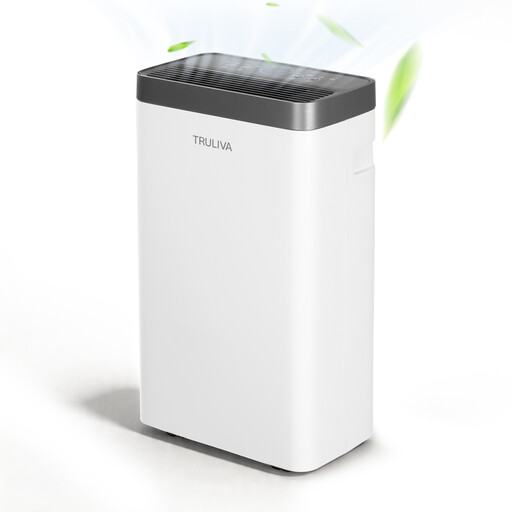 Image unavailable
TRULIVA AP10-2012EE, laundry drying
Worth considering for a room where laundry dries regularly, provided its water management suits the length of time you want to run it.
The product name lists coverage of around 32 m², a 24-hour timer, automatic defrost and continuous drainage.
If the room isn’t heated much, check the model’s operating specifications before relying on its drying mode.
View on Joybuy
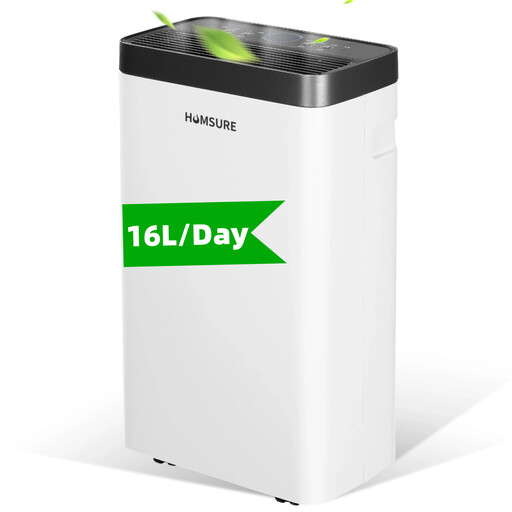 Image unavailable
HUMSURE 16 L/jour, 1,4 L tank
Worth comparing if you prioritise a nominal capacity stated in L/jour for drying laundry, and don’t mind keeping an eye on a 1,4 L tank.
The product name lists coverage of 25 m², a 24-hour timer, three modes and automatic defrost.
The stated capacity won’t predict how much water the appliance extracts at every temperature. Check the measurement conditions if your room is cold.
View on Joybuy
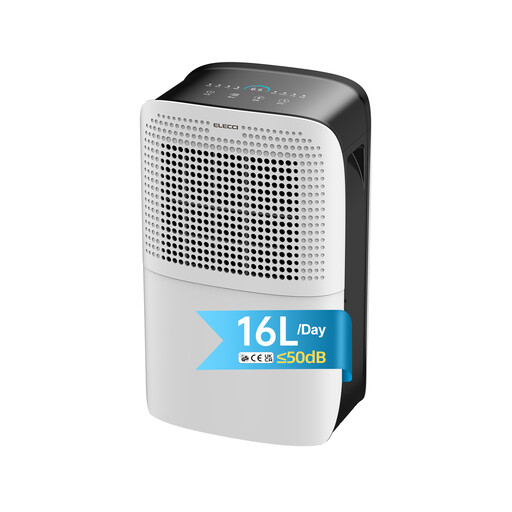 Image unavailable
ELECCI 16 L/jour, 3,1 L tank
Worth considering if how often you have to empty the tank matters when choosing a dehumidifier for drying laundry.
The product name specifies a 3,1 L tank, drainage hose, four modes, a 24-hour timer and stated coverage of 32 m².
For gravity drainage, check that there’s an accessible water outlet lower than the appliance. If the room is cold, also check the model’s operating range.
View on Joybuy
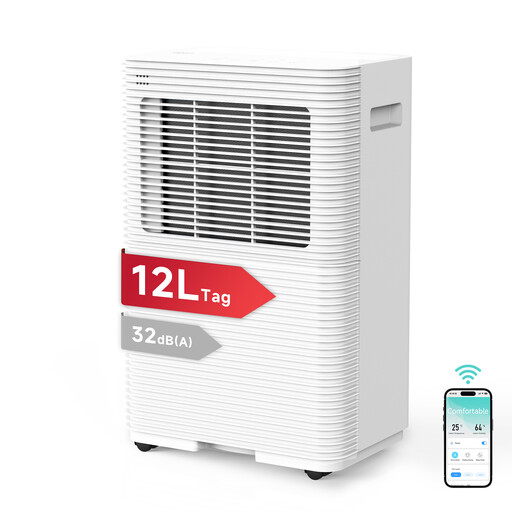 Image unavailable
VINO 12L Smart, 1,8 L tank
Worth considering if you’re looking for a model with a Dry mode for laundry and can allow for the need to empty a 1,8 L tank.
The product name lists Wi-Fi control, Auto, Dry and Sleep modes, and stated coverage of 24 m².
If noise is a key consideration near an occupied room, check the model specifications: the title and detailed description give different figures.
View on Joybuy
Frequently asked questions
When should you check the ventilation before buying?
Make this a priority if damp persists when there’s no laundry drying, if condensation forms on the walls or if you notice signs of mould. ADEME prioritises air renewal, while France Rénov’ highlights how inadequate ventilation can cause condensation. Also check for a possible leak or water ingress.
What capacity in L/jour should you choose for laundry?
Compare the measurement conditions and the running time of the specific model, rather than using a threshold based on room size alone. As examples of different configurations, Les Numériques lists the De’Longhi DEXD216RF at a stated 16 L/jour with a 2,1 L tank, and the Duux Bora 20L DXDH20 at a stated 20 L/jour with a 4 L tank. These figures won’t predict the extraction rate in your room.
Does continuous drainage always mean you won’t need to empty the tank?
No. Gravity drainage requires the water to flow down to the outlet. Air&Me explains this principle for hose installations; if the water needs to flow upwards, check that a suitable pump is integrated or compatible with the model you’re considering.
Can you put a dehumidifier in a bathroom?
The right location depends on the bathroom layout, electrical installation and appliance instructions. Promotelec describes safety zones around water-related equipment. Don’t assume that a spot near a shower or bath is suitable just because there’s a socket nearby; if you’re unsure, have the setup checked.
How should you maintain an appliance used while drying laundry?
Empty and clean the tank, and maintain the air inlets and filter in line with the model’s instructions. The Air&Me ORAIN manual, for example, recommends cleaning its tank monthly to limit limescale deposits; follow the maintenance intervals for your appliance.


