What should you check before buying?
First, work out whether the moisture is coming from your laundry or from an ongoing problem with your home. Then check that the appliance’s specifications suit the room and your drying habits.
| What to consider | What to check | How this fits my needs |
|---|
| Ventilation and the source of the moisture |
Check that the room can be aired or has a working extraction system. If there are persistent marks on the walls, find out what’s causing them: France Rénov’ recommends having them assessed. |
Condensation mainly appears when I’m drying a load of washing: I want to remove the extra moisture from the laundry without switching off the ventilation. |
| Room size and temperature |
Compare the stated floor area or room volume with the space where your clothes airer will be, and check the operating temperature. Compare capacities in L/24 h alongside the conditions they were measured in; don’t treat them as a guarantee of results in your home. |
My clothes airer is in a cool room or a room of a specific size: I need a model that’s suitable for that space and its conditions. |
| Settings and noise |
Check whether it has a laundry mode or humidity setting. If it’s going in a living space, look at the noise level and the mode it applies to: figures quoted for sleep mode won’t necessarily reflect the noise level in laundry mode. |
I plan to use the appliance while the room is occupied, so the noise level at the setting I’ll actually use matters as much as the features on offer. |
| Electricity use and water drainage |
Check the stated power rating and how long you expect to use the appliance: according to Rowenta, energy consumption depends in part on these two factors. Check the tank capacity and whether the appliance switches off when it’s full. For continuous drainage, check that a hose is included and that there’s a drain within reach. |
If I do several loads of washing a week, I’d like to know whether I can empty the tank often enough or connect the hose to a drain in practice. |
Dehumidifiers for drying clothes on Joybuy
These models are listed for drying clothes indoors. Compare their stated coverage, tank capacity and settings with the room where you keep your clothes airer, while making sure ventilation remains effective.
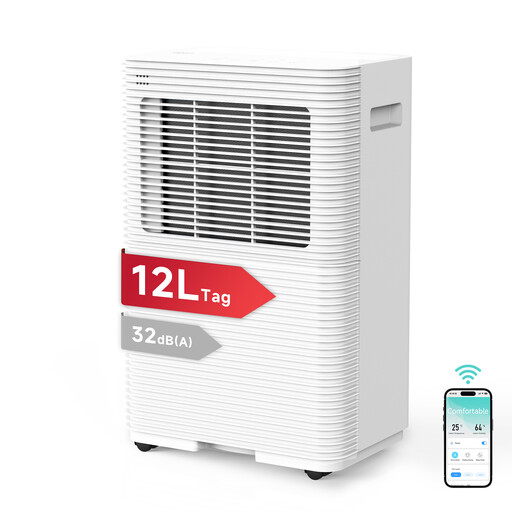 Image unavailable
VINO 12L Smart, 1,8 L tank
For drying clothes in a room stated to be up to 24 m², check that this coverage and the Dry mode suit your set-up. The title lists 12 L/day, a 1,8 L tank and Wi-Fi control. If noise is a concern, check the stated noise level for the mode you plan to use.
View on Joybuy
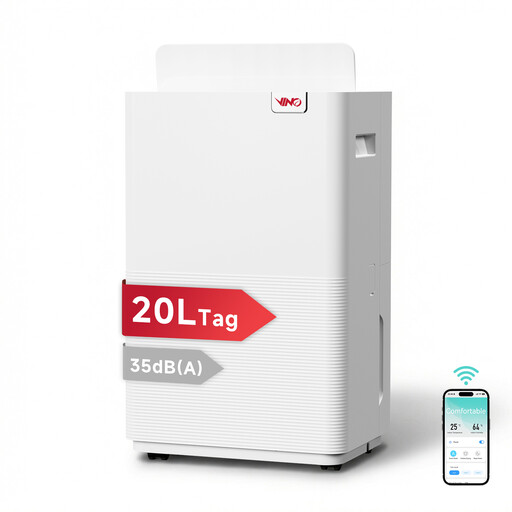 Image unavailable
VINO 20L Smart, 2,5 L tank
If your clothes airer is in a room stated to be up to 40 m², compare this figure with the room’s actual size. The title lists 20 L/day, a Dry mode, a 2,5 L tank and Wi-Fi control. Check the settings and noise level for the mode you choose.
View on Joybuy
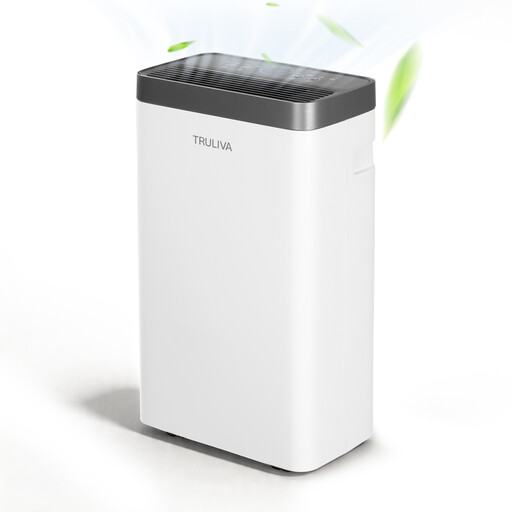 Image unavailable
TRULIVA AP10-2012EE, approx. 32 m²
The laundry-drying mode mentioned in the title may be useful if you regularly do washing in a room that matches the stated coverage. A 24-hour timer and continuous drainage are also listed. Check the noise level if the room is often occupied.
View on Joybuy
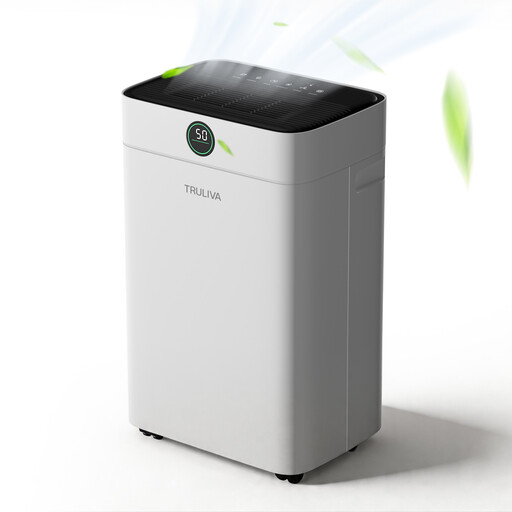 Image unavailable
TRULIVA 25 L/day, 2,8 L tank
This model has a laundry-drying mode, a 2,8 L tank and a continuous drainage hose. The 25 L/day capacity is stated for specific test conditions listed on the product page. Don’t assume it will collect that much water in your home in a day.
View on Joybuy
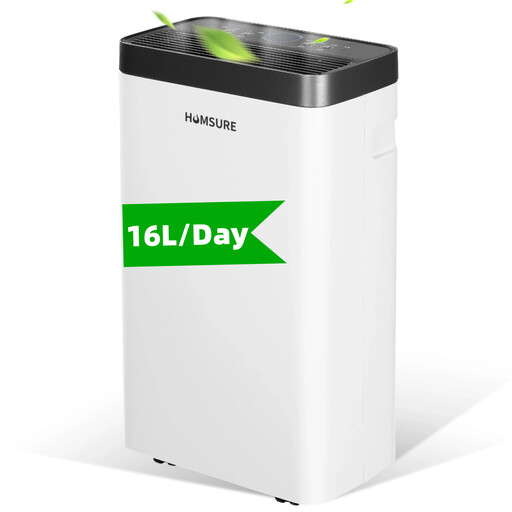 Image unavailable
HUMSURE 16 L/day, 1,4 L tank
For a room stated to be up to 25 m², the title lists 16 L/day, a 1,4 L tank and a 24-hour timer. If you dry clothes often, check the available settings, how often you’d need to empty the tank and the operating temperature range for a cool room.
View on Joybuy
Frequently asked questions
Does a dehumidifier replace airing the room or using the ventilation system while clothes are drying?
No. It complements fresh air circulation; it doesn’t replace it. ADEME recommends drying clothes in a large, well-ventilated room or one with an extraction system, and advises against switching off the ventilation system.
What should I do if the walls stay damp between loads of washing?
Find out what’s causing the damp before relying on an appliance to deal with it. France Rénov’ recommends having damp patches assessed to identify their source, which may need a different solution from simply removing moisture from the air.
How far should I place the dehumidifier from the clothes airer?
Follow the clearance instructions for your model and don’t cover its grilles with laundry. For example, the instructions for the Supra models in question say not to hang clothes within 50 cm of the appliance.
Can I use it in a bathroom or plug it into an extension lead?
Check your model’s instructions and position it somewhere it won’t be exposed to splashes. Some Supra and Midea manuals include restrictions on placing the appliance near water and plugging it in. Don’t assume that another appliance’s installation requirements apply to yours.
Should I arrange continuous drainage if I do laundry regularly?
It can save you from emptying the tank by hand, provided the model supports it and there’s a suitable drain within reach. Otherwise, check the tank capacity and whether the appliance switches off when it’s full. For example, Les Numériques notes that the Bosch Dry 4000’s 2,5 L tank needs emptying more often.


