Which features should you prioritise?
Dehumidifier with a laundry mode
Consider this: if you often dry laundry on an airer and the moisture it produces is a problem in a ventilated room.
Bear in mind: the appliance uses electricity, makes noise and needs to be emptied or connected to a suitable drain.
Tumble dryer
Consider this: if you would rather not dry a load on an airer at home and have space for a dedicated appliance.
Bear in mind: its size and electricity consumption, weighed against the moisture released by air-drying, as highlighted by ADEME.
Airing and ventilation
Prioritise this: if damp persists when there is no washing to dry, or if the ventilation seems faulty.
Allow for: the need to investigate the cause. A dehumidifier does not renew the air, as France Rénov’ explains.
Airer in a suitable room
Consider this: for occasional drying in a spacious, well-ventilated room, or one with an extractor.
Bear in mind: the time and space required. According to ADEME, air-drying releases a lot of moisture indoors.
If you decide a dehumidifier is right for your laundry, start with the room and how often you do a load, then check what could make it inconvenient to use or cause it to stop.
| Feature |
What to check |
Who should consider it? |
| Capacity and drying |
Advertised capacity in L/24 h and measurement conditions; stated room area or volume. |
When several loads dry each week, I want an appliance sized for the room rather than just a big number on the label. Around 31% of consumers prioritise this need for capacity. |
| Noise and size |
Noise level in dB(A) and the mode it applies to; appliance dimensions. |
In a room I use regularly, I need to be able to dry laundry without choosing an appliance that is too noisy or awkward to fit. Quiet operation and space come first for around 31% of consumers. |
| Emptying |
Tank capacity and whether continuous drainage can actually be connected. |
If the appliance runs often, I would rather avoid a full tank interrupting use. This level of autonomy is a priority for around 23% of consumers. |
| Cause of the damp |
Whether damp is present when there is no washing to dry, the condition of the ventilation and any persistent marks on the walls. |
If condensation keeps returning when no laundry is drying, I want to understand the cause before buying an additional appliance. Around 15% of consumers prioritise this check first. |
Dehumidifiers for laundry on Joybuy
These appliances are an option for drying laundry indoors with a dehumidifier. To compare the models, match their stated room size, capacity, tank and drainage setup to your home; they do not replace working ventilation.
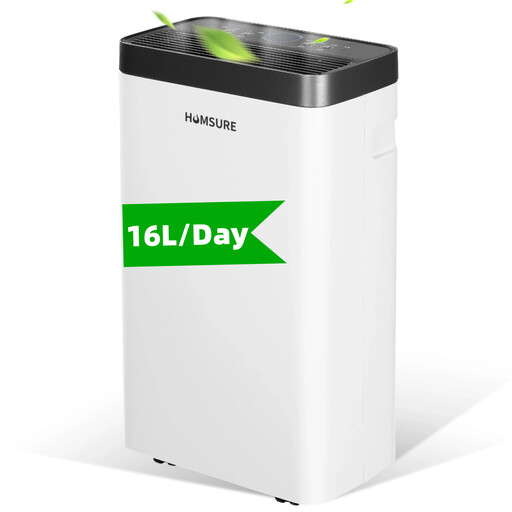 Image unavailable
HUMSURE dehumidifier, 16 L/day, 25 m²
Worth considering if you regularly dry laundry in a room that matches the stated floor area.
The product name specifies a capacity of 16 L/day, a 25 m² room, a 1.4 L tank and a 24-hour timer. This capacity alone cannot predict how long drying will take in your home.
Before buying, check how the laundry mode works, the noise level in the mode you’ll use and what is needed for your preferred drainage setup.
View on Joybuy
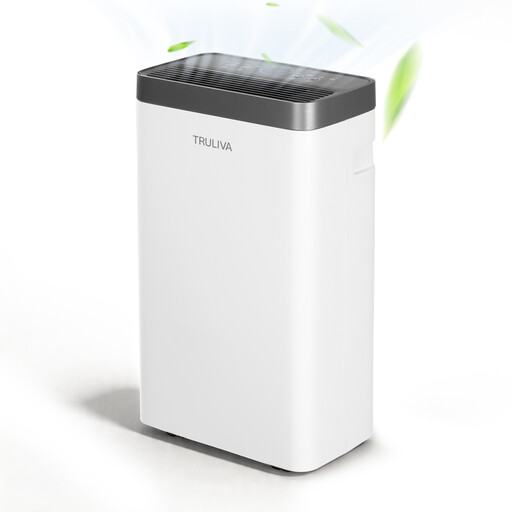 Image unavailable
TRULIVA AP10-2012EE, around 32 m²
Worth looking at if you use an airer regularly and the room is close to the stated approximate floor area.
The product name mentions a room of around 32 m², a 24-hour timer, a laundry mode and the option of continuous drainage.
Check that the hose can reach a suitable outlet. If you’d rather use the tank, factor in how often it will need emptying.
View on Joybuy
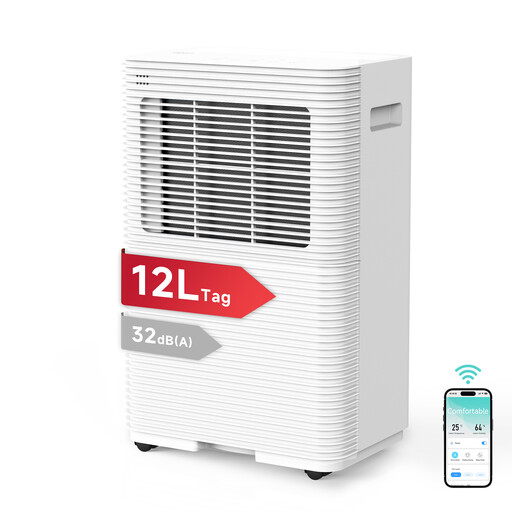 Image unavailable
VINO smart dehumidifier, 12 L/day, 24 m²
Worth comparing for drying laundry in a room that matches the stated floor area, if Wi-Fi control appeals to you.
The product name specifies a capacity of 12 L/day, a 24 m² room, a 1.8 L tank and a drying mode.
If you’ll use it in an occupied room, check the noise level and which mode it applies to before choosing this model.
View on Joybuy
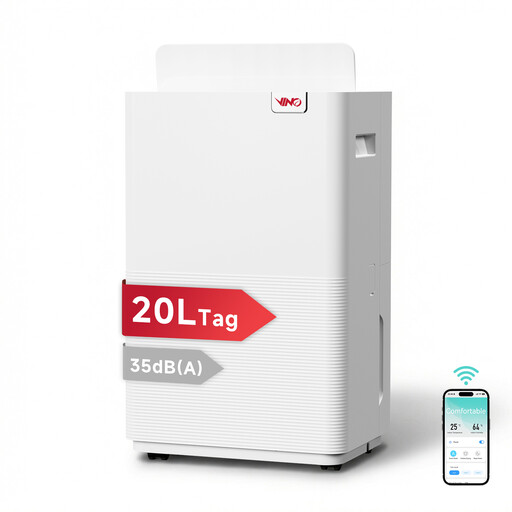 Image unavailable
VINO smart dehumidifier, 20 L/day, 40 m²
Worth comparing if your drying room matches the stated floor area and you want Wi-Fi control.
The product name specifies a capacity of 20 L/day, a 40 m² room, a 2.5 L tank and a drying mode.
The stated capacity does not guarantee a specific drying time. If noise matters in your room, check the figure for the mode you plan to use.
View on Joybuy
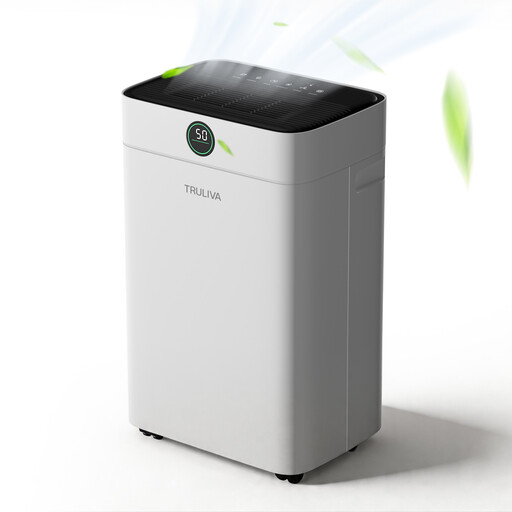 Image unavailable
TRULIVA dehumidifier, 25 L/day, 2.8 L tank
Worth considering for regular indoor drying if you can set up the appliance and its drainage in a suitable room.
The product name mentions a capacity of 25 L/day, a laundry mode, a 2.8 L tank and a continuous drainage hose.
Check which room size is suitable for the model and whether the hose can reach an outlet. The capacity figure alone is not enough to predict drying time.
View on Joybuy
Frequently asked questions
Can a dehumidifier replace airing or a mechanical ventilation system?
No. It removes water from the air without renewing the air in your home. In France, the decree of 24 March 1982 published on Légifrance states that homes must be able to have general, continuous ventilation at least during periods when outdoor temperatures mean windows have to be kept closed. France Rénov’ also highlights the role of ventilation in removing moisture.
Where should you put an airer when drying laundry indoors?
Choose a large, well-ventilated room or one with an extractor, as ADEME recommends. If you also use a dehumidifier, set it up according to its instructions and keep its air inlets and outlets clear.
When should you have your home checked instead of buying an appliance?
Have the ventilation or condition of the building checked if damp persists outside drying times, condensation keeps returning or you suspect a leak. For tenants, ANIL highlights the importance of keeping opening and ventilation systems in good condition. You can report what you have noticed to your landlord and ask ADIL for advice.
Compressor or desiccant: which should you choose for a cool room?
For a cool room, compare the operating temperature range for each model before choosing a technology. Meaco describes its compressor models as most suitable for heated rooms above 15 °C and its desiccant models as an option for cooler spaces. This reflects the brand’s positioning, so check it against the documentation for the specific model.


