What should you check before buying?
Start by measuring the humidity and checking what’s causing it, then compare appliances based on the room where they’ll be used. A litres-per-day extraction figure alone won’t tell you how the appliance will perform in your home.
| What matters |
What to check |
Who this matters to |
| Measuring humidity and finding the cause |
Measure relative humidity with a hygrometer. If it stays high or marks appear, check the ventilation and get the cause investigated. |
When condensation keeps coming back and fabrics stay damp, I want to understand what’s causing the problem before buying an appliance; around 31% of consumers would prioritise this check. |
| Choosing the right capacity for the room |
Compare the area or volume specified for the model with the size of your room, and check the conditions under which its extraction capacity is stated. |
For a utility room or a large room, I want a capacity that suits the space rather than a figure in isolation; around 31% of consumers would put this match first. |
| Noise and water management |
Check the noise level in the mode you plan to use, and choose between emptying the tank and drainage that’s suitable for where the appliance will go. |
If the appliance will run near living areas, I want to be able to live with the noise and avoid having to empty it too often; around 23% of consumers would prioritise these day-to-day considerations. |
| Use in a cold room |
Find out the lowest usual temperature and check the operating range and technology of the model. |
In an unheated cellar, I want an appliance designed for the room’s temperature; around 15% of consumers would make this compatibility their priority. |
Dehumidifiers for rooms around the home
These electric dehumidifiers are designed for use in rooms around the home, with different stated coverage areas and water collection options. Check the room’s temperature and the cause of the damp before choosing. None of these appliances replaces any necessary repair work or investigation.
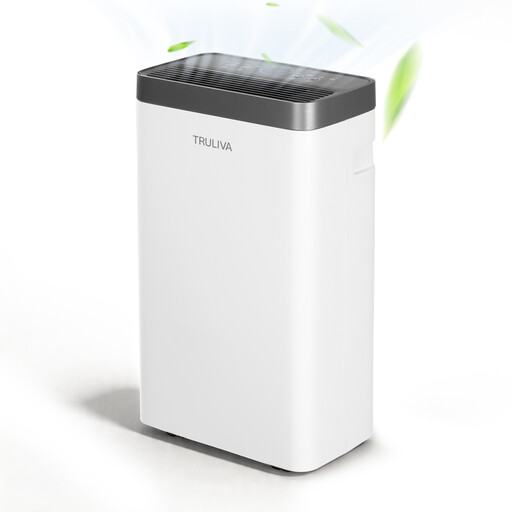 Image unavailable
TRULIVA AP10-2012EE dehumidifier for rooms of around 32 m²
Worth considering for a damp room or for drying laundry if the stated coverage suits your space.
The product name lists a 24-hour timer, laundry mode, automatic defrost and continuous drainage. If you’re using it in a cool room, check the operating and defrosting conditions in the manual.
View on Joybuy
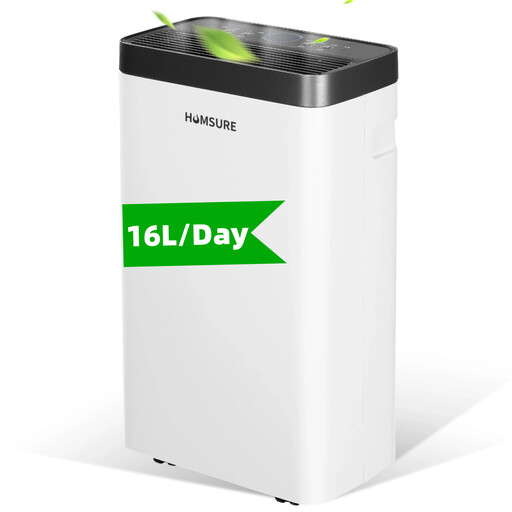 Image unavailable
HUMSURE 16 L/day dehumidifier for 25 m²
Worth considering for a room that matches the stated coverage, after checking that the extraction conditions suit your needs.
The product name lists a 1.4 L tank, three modes, a 24-hour timer and automatic defrost. If the room is cold, check the permitted temperature range in the manual.
View on Joybuy
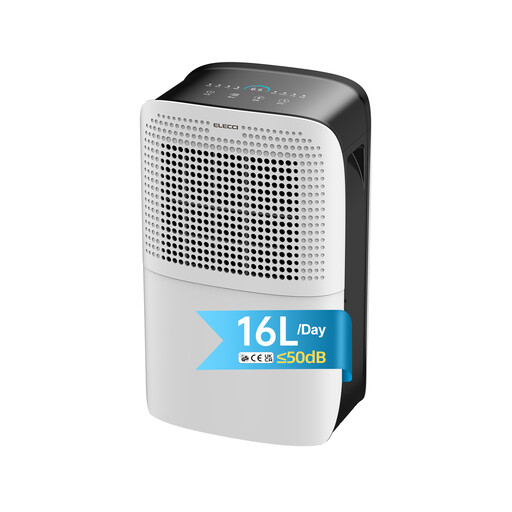 Image unavailable
ELECCI 16 L/day dehumidifier with a 3.1 L tank
Worth considering if you’d like the choice of using the tank or continuous drainage in a room that matches the model’s stated coverage.
The product name lists coverage of 32 m², a drainage hose, four modes and automatic defrost. If the room is occupied, check the noise level in the mode you plan to use and follow the positioning instructions in the manual.
View on Joybuy
 Image unavailable
VINO 20 L/day dehumidifier with Wi-Fi
Worth considering for a room that matches the stated coverage if Wi-Fi control would be useful to you.
The product name lists coverage of 40 m², a 2.5 L tank and three modes: auto, drying and sleep. Check the noise level of the mode you choose, and don’t assume the rated capacity guarantees the same extraction in your room.
View on Joybuy
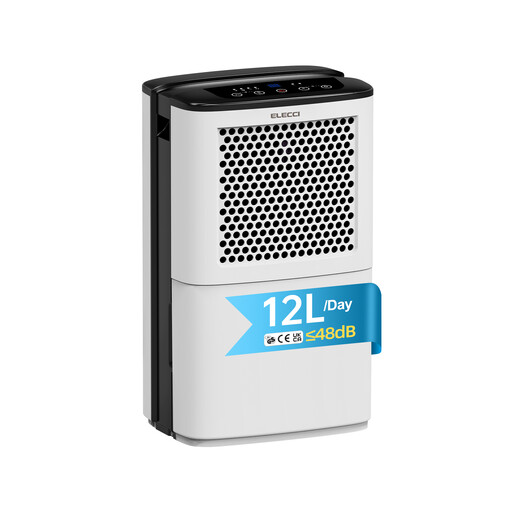 Image unavailable
ELECCI 12 L/day dehumidifier with a 3.8 L tank
Worth considering for a room that matches the stated coverage if you’d like a tank and a drainage option.
The product name lists coverage of 25 m², a hose, a 24-hour timer and automatic defrost. Check the noise level if the room is occupied, and the operating range if the space is cool.
View on Joybuy
Frequently asked questions
What humidity level should you check before buying a dehumidifier?
Measure the relative humidity in the room with a hygrometer. Qualitel generally recommends a range of between 40% and 60%. If condensation or marks persist, look for the cause too, rather than choosing an appliance based on the reading alone.
Can a dehumidifier replace airing a room or a mechanical ventilation system?
No, a dehumidifier can’t replace ventilation in your home. ADEME says that mechanical ventilation removes moisture continuously and recommends airing rooms after a shower or cooking, among other things. If the problem persists, Qualitel advises getting an appropriate assessment.
When should you choose continuous drainage instead of a tank?
Continuous drainage is worth considering if emptying the tank during frequent use would be inconvenient. Check the manual for connection details, the hose route and, if the model has a pump, its installation requirements. These options vary between appliances.
Which dehumidifier should you consider for an unheated cellar?
Choose based on the cellar’s usual temperature and the model’s operating range, not just its litres-per-day rating. Wood’s says its desiccant WDD80 works down to 0 °C. Meaco also recommends its desiccant appliances for cellars that stay below 15 °C. These are manufacturers’ recommendations, so check the details for each model.
What should you do with an electric dehumidifier at the end of its life?
Take it to an appropriate collection or take-back point for electrical and electronic equipment. The ministry responsible for ecological transition directs consumers to collection points for this category of appliance.


