For a heated room that remains damp, consider a compressor dehumidifier, comparing its stated extraction capacity, noise level and water drainage. In a room that isn’t heated much, check the operating range of a desiccant model instead; for a very small, occasional need, a refillable moisture absorber may be suitable. In all cases, check the ventilation first and look for any leaks or water ingress: an appliance won’t fix the underlying cause of a problem with your home.
Which solution is right for you?
For a heated room that’s damp every day
For regular use in a bedroom, living room or utility room with a moderate temperature, compare the stated capacity, noise level, tank size and drainage options. Rowenta, Air&Me and De’Longhi models illustrate the differences between configurations.
For a cellar or a space that isn’t heated much
The room’s usual temperature is the first thing to check. Air&Me distinguishes its compressor appliances from its desiccant range, which is designed for unheated spaces. Check the operating range of the model you’re considering before comparing its capacity.
For a small, occasionally damp area
A non-electric moisture absorber may suit a small amount of occasional damp, provided you’re happy to monitor it and replace the refills. Rubson’s stated coverage and refill life vary depending on the system and conditions of use.
What should you look for before buying?
Once you’ve checked the ventilation and looked for any persistent cause of damp, choose a technology suited to the room’s temperature. Then compare the stated extraction conditions and the practicalities of use.
Compressor
Consider for: a heated or moderately warm room that needs regular dehumidifying; Air&Me says its compressor models are for use from 15 °C.
Limitation: a stated capacity in L/day doesn’t guarantee the same extraction at the temperature and humidity levels in your room.
Desiccant
Consider for: a cellar or another unheated space; Air&Me says its desiccant range can operate in spaces where temperatures fall as low as 0 °C.
Limitation: this doesn’t apply to every model: check its operating range, noise level and electrical power consumption.
Refillable moisture absorber
Consider for: a small area with a low, occasional level of damp, if a non-electric option meets your needs.
Limitation: you’ll need to replace the refills; according to Rubson, how long they last depends in particular on humidity and temperature.
| Consideration |
What to check |
Who it matters to |
| Extraction and drainage |
The conditions used to measure L/day, tank capacity and whether continuous drainage can be set up. |
If damp keeps coming back, I want to use the appliance without constantly emptying the tank. Around 36% of consumers prioritise ongoing extraction and water management. |
| Cold room |
The room’s usual minimum temperature and the operating range of the specific model. |
In a cellar that isn’t heated much, I need to know whether the appliance can work at the temperatures I’m likely to encounter. Around 29% of consumers prioritise compatibility with cold conditions. |
| Noise in an occupied room |
The level in dB(A) and which mode it applies to; available settings if the appliance will be used near people. |
For a bedroom or regularly used office, operating noise is an important factor in my choice. Around 21% of consumers prioritise quiet operation. |
| Small, occasional need |
The stated coverage for the number of devices used and whether the refills are compatible. |
For a small area that’s damp now and then, I prefer a simple device and am happy to replace its consumables. This is the main priority for around 14% of consumers. |
Mistakes to avoid
-
Buying before checking what’s causing the damp
According to ADEME, mechanical ventilation continuously removes moisture from the home; a leak, water ingress or rising damp could also be the cause. A supplementary appliance won’t fix these problems.
Check the vents and air inlets, air the room after activities that create moisture, and get the cause investigated if the signs persist.
-
Comparing L/day without checking the test conditions
Stated capacities are based on temperature and humidity conditions that may differ from those in a cold cellar or heated room. For example, De’Longhi states 14 L/24 h at 30 °C and 80% relative humidity for the DEXD214RF.
Note the room temperature and the conditions associated with each figure before comparing two models.
-
Overlooking the tank, drainage and noise
A tank that needs frequent emptying or an appliance that’s disruptive in an occupied room can make regular use more difficult. Continuous drainage only helps if your intended setup is compatible with the instructions.
Check the tank capacity, whether the appliance switches off when it’s full, which hose is needed and the noise level in the mode you plan to use.
-
Choosing a moisture absorber without planning for refills
Rubson says refill life varies depending on the device, humidity and temperature; the stated coverage may also depend on how many absorbers you use.
Check which refills are compatible, the coverage for your setup and how often you’ll need to replace the consumables.
Brands to compare
Rowenta
The range includes electric dehumidifiers for rooms in the home. The Extrême Dry Compact+ DH5260F0 compressor model offers a point of comparison for a heated room.
- For the DH5260F0, Rowenta states a capacity of 16 L/day, a 3 L tank and a 1 m hose for continuous drainage.
- Its stated coverage of up to 40 m² or 100 m³ and noise level below 40.5 dB(A) apply to this model specifically; check the conditions before comparing these figures with another product listing.
Air&Me
The brand offers compressor appliances and desiccant models, two ranges to consider depending on the room’s temperature.
- Air&Me recommends its compressor models for heated rooms from 15 °C, and its desiccant range for spaces where temperatures can fall as low as 0 °C.
- These are the brand’s stated guidelines for its ranges, not an operating range that applies to every model; check the instructions for the appliance you choose.
De’Longhi
The Tasciugo range includes compressor dehumidifiers with humidity controls and the option of continuous drainage, making it worth considering for regular use.
- De’Longhi states a capacity of 14 L/24 h for the DEXD214RF and 10 L/24 h for the DEX210SF, both at 30 °C and 80% relative humidity.
- These capacities and stated noise levels apply to different models; compare their product information and the conditions that match your intended use, rather than assuming the figures represent the whole range.
Rubson
The brand offers refillable moisture absorbers to consider for a small area with a limited amount of damp.
- For some systems, Rubson states that refills last for two to three months, depending on the device and conditions.
- Stated coverage varies by system and may require two devices; check that the absorber, refill and coverage are compatible, and factor in replacing the consumables.
Dehumidifiers for rooms in your home on Joybuy
These electric models are worth considering for a damp room in your home, especially if you need ongoing extraction. Their inclusion in this selection doesn’t replace the need to check the room temperature, the conditions behind the stated capacities and the available drainage options.
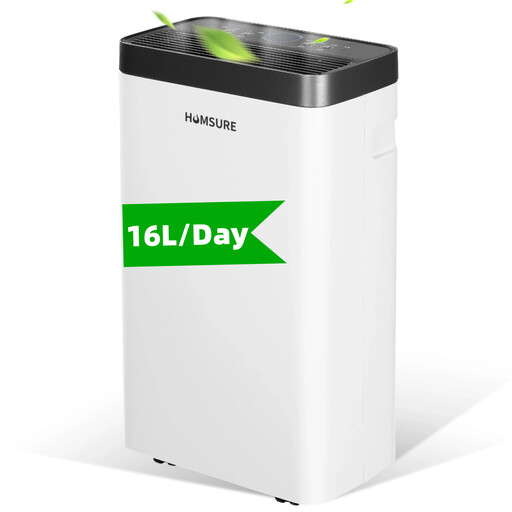 Image unavailable
HUMSURE 16 L/day, 1.4 L tank
Worth considering for a regularly used damp room if you can empty the tank or set up continuous drainage. The 16 L/day capacity is stated at 86 °F and 90% relative humidity, with coverage of up to 25 m². The product information lists humidity settings from 40 to 80%, automatic shut-off when the tank is full and a drainage hose included. For an occupied room, check the noise level in the mode you plan to use: the below-50 dB figure applies to sleep mode.
View on Joybuy
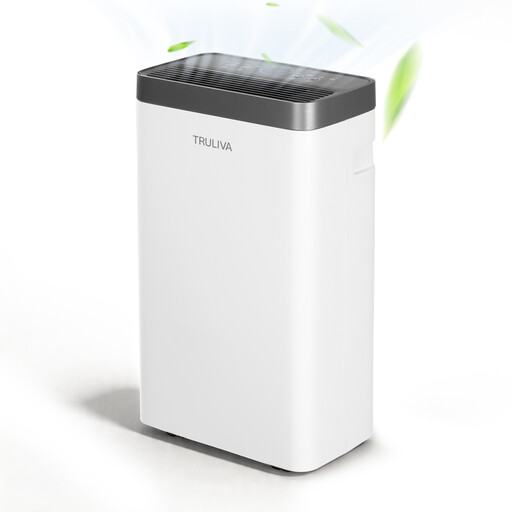 Image unavailable
TRULIVA AP10-2012EE compressor dehumidifier
Worth considering for regular use in a room with a moderate temperature, with the option of continuous drainage. The product information states a capacity of 16 L/day at 95 °F and 90% relative humidity, and says a drainage hose is included. Check the coverage for this variant: the stated figures of 25 m² and 32 m² differ. The listing also notes that the compressor stops during defrosting below 15 °C, which is important for a cold room.
View on Joybuy
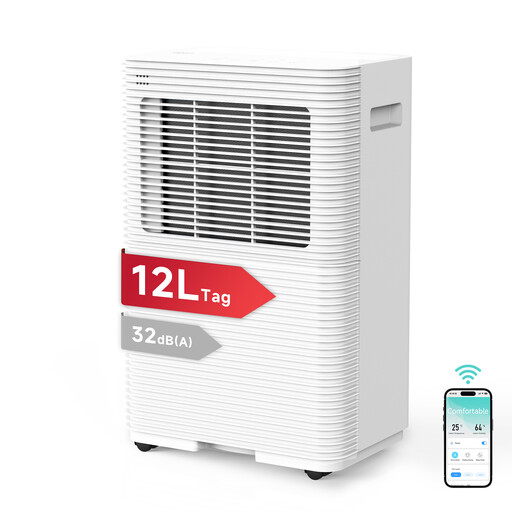 Image unavailable
VINO smart 12 L/day, 1.8 L tank
Worth considering if you want to schedule an appliance for a room stated to be up to 24 m². The 12 L/day capacity is stated at 30 °C and 80% relative humidity. The product information also mentions app control, a 1.8 L tank with automatic shut-off and continuous drainage. For a bedroom, check the noise level in the mode you plan to use: the listing gives 32 dB in sleep mode and 38 dB(A) in its specifications table. Also check which hose you’ll need for your setup.
View on Joybuy
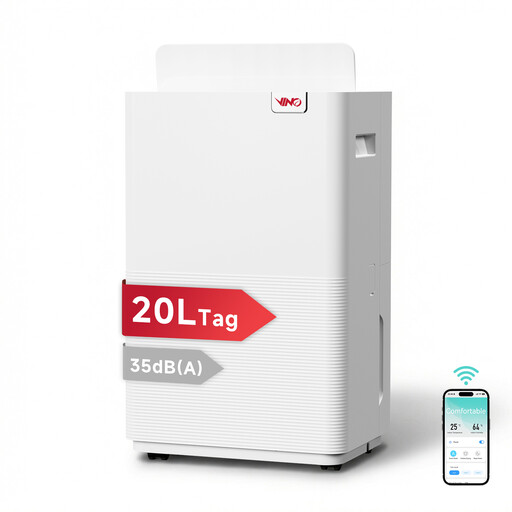 Image unavailable
VINO smart 20 L/day, 2.5 L tank
Worth considering for a room stated to be up to 40 m² if you want to schedule operation and have a way to drain the water. The product information states 20 L/day at 30 °C and 80% relative humidity, a 2.5 L tank with automatic shut-off and hose drainage. Before using it in an occupied room, check the noise level in your chosen mode: 35 dB is stated for sleep mode, while the specifications table gives 40 dB(A). Also make sure the hose suits your setup.
View on Joybuy
 Image unavailable
Comfee' MDDN-10DEN7, 10 L/24 h
Worth considering for a room in your home if humidity control and the option of continuous drainage suit your needs. The product information states a capacity of 10 L/24 h, a removable tank and automatic shut-off when full. Check the coverage for this model: the stated figures of around 16 m² and 5 to 50 m² don’t match. Also check the conditions used to measure the 10 L/24 h capacity, so you can interpret it in relation to your room’s temperature.
View on Joybuy
Frequently asked questions
Can a dehumidifier replace your home’s ventilation?
No. ADEME says mechanical ventilation continuously removes moisture and pollutants. A dehumidifier is an additional measure for one room; if damp persists, check the vents and that the ventilation is working properly.
What should I do if I suspect a leak or water ingress?
Get the cause investigated separately from your choice of appliance. ADEME lists water leaks, rising damp and water ingress among the possible causes to check; a supplementary dehumidifier won’t fix them.
How do I compare two capacities given in L/day?
First check the temperature and relative humidity specified for each figure, then compare them with the conditions in your room. For example, De’Longhi states 14 L/24 h for the DEXD214RF at 30 °C and 80% relative humidity: that figure doesn’t promise the same extraction in a colder room.
What should I know about buying and end-of-life rules in France?
According to the French Ministry of the Economy, the legal guarantee of conformity applies to new, second-hand or refurbished goods sold by a business to a private individual, under the conditions set out by law. When an electrical appliance reaches the end of its life, find out about the collection of waste electrical and electronic equipment: the Ministry for Ecological Transition says a dedicated scheme operates in France.


