Which criteria should you check first?
First, work out whether you need to monitor or temporarily reduce damp, or whether there’s a problem with the property that needs investigating. A hygrometer helps you monitor relative humidity; a passive moisture absorber may be enough for a limited need in a small, enclosed space, while an electric dehumidifier is designed for a room. None of these accessories replaces ventilation.
| What to consider |
What to check |
Who this matters to |
| Cause of the damp |
Monitor humidity with a hygrometer and look for recurring mould, water ingress or water damage. If you spot any of these signs, get the cause checked. |
If the signs return despite airing the room, I don’t want to mistake the collected water for a repair to the property. Around 34% of consumers prioritise distinguishing between a temporary aid and an issue that needs investigating. |
| Room to treat |
Compare the stated capacity in L/day, the recommended floor area or volume and the model’s test conditions with the room in question. |
For a bedroom, living space or laundry-drying area, I’m looking for temporary help for the whole room rather than an accessory for a cupboard. Reducing damp in that room is the priority for around 33% of consumers. |
| Everyday use |
Check the noise level for each mode, the power, the tank and the requirements for setting up continuous drainage. |
If the appliance runs near where I spend time, its noise and how often I need to empty it could determine whether I use it regularly. These practicalities come first for around 20% of consumers. |
| Small space or monitoring |
For a moisture absorber, check the area it covers and the refills; for a hygrometer, check that it displays relative humidity. |
For a cupboard without a power socket, or before deciding whether I need an electric appliance, I’d rather choose something that meets my specific needs. Around 13% of consumers prioritise a small space or monitoring humidity. |
Portable dehumidifiers on Joybuy
These electric models can provide temporary help in a room in a rented home. Choose one to suit the room, the noise level you’re comfortable with and how you’ll empty or drain the water. They won’t fix water ingress or inadequate ventilation.
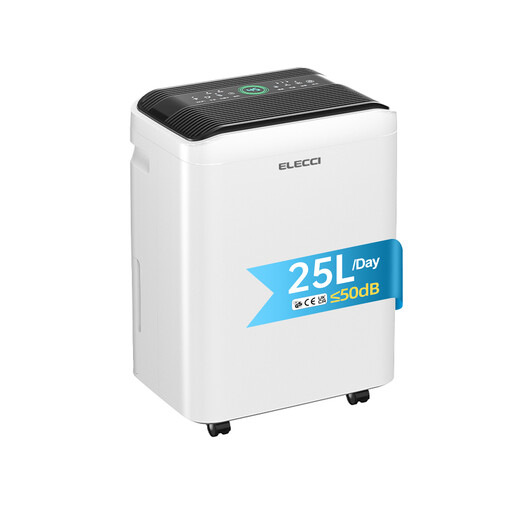 Image unavailable
ELECCI 25L/D, 4.8 L tank
Worth considering for a room that matches the stated coverage. The product page lists 25 L/day at 30 °C and 80% RH, coverage of up to 50 m², a 4.8 L tank and continuous drainage. Check the setup required if your drainage needs a separate pump.
The stated rated power is 305 W and the noise level is 36 dB. If noise matters to you, check the mode and test conditions.
View on Joybuy
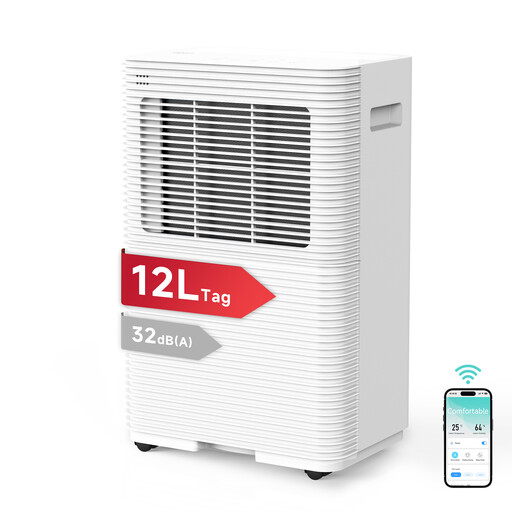 Image unavailable
VINO 12L WiFi, 1.8 L tank
Worth considering for a specific room: the product page states 12 L/day at 30 °C and 80% RH, coverage of up to 24 m², a 1.8 L tank and continuous drainage. If you don’t have suitable drainage, be prepared to empty the tank.
The stated power is 195 W. The product page lists 38 dB(A) in its table and states 32 dB in sleep mode. Check the conditions for both figures before using it in a bedroom.
View on Joybuy
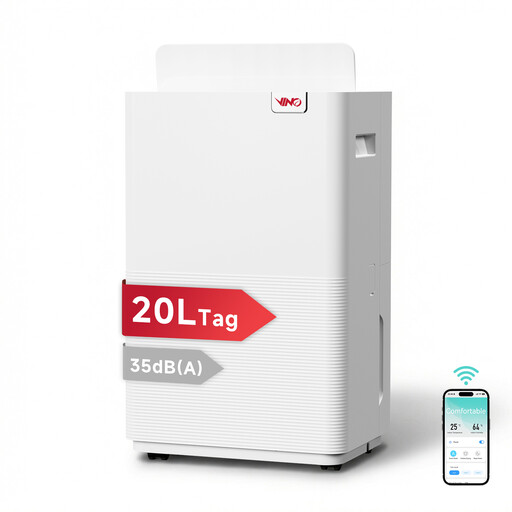 Image unavailable
VINO 20L WiFi, 2.5 L tank
Worth considering if the room matches the stated coverage: the product page lists 20 L/day at 30 °C and 80% RH, coverage of up to 40 m², a 2.5 L tank and continuous drainage. You’ll need a suitable drain for the latter.
The stated power is 365 W. Sleep mode is listed at 35 dB, compared with 40 dB(A) in the product page’s table. Check the modes and test conditions before choosing a model based on noise levels.
View on Joybuy
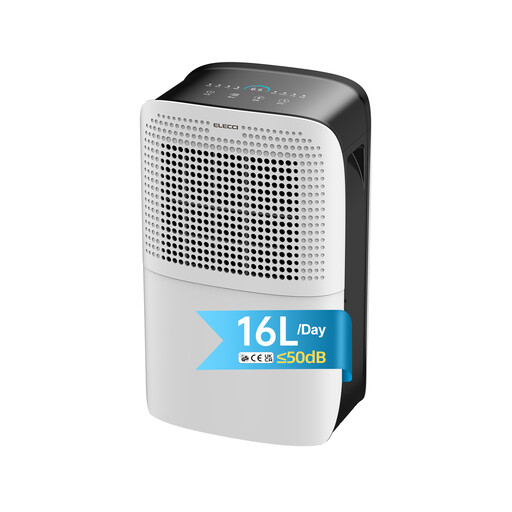 Image unavailable
ELECCI 16L/D, hose and 3.1 L tank
Worth considering for a room that matches the stated coverage of 32 m². The product page lists 16 L/day at 86 °F and 90% RH, a 3.1 L tank, automatic shut-off when the tank is full and a continuous drainage hose.
The stated rated power is 182 W. If you plan to use it in a bedroom or living space, check the noise level on the product page or in the manual.
View on Joybuy
 Image unavailable
Comfee' MDDN-10DEN7, 10 L/24 h
Worth considering for a specific room, once you’ve checked the suitable floor area in the manual: the product page gives different coverage figures. The model is listed at 10 L/24 h, with a 2.1 L tank and continuous drainage.
The stated power is 340 W. Two figures are given: 44.5 dB and 45 dB. If the appliance will run near you, check which figure applies and the conditions under which it was measured.
View on Joybuy
Frequently asked questions
Does a dehumidifier replace ventilation in the home?
No. It can temporarily reduce the humidity in a room, but it doesn’t refresh the air. The ADEME notes that mechanical ventilation continuously removes moisture and pollutants, so check the home’s ventilation system separately to make sure it’s working properly.
When should you get the cause of damp checked?
Get it checked if mould keeps coming back, condensation persists or you notice water ingress, water damage or peeling surfaces. These signs can have different causes. A portable appliance may help temporarily, but it can’t diagnose the problem.
Can you use a dehumidifier in a bathroom?
Only if the location and the model’s instructions allow it to be used safely in that room. Check the manual and the electrical safety rules that apply near a shower or bath. Don’t place the appliance where it could be splashed.
How can you estimate its electricity use?
Multiply the stated power in kW by the expected running time in hours to calculate energy use in kWh. Actual running time depends on factors including the room’s humidity and the settings, so check the power rating for the exact model before doing the calculation.
What safety information should you check before buying?
Check for CE marking, as well as instructions and safety guidance in French for the model you choose. As the Directorate-General for Competition, Consumer Affairs and Fraud Control points out, CE marking is not an independent certification of quality or performance.


