If a room is occasionally damp, start by monitoring humidity with a hygrometer. Then choose a dehumidifier for occasional use based on the size of the space, the noise level you can tolerate and how you’ll empty the collected water. Continuous drainage is only useful if you can install the hose correctly. A dehumidifier is no substitute for effective ventilation or for finding the cause of persistent damp.
Who is this purchase for?
People dealing with occasional damp in a room
Do you get condensation after a shower, cooking or drying clothes? A portable appliance could help as an additional measure, while you continue to air the room and maintain ventilation. ADEME recommends airing the bathroom after a shower, for example.
People who are mindful of noise
In a bedroom or a room you spend time in, compare the stated noise level and the mode it applies to, rather than choosing solely by the advertised capacity in litres per day.
People who want to empty the tank less often
For regular use, check the tank capacity. If you’re considering continuous drainage, you’ll also need a compatible appliance and a practical route for the hose to the drain.
What should you look for?
First, check whether the damp is occasional or persistent. Then compare appliances for the room you’ll actually be treating. A hygrometer helps you monitor humidity, while a dehumidifier collects water, so you’ll need to manage the tank or hose.
| Consideration |
What to check |
What consumers are looking for |
| Damp and its cause |
Monitor relative humidity with a hygrometer and see whether marks or condensation keep coming back. Keep the ventilation running. |
If the marks keep coming back, I want to know whether an additional appliance will be enough or whether there’s a problem with the property that needs investigating; around 33 % of consumers put this check first. |
| Room size |
Measure the space you’ll be treating and compare it with the area or volume stated for the exact model. Check the conditions associated with its capacity in L/day. |
For an open-plan room or one used for drying clothes, I’m looking for an appliance suited to the space; this is the priority for around 25 % of consumers. |
| Noise |
Compare the stated dB(A) for the mode you plan to use and think about where you’ll place the appliance. |
In a bedroom or a room where I work, I don’t want the appliance to disturb me; around 25 % of consumers prioritise this. |
| Water and extended use |
Check the tank capacity, whether drainage will work with your setup and the stated power rating to estimate energy use based on how long you’ll run it. |
If damp is a regular issue, I want to avoid emptying the tank too often without choosing a hose that’s impossible to install; around 17 % of consumers make this their main requirement. |
Mistakes to avoid
-
Using the appliance instead of ventilation
Collecting water in a room is no substitute for renewing the air. ADEME advises never switching off the mechanical ventilation system (MVHR) or blocking air inlets and extractor vents.
Keep the ventilation running and use the dehumidifier only as an additional measure.
-
Choosing on litres per day alone
The amount of water extracted depends on factors including temperature, the initial humidity level and the room, as De’Longhi points out. So the advertised capacity alone doesn’t tell you how the appliance will perform in your home.
Compare the recommended area or volume for the exact model and the conditions associated with its rated capacity.
-
Planning for drainage without a suitable hose route
De’Longhi says the continuous-drainage hose must not run upwards or become kinked. In this setup, water may continue to collect in the tank.
Before choosing this feature, check the instructions, the drain location and whether the hose can be routed suitably.
-
Ignoring persistent marks without finding the cause
An appliance for occasional use won’t fix a leak or another problem with the property. Qualitel recommends getting a diagnosis if the damp persists.
If the marks return, spread or are accompanied by damaged materials, get the cause investigated rather than relying on the appliance alone.
Brands to know when comparing models
Rowenta
The range includes electric compressor dehumidifiers, including the Extrême Dry Compact+.
- For this model, Rowenta states an extraction rate of 16 L/day, a 3 L tank and a hose for continuous drainage.
- These specifications don’t apply to the entire range. Rowenta also says compressor models can be noisy, use a lot of electricity and be affected by the temperature.
Meaco
The brand offers compact models, as well as models rated at 20 or 25 L/day for larger spaces.
- Meaco states a noise level of 35 dB for the MeacoDry ABC 10L. It also offers models with continuous drainage, depending on the model.
- Check the model, the mode that the stated noise level applies to and the installation requirements before assuming these details will suit your room.
De’Longhi
The Tasciugo range includes dehumidifiers for home use, including models designed to help with drying clothes.
- For the Tasciugo AriaDry Evo DEP216, De’Longhi states an extraction rate of 16 L/day.
- De’Longhi says the dehumidification rate varies according to factors including temperature, humidity and the characteristics of the room.
Dehumidifiers for occasional use on Joybuy
These electric appliances have a tank and continuous drainage. They’re suitable for damp rooms where a hose can be routed appropriately, but you don’t have to use them in this way. Compare the stated room size, how the collected water is managed and the noise information that matters for your needs.
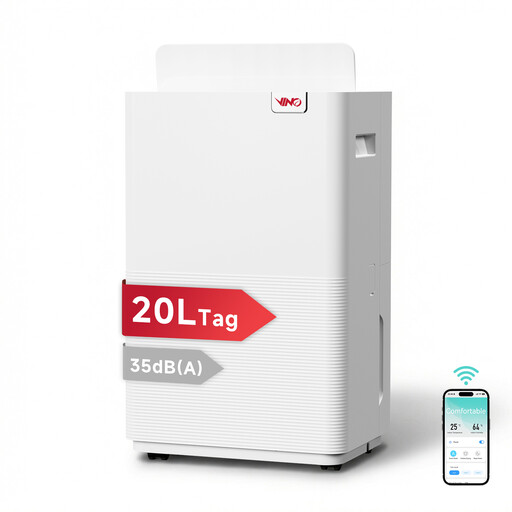 Image unavailable
VINO 20L Smart, Wi-Fi control
Worth considering for a room that matches the stated area, if continuous drainage can be installed.
The title states up to 40 m², a 2.5 L tank and three modes: automatic, drying and sleep. Check your room’s volume and the noise level for the mode you plan to use.
View on Joybuy
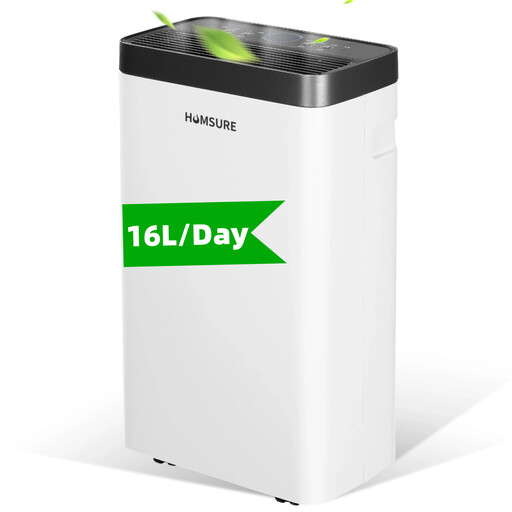 Image unavailable
HUMSURE 16 L/day, 1.4 L tank
Worth considering for a room close to the stated area, bearing in mind you’ll need to empty the tank if drainage isn’t an option.
The title mentions a 25 m² room, a 24-hour timer and automatic shut-off. If you’ll be running the appliance near a place where you sleep, check the noise level for the mode you choose.
View on Joybuy
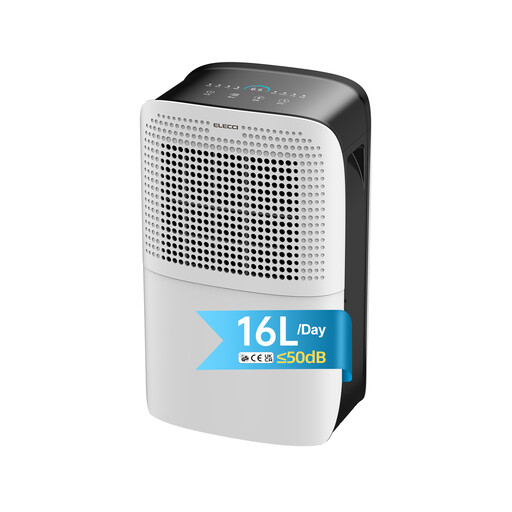 Image unavailable
ELECCI 16 L/day, 3.1 L tank and hose
The tank and hose give you two ways to manage collected water, depending on whether you can install drainage in the room.
The title states four modes and coverage of up to 32 m². Compare this with the actual volume of your room and check the noise level if you’ll be spending time there.
View on Joybuy
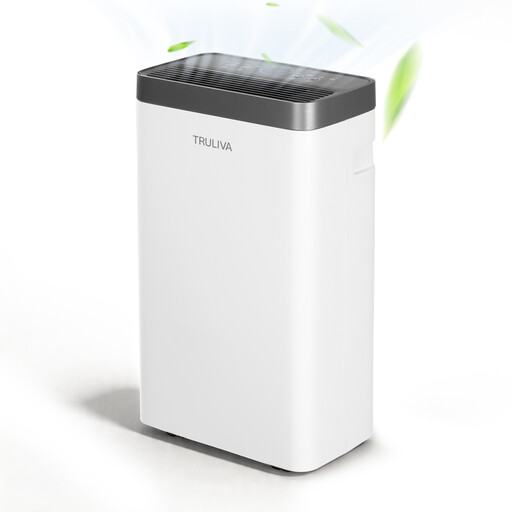 Image unavailable
TRULIVA AP10-2012EE, continuous drainage
Worth considering if you’d like a timer and can connect the continuous-drainage hose, particularly if you plan to use it to help dry clothes.
The model description states coverage of up to 32 m², a 24-hour timer and a laundry-drying mode. Check that it’s suitable for your room’s volume and check the noise level before using it in an occupied space.
View on Joybuy
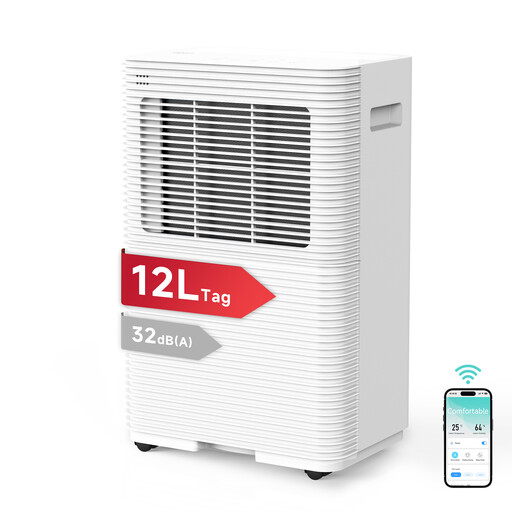 Image unavailable
VINO 12L Smart, Wi-Fi control
Worth considering for a room that matches the stated area, with the option of using the tank or continuous drainage if your setup allows it.
The title states up to 24 m², a 1.8 L tank and three modes: automatic, drying and sleep. Check your room’s volume and the noise level for the mode you’ll use.
View on Joybuy
Frequently asked questions
Can a dehumidifier replace airing the room or mechanical ventilation?
No. A dehumidifier for occasional use collects water in a room, but it doesn’t replace ventilation. ADEME advises never switching off the mechanical ventilation system (MVHR) or blocking air inlets or extractor vents. You should also continue to air the room after activities that produce moisture.
What humidity level should I monitor at home?
Qualitel generally recommends a relative humidity range of between 40 % and 60 %. Measure the level in the room with a hygrometer and monitor how it changes before deciding how to use a dehumidifier.
When should I look for the cause of damp rather than rely on the appliance?
If the damp persists or marks and damage keep returning, get the cause investigated: a dehumidifier for occasional use won’t repair the property. Qualitel lists poor ventilation and water ingress among the possible causes, and recommends getting a professional diagnosis if the problem persists.
How can I estimate electricity use?
Multiply the appliance’s power rating in kW by its running time in hours to calculate energy use in kWh, as Rowenta explains. Factor in how long you’ll actually use it and any automatic cycles. The stated capacity in L/day alone isn’t enough to work out energy use.


