Tenants with a clothes airer in a small room
If you often dry laundry in a bathroom, bedroom or compact living space, you’ll need to balance the space available with the noise from the appliance and access to its tank.


A dehumidifier can be used alongside a clothes airer if the laundry regularly adds too much moisture to the room, provided you choose a model suited to the space and where you plan to put it. However, it is no substitute for proper ventilation and won’t fix a leak or water ingress. Before buying, also check the noise level, how the tank is emptied and the clearance required in the instructions.
If you often dry laundry in a bathroom, bedroom or compact living space, you’ll need to balance the space available with the noise from the appliance and access to its tank.
If damp appears while laundry is drying, an appliance can help manage the moisture in the room. Make sure the openings and ventilation provided for your home remain functional, though.
Repeated drying can make emptying the tank more of a chore. An easy-to-access tank or continuous drainage that works in your room may then be important considerations.
Start with the room where you actually keep your clothes airer, then check the ventilation before comparing appliance features. ADEME notes that drying laundry adds a lot of moisture to indoor air, so the appliance should support the way you dry your clothes, not be treated as a fix for problems with the property.
| What matters | What to check | Who it matters to |
|---|---|---|
| Drying and humidity | Laundry mode, humidity settings and the stated capacity with its test conditions; the room’s size and ventilation. | When my airer is loaded for a long time, I want to manage the moisture from the laundry without neglecting ventilation. Around 50% of consumers put this drying need first. |
| Everyday noise | The noise level of the exact model and whether you can place it away from the area where you rest. | If the appliance is running in an occupied room or near a bedroom, I need to be able to live with the noise. For around 30% of consumers, quiet operation comes ahead of other considerations. |
| Emptying the tank | Tank capacity and access; continuous drainage only if a suitable outlet is available. | When I do laundry frequently, I’d rather not keep checking and emptying a small tank. Limiting the need to handle it is a priority for around 20% of consumers. |
The stated capacity depends on the test conditions. For example, De’Longhi gives a figure of 10 L/24 h for the DEX210SF at 30 °C and 80% relative humidity. This figure alone can’t predict how much water it will collect in a flat.
Also compare the room size, laundry mode, noise, tank and clearance required around the appliance.
A small tank can become inconvenient when you dry laundry repeatedly. Reviews published by Darty for the De’Longhi DEX210SF mention frequent emptying, although they can’t predict how often you’ll need to empty it at home.
Check how easy the tank is to access. If you’re considering continuous drainage, make sure there’s a suitable outlet and check the instructions for fitting the hose.
How loud an appliance seems will vary depending on the model, its settings and where it’s placed. Reviews published by Darty for the DEX210SF differ on this point; a review published by Fnac also describes the Duux Bora 12L as a little noisy.
Check the noise information for the model and mode you plan to use. Don’t assume it will be comfortable to have running near a bed.
A dehumidifier affects the air in the room, not a leak, water ingress or faulty ventilation. If condensation or mould keeps coming back, the cause needs to be investigated.
Don’t block the ventilation openings provided. If you’re renting and the problem persists, report it to your landlord and contact ADIL for advice if necessary.
The Tasciugo AriaDry range includes appliances with a laundry function, including the DEX210SF.
According to Duux, the Bora 12L combines a laundry mode with a 1,7 L tank in a format designed in particular for smaller spaces.
Philips describes its Series 3000 DE3306/11 as having a laundry-drying mode and a 4 L tank.
These Joybuy models are presented as options to use alongside a clothes airer indoors. Choose according to the space available, how you’ll manage the tank and the features listed for each variant. Check the instructions for the conditions that apply when setting up the appliance near laundry.
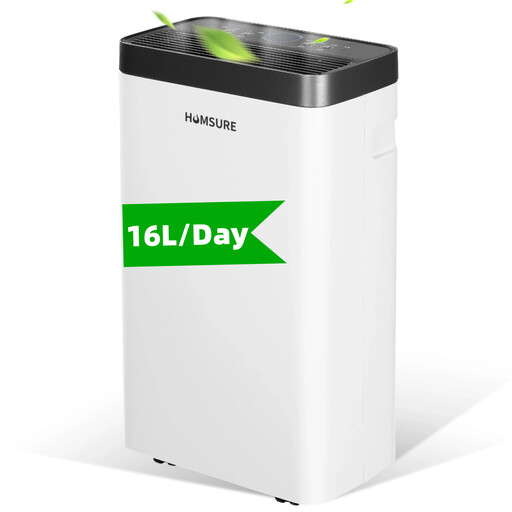 Image unavailable
Worth considering if your clothes airer is in a room that matches the stated coverage, up to 25 m².
The product name lists an extraction rate of 16 L/j, a 1,4 L tank, three modes and a 24-hour timer. Plan how you’ll manage emptying the tank and check the noise level of the mode you’ll use.
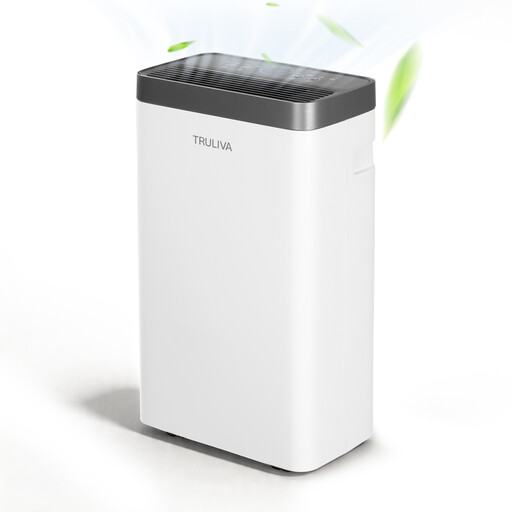 Image unavailable
Consider it for drying laundry indoors if there’s also room to set up continuous drainage correctly.
The product name mentions a room of around 32 m², a laundry-drying function, continuous drainage and a 24-hour timer. Check the noise level before using it near a bedroom.
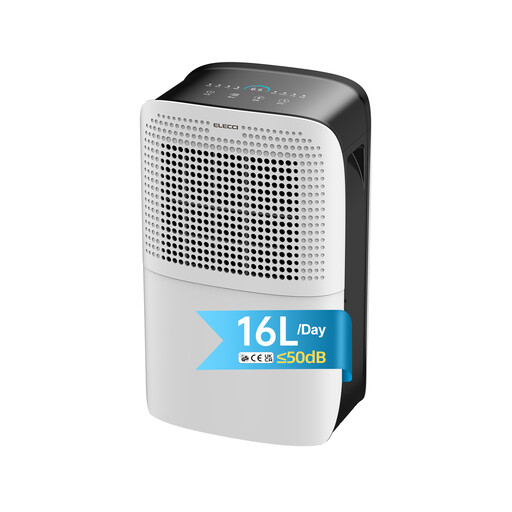 Image unavailable
Worth considering if you often dry laundry and want the choice of using the tank or continuous drainage.
The product name lists a 3,1 L tank, a drainage hose, four modes and stated coverage of 32 m². Check the noise level and the space needed around the appliance.
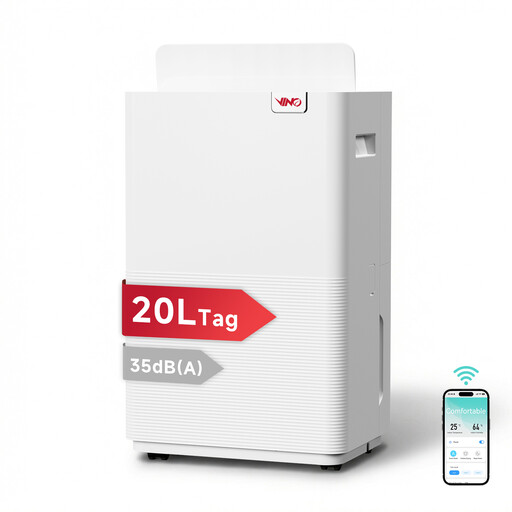 Image unavailable
Consider it if the drying room matches the stated coverage and you’d like a Dry mode.
The product name lists coverage of up to 40 m², a 2,5 L tank and Auto, Dry and Sleep modes. The noise information differs across sections of the product listing, so check which figure applies to the mode you plan to use before placing it near an area where you rest.
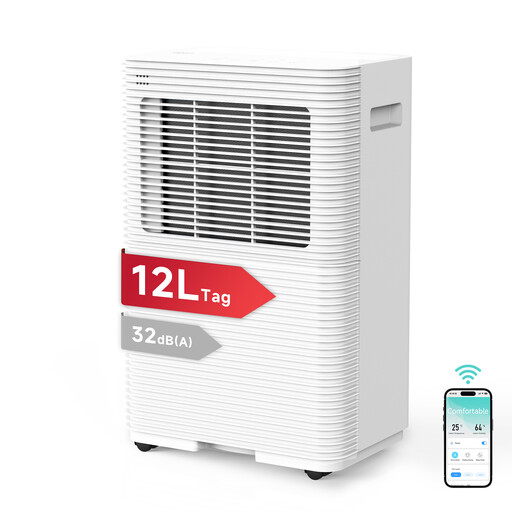 Image unavailable
Worth considering for a clothes airer in a room that matches the stated coverage, up to 24 m².
The product name lists a 1,8 L tank and Auto, Dry and Sleep modes. The noise figures given for this product don’t match, so check which one applies to the mode you’re considering if the appliance will be used near a bedroom.
No. It can reduce moisture in the room’s air, but it won’t fix a leak, water ingress or faulty ventilation. If the marks keep returning, find out what’s causing them and report the problem to your landlord if you’re renting.
Dry laundry in a room with enough ventilation or an extractor fan, then follow the clearance requirements in your appliance’s instructions. For example, the manuals for the Supra DU 202 and DU 252 models specifically say to keep laundry at least 50 cm from the appliance and not to block its grilles.
Check the instructions for the exact model before choosing a socket and location. The manuals for the Supra DU 202 and DU 252, for example, prohibit extension leads and multi-socket adaptors, as well as use near a bath or shower. These instructions don’t replace those for a different appliance.
No. It can save you from emptying the tank if the model supports it and the hose leads to a suitable outlet. Follow the instructions for setting it up, including how to route the hose and how to avoid leaks.