Frequent drying in a heated flat
You regularly put up an airer in a living room or heated bedroom. Extraction matters, but noise, energy use and emptying the tank will also affect day-to-day use.


For drying laundry indoors, choose a dehumidifier based on the room’s temperature and size, then compare its stated extraction rate, noise level and tank management. A compressor model is suitable for a heated or temperate room, while a desiccant model is worth considering for a room with little heating. If signs of damp persist outside drying periods, first find out what’s causing them : the appliance is no substitute for investigating the issue.
You regularly put up an airer in a living room or heated bedroom. Extraction matters, but noise, energy use and emptying the tank will also affect day-to-day use.
If you dry laundry in an outbuilding, cellar or another cold room, check the operating temperature before choosing between a compressor and a desiccant model.
If you do laundry frequently, continuous drainage can reduce the need for manual emptying, provided the model and your setup allow you to connect the hose.
The room temperature is the first thing to consider when choosing a technology. Drainage is a feature to check on the model you choose, not a third competing technology.
Consider it : for an airer in a heated or temperate room, choosing an appliance sized for the room.
Bear in mind : the stated capacity depends on the test conditions and, on its own, doesn’t predict how much moisture the appliance will extract in your room.
Consider it : for a utility room or outbuilding with little heating, where low temperatures can limit the performance of a compressor model.
Bear in mind : check the room size the model is designed for; this technology doesn’t remove the need to choose the right capacity.
| Consideration | What to check | Who this matters to |
|---|---|---|
| Source of the damp | Check whether the signs appear mainly while laundry is drying or persist when there’s no wet laundry around; also check the ventilation. | If the walls are still damp even when the airer has been put away, I want to understand the cause before buying an appliance. Around 29 % of consumers would put this distinction first. |
| Extraction and room size | Compare the L/24 h figure and its test conditions, then check the recommended floor area or room volume. | With frequent laundry loads, I’m looking for an appliance suited to the room where I dry clothes, rather than relying on the extraction figure alone. This would be the main priority for around 29 % of consumers. |
| Noise and energy use | Check the stated noise level in dB(A), power in W and the modes designed for the way you plan to use it. | When the airer is near an occupied space, I need to take noise and running time into account. Around 24 % of consumers would prioritise this ease of use. |
| Tank and drainage | Check the tank capacity, full-tank alert or automatic shut-off, and whether the hose and its installation are compatible. | If I dry laundry often, I’d rather not have to keep an eye on the tank during every cycle. Avoiding frequent emptying would be the main need for around 18 % of consumers. |
De'Longhi states an extraction rate of 14 L/24 h for the DEXD214RF at 30 °C and 80 % relative humidity. This doesn’t guarantee the same amount of water will be removed in a colder or less humid room.
Read the conditions associated with the stated capacity and compare them with your room’s temperature and size, and how often you dry laundry.
ADEME notes that air-drying laundry releases a lot of moisture. However, France Rénov' advises investigating signs of damp to identify their cause.
If damp patches, condensation or odours persist when no laundry is drying, find out what’s causing them rather than simply increasing the appliance’s capacity.
Having a drainage function isn’t enough if you don’t have the right hose or a route for it that complies with the instructions. In that case, you’ll still need to manage the tank.
Check the instructions, included accessories, hose route and tank capacity before choosing this option.
The range includes the Extrême Dry Compact+ DH5260F0, which Rowenta presents as having a laundry mode and continuous drainage.
The Tasciugo range includes the AriaDry Multi DEXD214RF compressor model, which De'Longhi says has a laundry mode and continuous drainage.
Trotec offers compressor and desiccant models for different temperature conditions.
These Joybuy models are presented for drying laundry indoors and offer continuous drainage. Before choosing, compare your room’s size with the model’s specifications and make sure you can install the drain; otherwise, factor in the tank capacity.
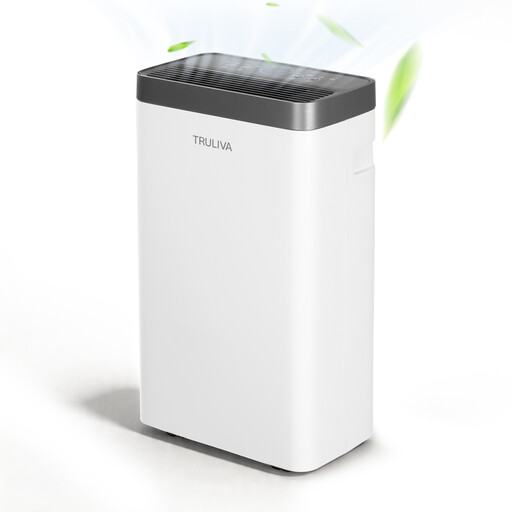 Image unavailable
Worth considering for drying laundry in a room that matches the stated floor area. The model name mentions a laundry mode, a 24 h timer and continuous drainage; check that the drainage setup is compatible with yours.
If the appliance will run near an occupied room, check the noise level of the mode you plan to use.
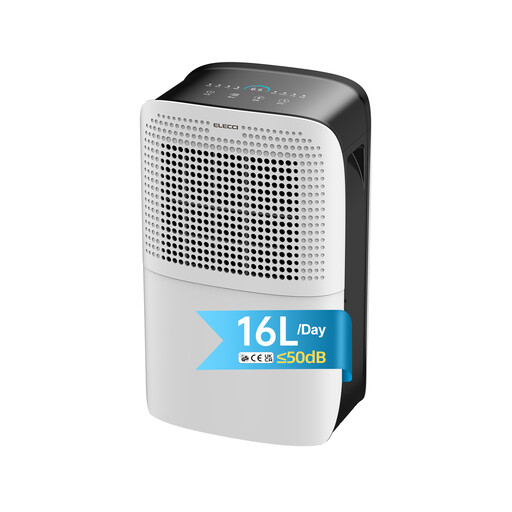 Image unavailable
Consider this model if you want the option of using either the tank or a drainage hose when drying laundry indoors. Its stated capacity is 16 L/day and it’s listed for rooms of up to 32 m² ; compare the test conditions with those in your room.
If the room is cold or occupied, also check the operating temperature and the model’s noise level.
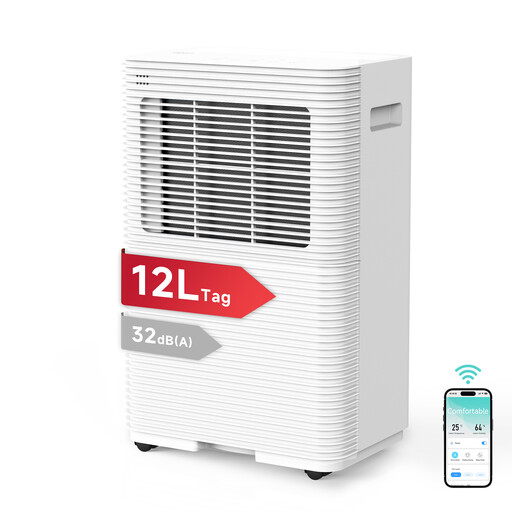 Image unavailable
Worth considering for a room that matches the stated area of 24 m². The model name mentions a Dry mode, a 1.8 L tank and Wi-Fi control; if you plan to use the drainage function, confirm how to connect it.
The stated noise levels for this model vary depending on the listing; check the level for the mode you’ll use before buying it for an occupied room.
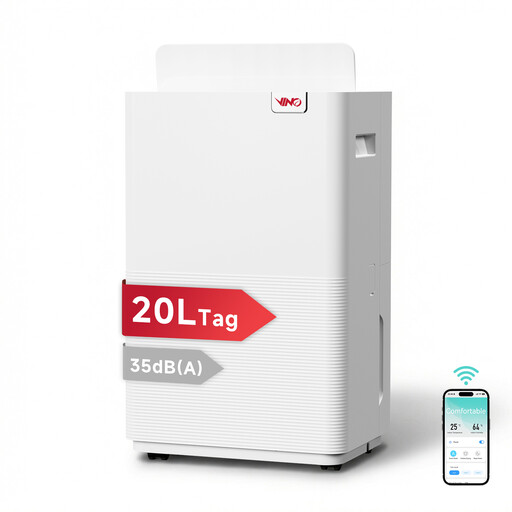 Image unavailable
Compare this model for frequent drying in a room that matches the stated area of 40 m². The model name mentions a Dry mode, a 2.5 L tank and Wi-Fi control; plan the necessary connections if you want to avoid emptying the tank.
The noise figures listed for this model don’t match; confirm the noise level in the mode you plan to use before installing it near an occupied space.
 Image unavailable
Worth considering if you’re looking for a model with a laundry mode and continuous drainage hose. However, its stated capacity of 25 L/day isn’t enough to tell you whether it’s suitable for your room; check the recommended floor area and test conditions.
For a cold room, check how defrosting affects operation. If energy use matters to you, also confirm the power consumption for the mode you plan to use.
No : if the walls stay damp, you need to find out why, even if you also dry laundry indoors. France Rénov' recommends investigating damp patches to identify their cause; an appliance can’t diagnose the problem for you.
For a room with little heating, consider a desiccant model suited to its size. Trotec recommends this technology for cold rooms; in a heated room, a compressor model is still worth comparing based on its stated capacity and test conditions.
Make sure the model supports continuous drainage and that you can install the hose in line with the instructions. Also check whether the accessory is included; if you can’t connect it, the tank size and full-tank shut-off or alert become important.
In France, you can claim under the statutory guarantee of conformity from the professional seller if a new appliance is faulty or doesn’t conform to the contract. The Directorate General for Competition, Consumer Affairs and Fraud Control states that you have two years to make a claim; any commercial warranty is separate and doesn’t replace it.