A dehumidifier can help when condensation or drying laundry creates a recurring need in a room, but it is no substitute for working ventilation: ADEME points out that ventilation removes moisture continuously. Before choosing an appliance, check the possible cause of the damp, then consider the room temperature, the conditions used to measure the stated capacity, the noise level and how you’ll empty the water.
Who are these options for?
Small home with localised damp
If condensation or musty smells are mainly an issue in a bedroom or small utility room, consider the size, how easy the model is to move and how noisy it is. A compact design alone doesn’t tell you how much water the appliance will extract in that room.
Drying laundry indoors
If you’ll use it regularly near laundry, compare the stated capacity, tank size and option for continuous drainage. Noise also matters if the utility room is next to an occupied room.
Unheated cellar or basement
In a cold space, the exact model’s operating temperature range is a priority. Check it before relying on the litres-per-day figure, which may have been measured under different test conditions.
What should you check before choosing?
First, distinguish moisture produced in the room from a ventilation problem or a leak. Then choose an appliance to suit its location and how you plan to use it.
| Priority |
What to check |
Depending on your needs |
| Cause of the damp |
Check the ventilation and look for a leak or water ingress if there are signs of one. ADEME recommends keeping the mechanical ventilation system running and airing rooms regularly. |
Condensation keeps coming back: before buying an appliance, I want to know whether the air is being refreshed properly. |
| Room temperature |
Check the model’s operating range. Air&Me describes compressor models as suitable from around 15 °C and recommends desiccant models for cold spaces; confirm these details for the appliance you’re considering. |
In an unheated cellar, I’ll check that it works at low temperatures rather than choosing based only on the stated floor area. |
| Extraction capacity |
Compare the litres per day with the test temperature and relative humidity. For example, Air&Me gives 25 °C and 90 % relative humidity for a stated capacity of 20 L/j. |
If my bedroom is cooler or less humid than the test conditions, I won’t assume it will collect the same volume of water each day. |
| Noise and space |
Check the documented noise level at the setting you plan to use, the dimensions and the clearance needed around the appliance. Les Numériques notes, in particular, the noise at full power of the H.Koenig DSH520. |
Near a bedroom, the noise while it’s running matters just as much to me as being able to move the appliance. |
| Laundry and drainage |
Check for a laundry mode, the tank capacity and the option to set up continuous drainage. If you need a pump to lift the water, confirm that it’s included with the exact model. |
I regularly dry laundry indoors and want to avoid a full tank interrupting the appliance while it’s in use. |
What mistakes should you avoid?
-
Relying on the appliance instead of mechanical ventilation
A dehumidifier doesn’t refresh the air. ADEME says mechanical ventilation removes moisture continuously.
Check that the ventilation is working and that its air inlets and vents aren’t blocked. Keep airing the room after activities that create moisture, too.
-
Comparing litres per day alone
According to Air&Me, the stated capacity depends, among other things, on the temperature and relative humidity used for the test. Two figures measured under different conditions therefore don’t describe the same situation.
Check the conditions given for each figure and make sure the operating range suits the room you have in mind.
-
Overlooking the tank and noise
A full tank can stop the appliance, while noise at high power can be an issue in an occupied room. Les Numériques flags the noise level of the H.Koenig DSH520 in particular.
Compare tank capacities, drainage options and the noise information for the models you’re considering.
-
Choosing for a cellar based on the stated capacity alone
Air&Me distinguishes between using compressor and desiccant models in cold environments. This general guidance doesn’t guarantee that a particular model will work in your cellar.
Check its temperature range and investigate any leak or water ingress before relying on dehumidification.
Which models can you use as a guide?
The observations below relate to specific models reviewed by Les Numériques, not to every appliance from each brand.
Comfee
Les Numériques presents the Aqua Dry 12 as an option for small rooms.
- Its compact design may be useful when space is limited.
- The review notes limited capacity, modest performance and no connectivity.
H.Koenig
The DSH520 is a useful point of comparison for water management and noise in a utility room or living space.
- Les Numériques reports that this model has a 5 L tank.
- The review notes its noise level at full power.
Wood's
Les Numériques mentions the MDX20P for its built-in pump, which is worth considering if you need to pump water away.
- The pump sets this model apart from one that relies on gravity drainage alone.
- Check that your planned set-up matches the model’s instructions, and factor in tank maintenance.
Dehumidifiers available on Joybuy
These five dehumidifiers are designed for domestic use, including occupied rooms and drying laundry. Their stated capacity alone won’t tell you how much moisture they’ll extract in your home: also check the room temperature and how the water is collected and drained.
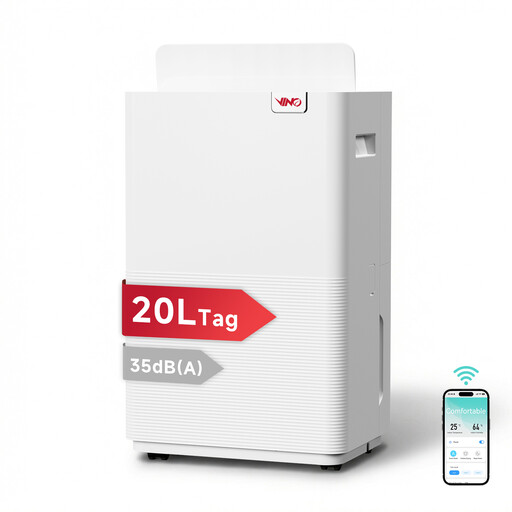 Image unavailable
VINO 20L Smart, Wi-Fi, 2.5 L tank
For a utility room, the Auto, Dry and Sleep modes and 2.5 L tank are worth comparing with your usual emptying routine. The 20 L/j capacity is stated under test conditions. If the appliance will be used near a bedroom, check the noise level, as the sound figures on its product information differ.
View on Joybuy
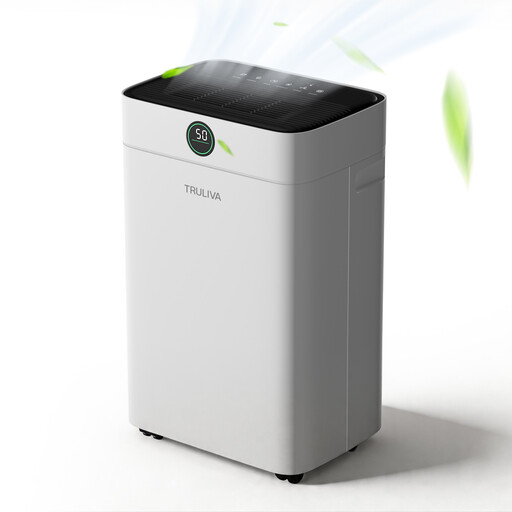 Image unavailable
TRULIVA 25L/Day, laundry mode, 2.8 L tank
The laundry-drying function and continuous drainage hose make this a practical option for regular use in a utility room. Check the conditions behind the stated 25 L/j capacity and the temperature range for your room. The product information notes that the compressor stops during defrosting below 15 °C.
View on Joybuy
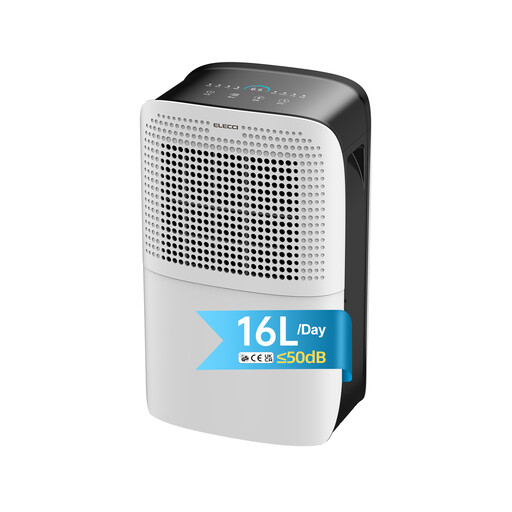 Image unavailable
ELECCI 16L/D, drainage hose, 3.1 L tank
The drainage hose may be useful if you have a suitable outlet; the tank gives you another way to collect the water. Check the noise level if it’s for an occupied room, the temperature range if it’s for a cold space, and the 25 cm clearance specified in the instructions.
View on Joybuy
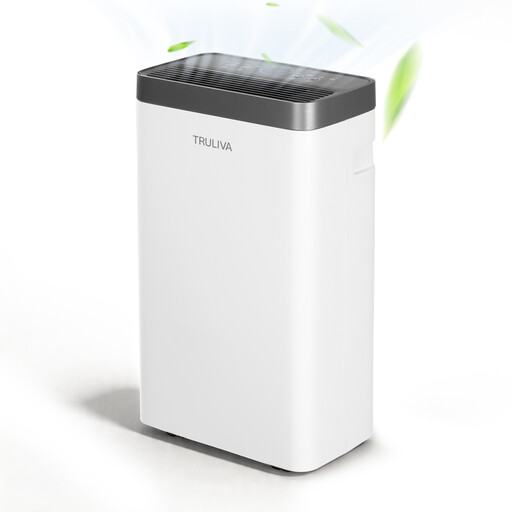 Image unavailable
TRULIVA AP10-2012EE, 24-hour timer and laundry mode
The laundry mode and continuous drainage may suit a utility room where the appliance runs for long periods. The stated tank capacity is 1.35 L, so compare the emptying requirements with your set-up. Check the noise level too if you plan to use it near a bedroom.
View on Joybuy
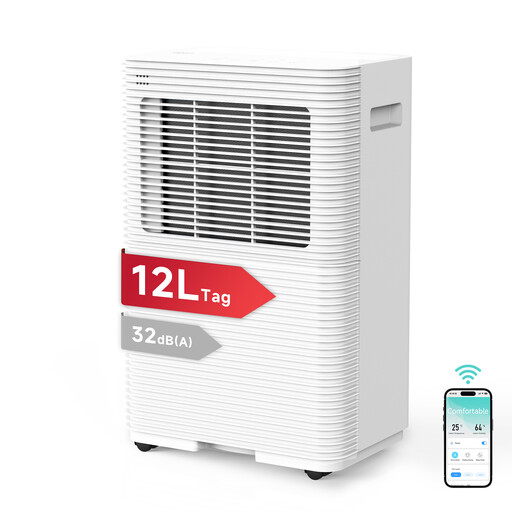 Image unavailable
VINO 12L Smart, Wi-Fi, 1.8 L tank
This model has Auto, Dry and Sleep modes for use in a room at home or near laundry. Its 1.8 L tank means you’ll need to plan for regular emptying. If quiet operation is a priority, check the noise level, as the figures on its product information don’t match.
View on Joybuy
Frequently asked questions
Can a dehumidifier replace airing or mechanical ventilation?
No. ADEME recommends keeping the mechanical ventilation system running and airing your home daily. A dehumidifier can help manage moisture in a room alongside these practices, but it can’t refresh the air for you.
When should you investigate the cause of damp before buying?
If the ventilation isn’t working, or you suspect a leak, water ingress or a structural problem, have the cause looked into rather than relying on an appliance alone. As ADEME points out, ventilation removes moisture continuously; a dehumidifier won’t repair the building.
Can you compare two litres-per-day capacity figures directly?
Only if the measurement conditions are comparable. Air&Me notes, for example, that a capacity of 20 L/j may be stated at 25 °C and 90 % relative humidity. Check the temperature and humidity used for each model before comparing the figures.
Which type should you choose for a cold cellar?
Start by checking each appliance’s temperature range. Air&Me suggests desiccant models for cold spaces and says compressor models are suitable from around 15 °C. Confirm that the exact model will work in your cellar, and don’t overlook any possible water ingress.


