Households that often dry laundry indoors
If drying laundry regularly adds moisture to a room, look at the drying mode, the stated capacity and whether you can drain the water without having to empty the tank frequently.


A portable dehumidifier can complement ventilation and heating when condensation occurs, particularly while drying laundry. First, however, check that your ventilation is working properly and identify the cause of any damp patches. Que Choisir distinguishes this from water ingress and rising damp, which require the underlying cause to be addressed. When choosing an appliance, compare its stated capacity and the conditions under which it was measured, as well as its noise level, water management and power consumption.
If drying laundry regularly adds moisture to a room, look at the drying mode, the stated capacity and whether you can drain the water without having to empty the tank frequently.
For a room you spend a lot of time in, compare the stated noise level for the mode you plan to use, along with the recommended room size, before opting for a higher capacity.
Before buying an appliance, distinguish condensation from water ingress, rising damp or poor ventilation. France Rénov’ recommends having damp patches assessed to identify their cause.
Start by checking the cause of the damp and the ventilation. Then choose an appliance suited to the room and how you plan to use it.
| What to consider | What to check | Who this matters to |
|---|---|---|
| Cause of the damp | Check the ventilation. Have the cause investigated if damp patches are linked to rain, appear on lower walls or persist. | If damp patches keep coming back, I want to avoid an appliance masking water ingress or poor ventilation. Around 31% of consumers put finding the cause at the top of their list. |
| Capacity and drainage | Compare the litres per day and the conditions under which they were measured, the recommended room size, the tank and the option of continuous drainage. | When I often dry laundry indoors, I want to manage the damp and collected water without repeated interruptions. This is the priority for around 31% of consumers. |
| Noise | Check the stated noise level and the operating mode it applies to. | In a bedroom or living space that’s in use, I don’t want to choose a capacity without knowing whether the noise will bother me. Noise comes first for around 23% of consumers. |
| Monitoring and electricity use | Check the humidity settings and power rating in W. Estimate kWh using the power in kW and the number of hours the appliance runs. | For regular use, I want to monitor humidity and control how long the appliance runs. Around 15% of consumers prioritise keeping track of electricity use. |
A dehumidifier won’t fix the cause of water ingress or rising damp. If mould appears, it’s also important to find out why: Anses has linked mould in buildings to effects on respiratory health.
If damp patches appear after rain, affect lower walls or persist despite ventilation, get their cause identified before relying on a portable appliance.
The stated capacity depends on the conditions under which it was measured. For example, De’Longhi gives a figure of 10 L/24 h for the DEX210SF at 30 °C and 80% relative humidity. This figure doesn’t necessarily reflect how much water it will remove in a cooler room.
Check the conditions associated with the capacity, then compare the recommended room size, noise level and drainage options with your needs.
Having to empty the tank can interrupt the intended use, while a drainage hose needs a suitable route to an outlet.
Decide where you’ll install the appliance and check whether the hose is included, how long it is and whether you can drain the water from that spot.
According to Rowenta France, the Extrême Dry Compact+ DH5260F0 combines room dehumidification, a laundry mode and continuous drainage.
The French product details for the Tasciugo AriaDry DEX210SF set out its capacity, noise level, power, humidistat and drainage options.
The MeacoDry ABC 12L has humidity settings and a laundry mode designed for home use.
These portable appliances are designed to help manage condensation at home, particularly while drying laundry. Their stated capacity is no substitute for effective ventilation or investigating water ingress.
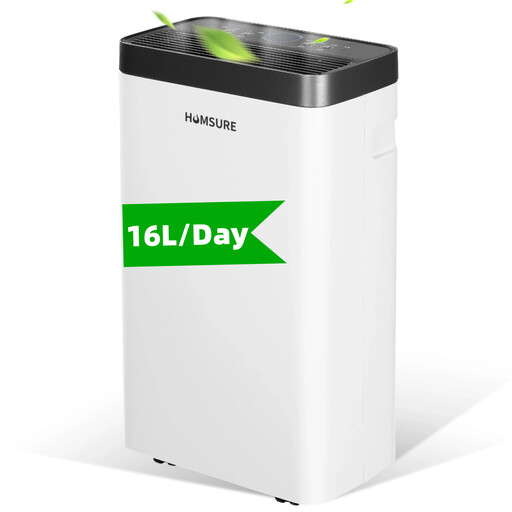 Image unavailable
Worth considering for a room where you dry laundry indoors, after checking the ventilation and the cause of the damp.
The title states a capacity of 16 L/day, coverage of 25 m², a 1.4 L tank and a 24-hour timer. Check the conditions associated with the capacity and the modes available on the version being sold.
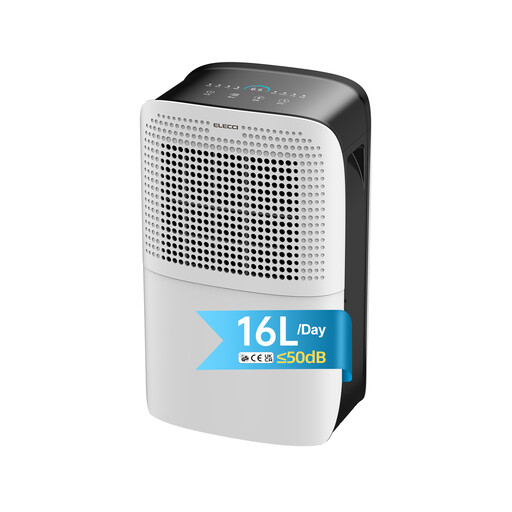 Image unavailable
Worth a look if you want to manage the collected water during extended use, provided you have a suitable spot for drainage.
The title states 16 L/day, a 32 m² room, a 3.1 L tank, four modes and a 24-hour timer. If you plan to use the appliance in a bedroom, check the noise level for the mode you intend to use.
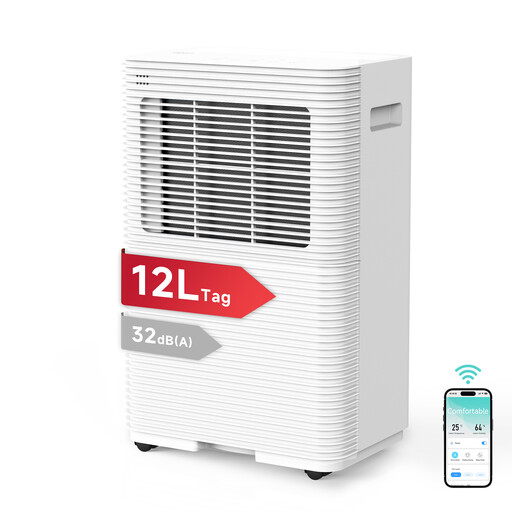 Image unavailable
Worth a look if you want to control an appliance remotely in a room where you dry laundry.
The title mentions a 12 L capacity, a 1.8 L tank and automatic, drying and sleep modes. The available information gives conflicting noise figures, so check the level and the mode it applies to before using it in an occupied room.
 Image unavailable
Worth considering for a larger room where you dry laundry, bearing in mind how you’ll manage the water and how many hours the appliance will run.
The title states a capacity of 20 L, a 2.5 L tank and automatic, drying and sleep modes. Check the noise level and how it was measured before planning to use the appliance in an occupied room.
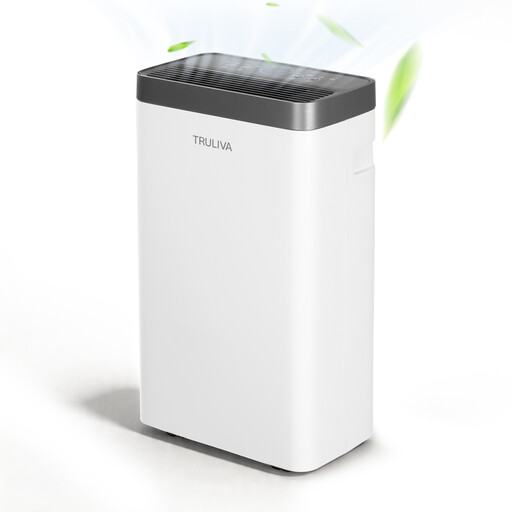 Image unavailable
Worth considering for drying laundry if you can arrange suitable continuous drainage where you plan to place it.
The title mentions a 24-hour timer, automatic defrost and continuous drainage. If you want to set a precise humidity level or use the appliance in a bedroom, check the adjustment range and the noise level of the version being sold.
No. A portable appliance can’t replace ventilation. ADEME says mechanical ventilation continuously removes moisture and pollutants; a dehumidifier can only complement efforts to manage condensation caused by everyday activities.
Have the cause investigated if you suspect water ingress, rising damp or poor ventilation, rather than relying on an appliance alone. Que Choisir distinguishes these problems from condensation, while France Rénov’ recommends identifying the cause of damp patches.
Multiply its power in kW by the number of hours it runs to calculate its consumption in kWh, as explained by Rowenta France. To estimate the cost, multiply this by the kWh rate in your tariff. The actual running time makes a significant difference.
Compare the tank capacity and the option of continuous drainage. Continuous drainage is only useful if the hose can reach a suitable outlet from where you plan to put the appliance.